
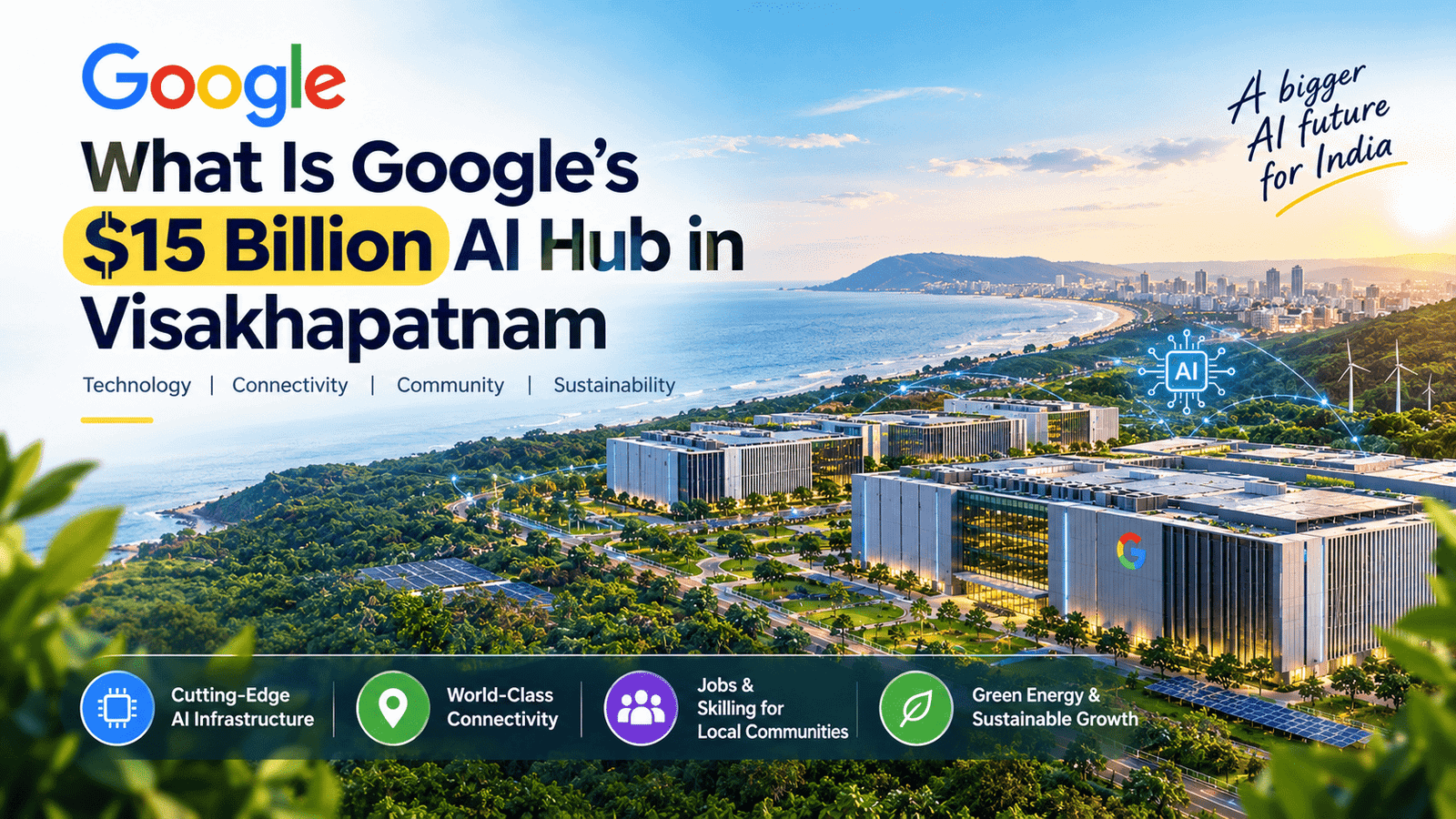
India’s AI ambitions just got a very large physical address: Visakhapatnam, Andhra Pradesh.
On April 28, 2026, Google officially broke ground on its AI hub in Vizag, marking the beginning of construction on a $15 billion investment in India’s digital infrastructure. The project is being developed in partnership with AdaniConneX and Nxtra by Airtel.
But this isn’t simply another data centre.
Google describes it as a much larger AI ecosystem involving data centres, connectivity, clean energy and community programmes.
So, what exactly is Google building in Vizag and why does it matter?
Index
- What Is Google’s Vizag AI Hub?
- How Big Is Google’s AI Project?
- Why Is Google Building an AI Hub in Visakhapatnam?
- What Is the AI Hub Actually Going to Do?
- What Is America-India Connect?
- How Could the Project Benefit Local Communities?
- How Is Google Addressing Environmental Concerns?
- What Is India’s AI Industrial Corridor?
- Frequently Asked Questions
What Is Google’s Vizag AI Hub?
Google’s Vizag AI hub is a large-scale infrastructure project designed to provide the computing power and connectivity needed for artificial intelligence and cloud services.
The project is part of Google’s $15 billion investment in India between 2026 and 2030 and includes what Google describes as India’s first gigawatt-scale AI hub.
The hub will be developed across three data centre campuses, with AdaniConneX and Nxtra by Airtel leading the construction of the data centre buildings and connecting infrastructure.
In simple terms, Google is building the infrastructure needed to handle huge amounts of computing for the next generation of AI and digital services.
How Big Is Google’s AI Project?
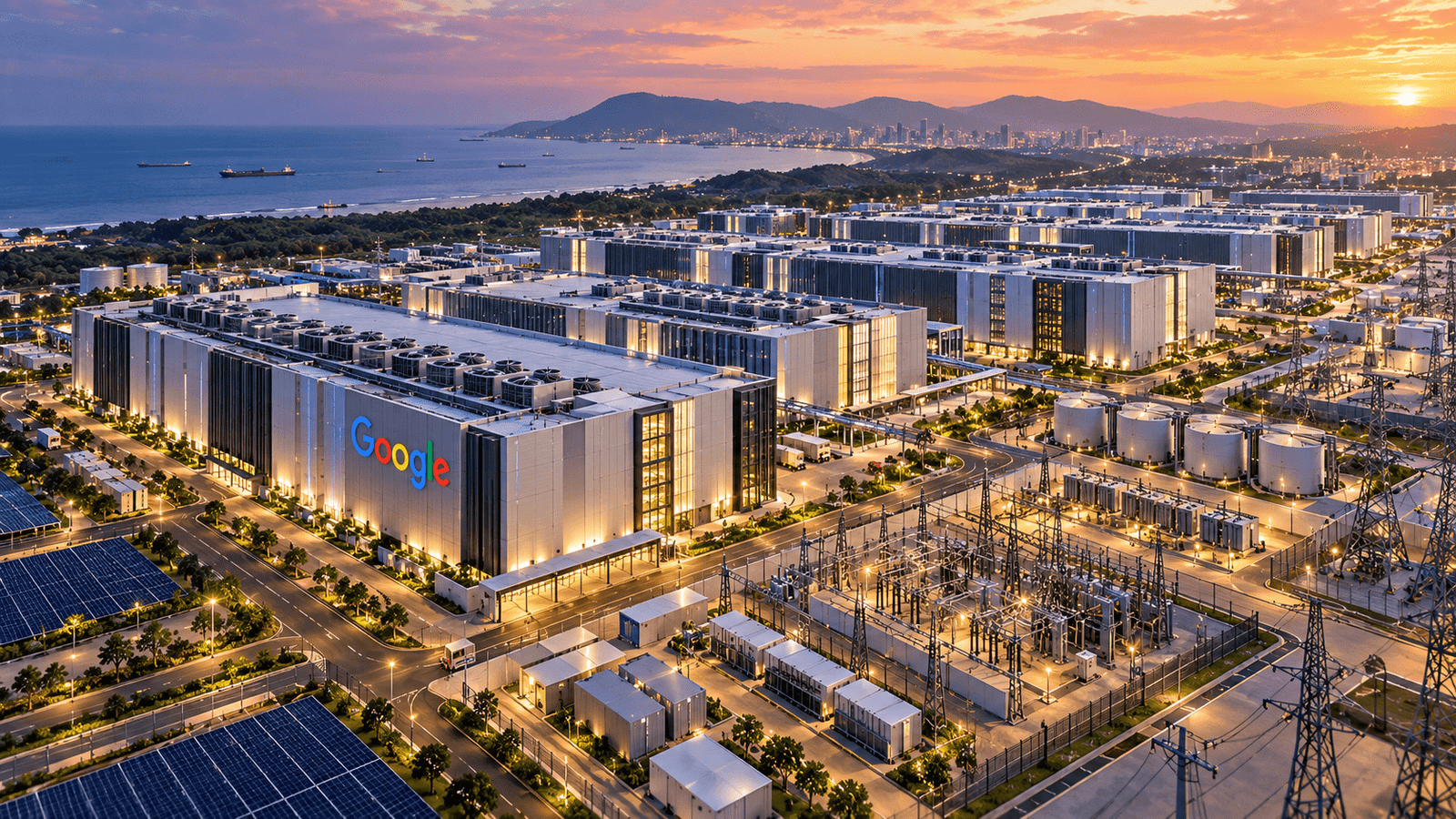
The numbers behind the project are hard to miss.
Google has committed $15 billion over five years, from 2026 to 2030, to establish the AI ecosystem in India.
The hub is described as gigawatt scale, with Adani Group’s Jeet Adani describing the project as nearly 1 GW in a single location.
What does gigawatt-scale mean?
A gigawatt is a unit of power equal to 1,000 megawatts.
So when Google and its partners describe the hub as gigawatt scale, they’re talking about infrastructure requiring an enormous amount of computing capacity and supporting power infrastructure.
And that’s the point: this isn’t being designed as a small regional server facility. It is intended to support AI infrastructure at a much larger scale.
Why Is Google Building an AI Hub in Visakhapatnam?

AI needs serious computing power.
Businesses and organisations increasingly want to use AI for everything from research and software development to customer services and other digital applications.
Google says the hub will provide high performance, low latency services that businesses and organisations can use to build and scale their own AI-powered solutions and accelerate research and development.
Visakhapatnam is also positioned to become an important connectivity and technology hub.
The project brings together data centres, fibre connectivity, subsea cables and energy infrastructure rather than treating the data centre as an isolated facility.
What Is the AI Hub Actually Going to Do?
Think of the AI hub as the infrastructure behind the AI services people and businesses use.
It is intended to provide the computing power needed to:
- Build and scale AI applications
- Support cloud services
- Help businesses develop AI-powered solutions
- Accelerate research and development
- Provide high-performance, low-latency digital services
Google says the wider ecosystem is designed to help India strengthen its position in the global AI economy.
In other words, the goal isn’t just to put more servers in Vizag. It’s to create infrastructure that can support a much larger AI ecosystem.
What Is America-India Connect?
There’s another interesting part of the project that has nothing to do with servers at least directly.
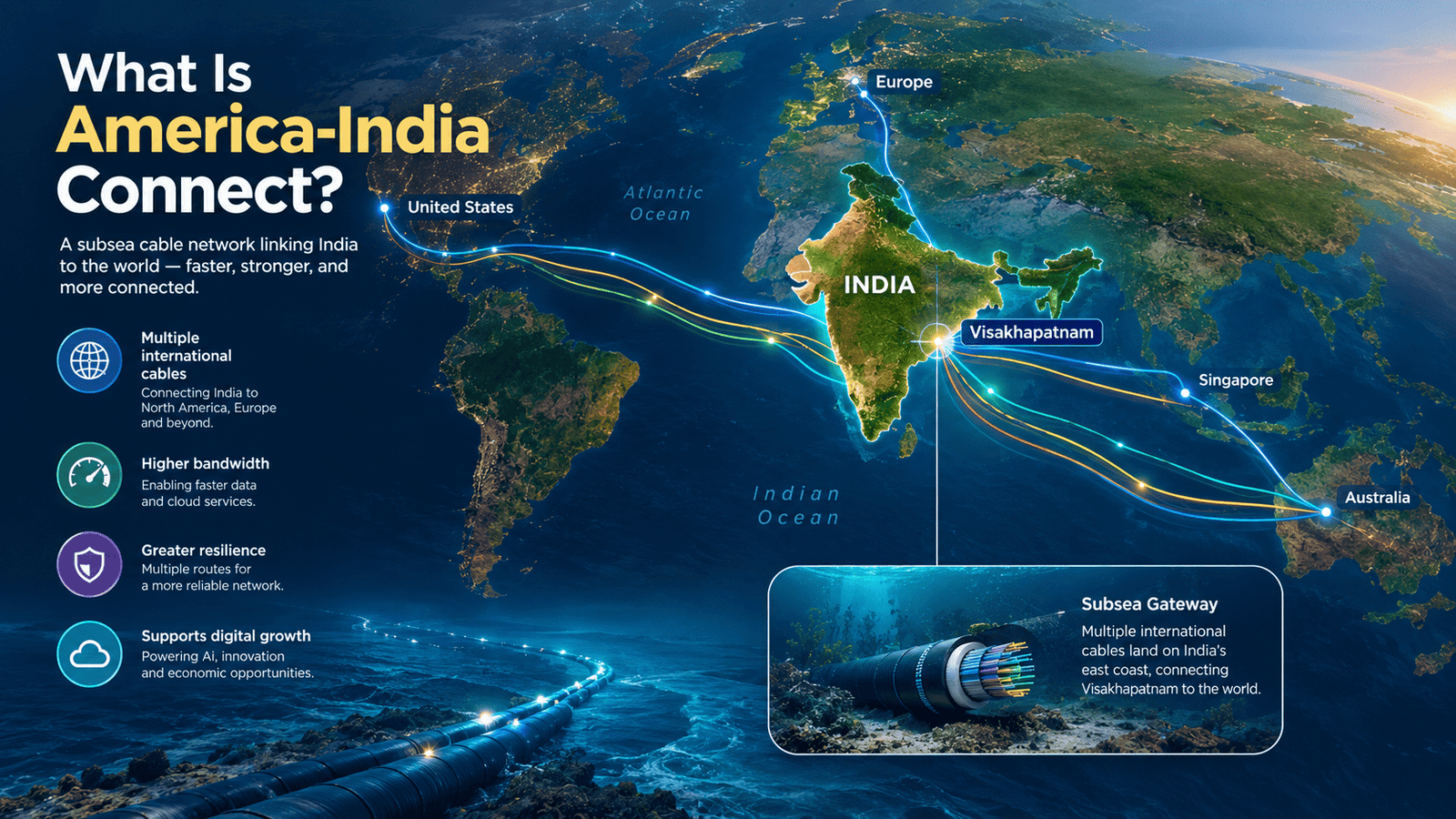
The AI hub includes Google’s America-India Connect initiative, which involves an expanded fibre-optic network and subsea connectivity.
Google says the initiative will create a major subsea gateway in Vizag, with multiple international cables landing on India’s eastern coast. This is intended to provide greater route diversity and strengthen India’s global connectivity.
That means the project isn’t just about computing power. Connectivity is another major piece of the puzzle.
How Could the Project Benefit Local Communities?
This is one of the more interesting parts of Google’s announcement.
Google says it carried out a community impact assessment before construction and has announced several programmes focused on local communities.
Support for the fishing community
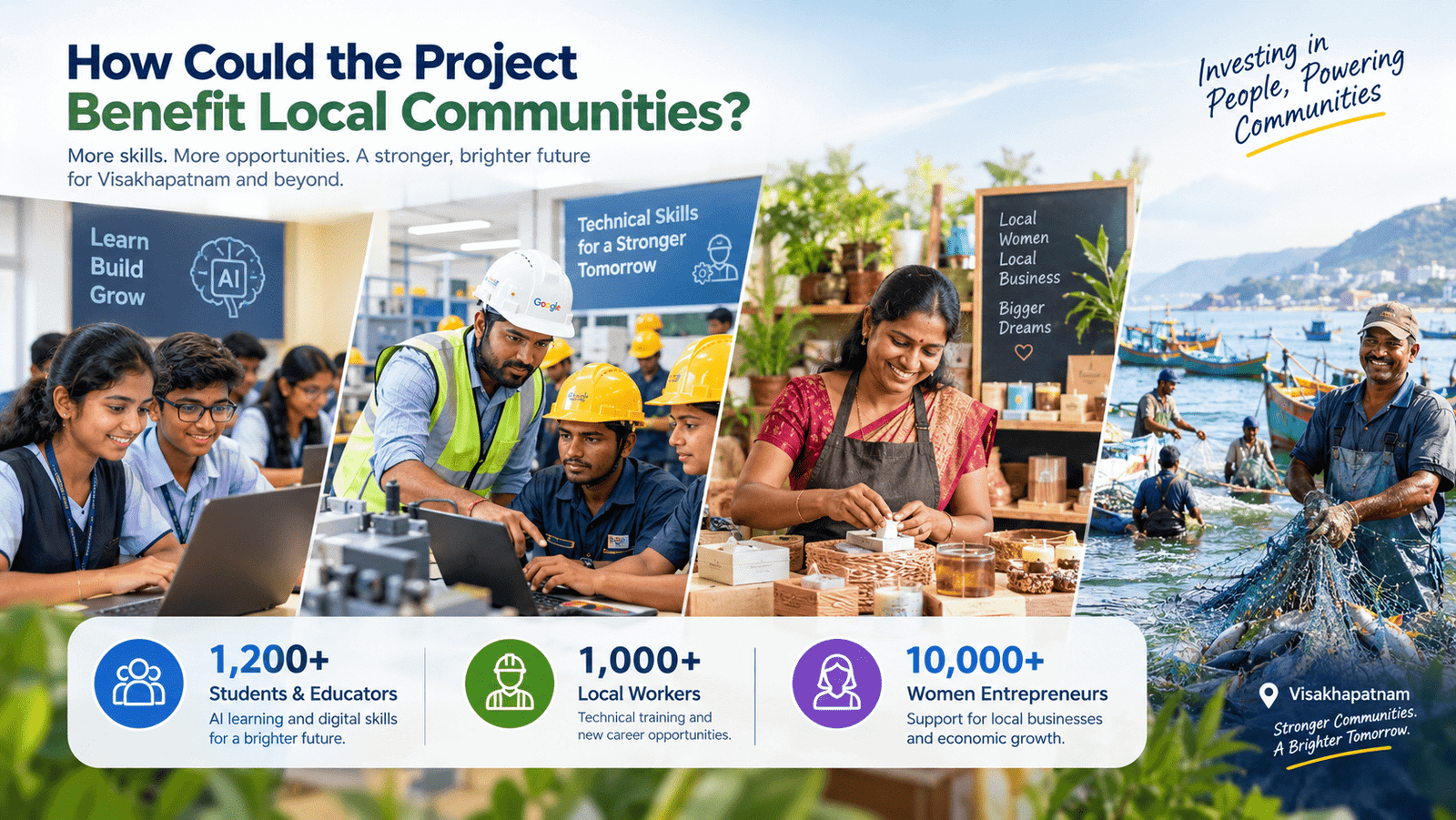
Google says a programme with the Sambhav Foundation will equip more than 1,000 people from the local fishing community with GPS navigation and weather-forecasting tools.
The programme will also include training in cold-chain management and value-added processing.
Support for women entrepreneurs
Through the NARI Shakti programme, Google says it aims to support 10,000+ existing and aspiring women entrepreneurs from low-income backgrounds.
The programme focuses on financial literacy, business planning and digital tools to help turn home-based work into sustainable micro-enterprises.
Training for local workers
Google’s Skills Trade and Readiness programme aims to prepare more than 1,000 local workers for roles connected to infrastructure development, including construction, welding and facility operations.
Google also says its partnership with ICT Academy will train 1,200+ local students and educators in areas including cloud computing and generative AI.
So the project’s intended impact goes beyond the people who will actually work inside the data centres.
How Is Google Addressing Environmental Concerns?
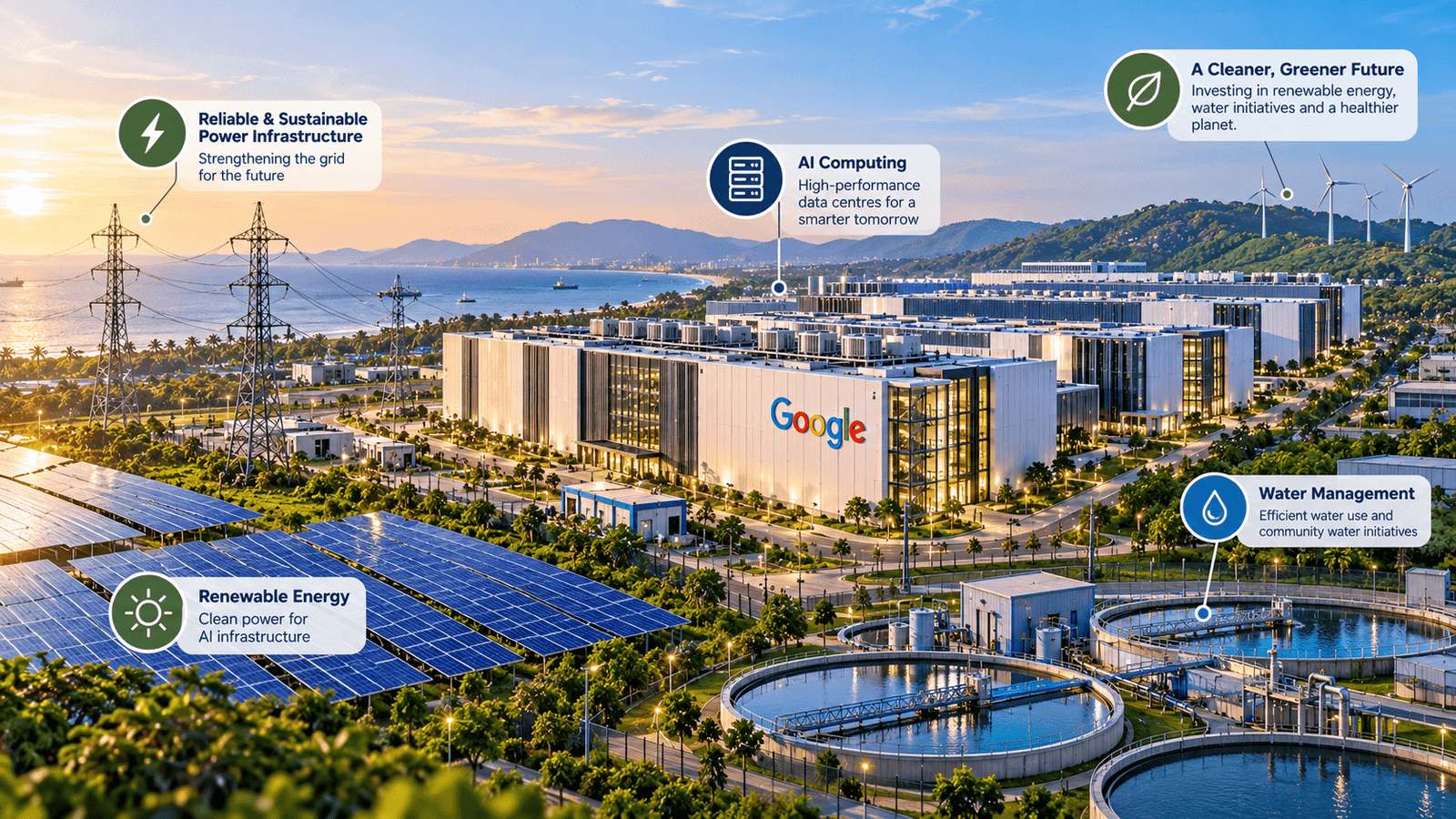
A project of this size naturally raises questions about electricity, water and other resources.
Google says its AI hub will include a long-term clean energy strategy focused on bringing new clean energy supply to the electricity grid and supporting India’s goal of reaching 500 GW of non-fossil fuel capacity by 2030.
Water is another focus.
Google says it is partnering with Sponge Collaborative on watershed management and community programmes around the data centre campuses. The plans include watershed restoration, clean drinking-water systems such as reverse osmosis plants and “Water ATMs”, and support for local agriculture and fisheries.
These initiatives don’t make the environmental questions disappear, but they show that resource management is being built into Google’s stated plans for the project.
What Is India’s AI Industrial Corridor?
Google isn’t presenting the project as just a construction project.
Alongside the groundbreaking, Google and the Andhra Pradesh government held the Bharat AI Shakti Conclave, bringing together suppliers, industry partners and infrastructure stakeholders.
The broader idea is to create an AI industrial corridor around the investment.
Google says it plans to prioritise local procurement and integrate regional small and medium sized businesses into its safety and operational frameworks.
The aim is to help local companies build the capabilities needed for future large-scale infrastructure projects.
That could be one of the project’s biggest long-term effects: not simply creating one huge AI facility, but helping develop an ecosystem around it.
Frequently Asked Questions
How much is Google investing in the Visakhapatnam AI hub?
Google has announced a $15 billion investment over five years, from 2026 to 2030, to establish its AI ecosystem in India.
Where is Google’s AI hub being built?
The AI hub is being developed in Visakhapatnam (Vizag), Andhra Pradesh, with the groundbreaking ceremony held at Tarluvada.
What does gigawatt scale AI mean?
It refers to AI infrastructure operating at an extremely large power and computing scale. Google’s partners describe the Vizag project as nearly 1 GW at a single location.
Who is Google working with on the project?
Google is working with AdaniConneX and Nxtra by Airtel on the AI hub.
Will the project create jobs?
Google has announced workforce programmes targeting more than 1,000 local workers, as well as training for more than 1,200 students and educators.
What is the project doing for the local community?
Google has announced programmes involving water management, fishing-community support, women-led businesses, digital literacy, local entrepreneurship and workforce training.
Final Thoughts
Google’s AI hub in Visakhapatnam is much more than a giant building filled with computers.
The $15 billion investment brings together AI computing, data centres, international connectivity, clean-energy plans and community programmes.
If Google’s plans develop as announced, Vizag could become an important part of India’s growing AI infrastructure, while local businesses, workers, students and communities could become part of the ecosystem surrounding it.
And perhaps that’s what makes this project particularly interesting.
The real story isn’t just about how much Google is spending. It’s about what India can build around that investment.
Source
Google Cloud Press Corner, “Google Breaks Ground on India AI Hub, Launching a National Industrial Ecosystem Alongside India’s Digital Infrastructure Milestone,” April 28, 2026.
 Amisha26