
Introduction
Politics plays a vital role in shaping a nation’s future. However, many people in India often describe politics as “dirty.” This perception has developed over time due to corruption scandals, criminalization of politics, misuse of power, and lack of transparency in governance. While not all politicians are involved in unethical practices, negative incidents often receive greater public attention, creating a broader perception that politics is corrupt.
Why Do People Perceive Politics as Dirty in India?
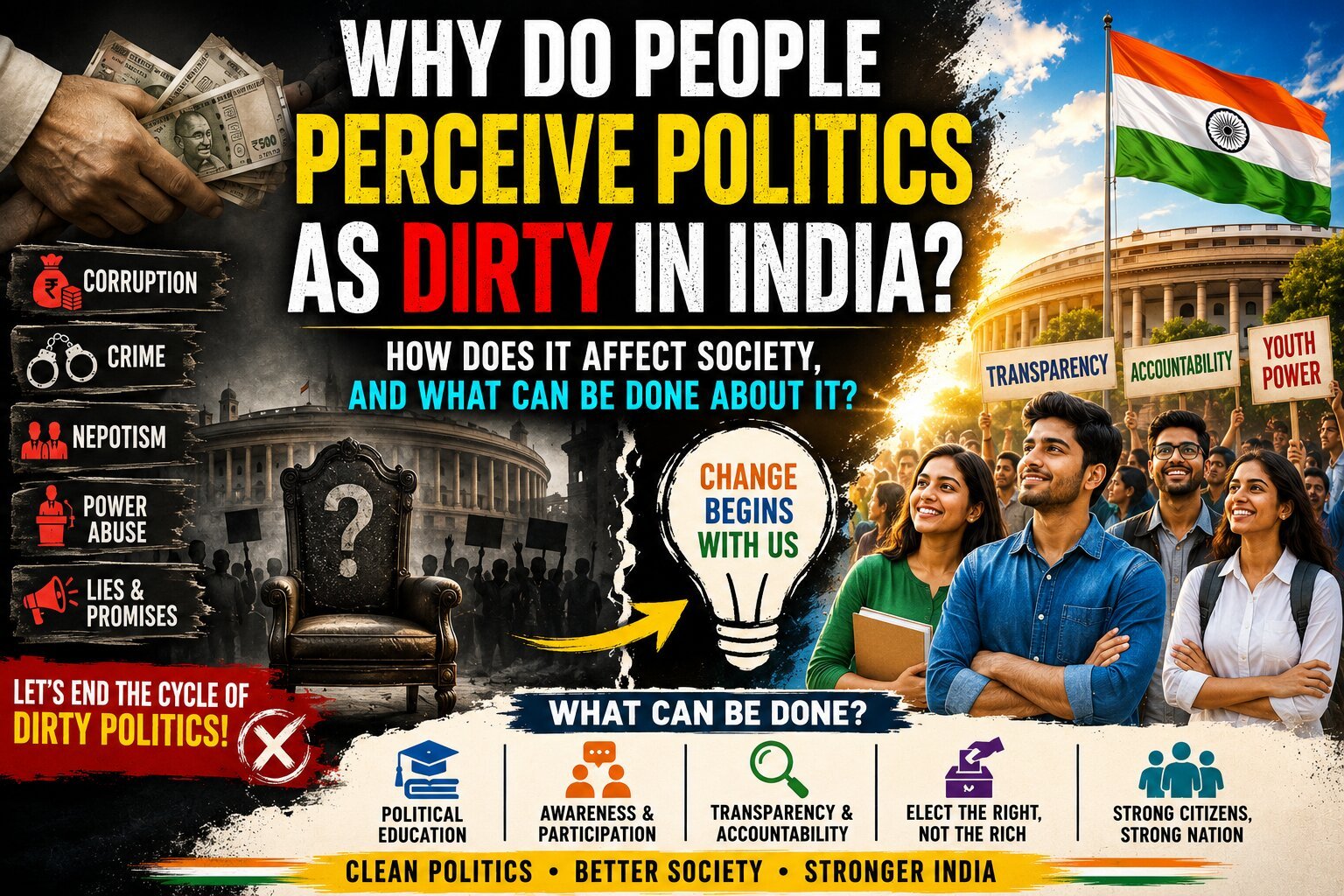
1. Corruption and Financial Misconduct
One of the biggest reasons is corruption. Cases involving bribery, misuse of public funds, and favoritism have repeatedly surfaced in the media. When taxpayers see public money being misused, they lose trust in political leaders and government institutions.
2. Criminalization of Politics
Some elected representatives face criminal charges, ranging from financial crimes to serious offenses. Although many cases are still under trial, the presence of such individuals in politics creates a negative image and raises concerns about the quality of leadership.
3. Vote-Bank Politics
Political parties sometimes appeal to voters based on caste, religion, language, or regional identity rather than focusing on development and governance. This can create social divisions and increase tensions among communities.
4. Lack of Accountability
Citizens often feel that politicians make promises during elections but fail to deliver after being elected. When there is little accountability for unmet promises, public confidence declines.
5. Dynastic Politics
In many cases, political power remains within a few influential families. Critics argue that this limits opportunities for talented individuals from ordinary backgrounds and weakens democratic competition.
6. Negative Media Coverage
News outlets frequently report scandals, conflicts, and controversies because they attract attention. Positive contributions and successful governance initiatives often receive less coverage, reinforcing the perception that politics is largely unethical.
How It Affects Society?
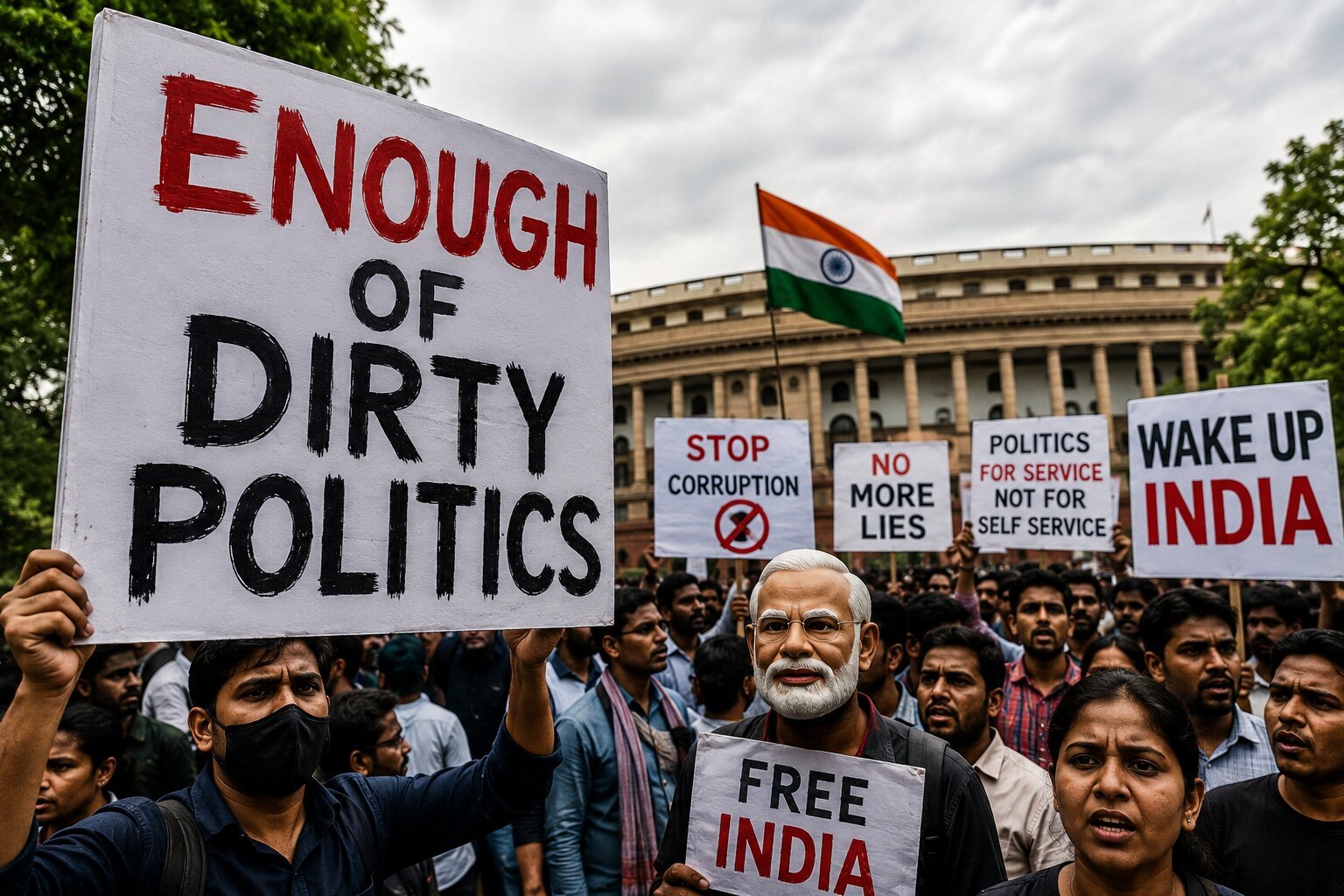
The “dirty” nature of politics has severe, tangible consequences for Indian society:
Systemic Inequality: When political processes are hijacked by vested interests, redistributive policies and affirmative action programs fail to reach the most vulnerable, exacerbating the wealth and opportunity gap.
Erosion of Civic Trust: Constant exposure to political scandals and unethical behavior leads to deep cynicism. Many citizens—particularly the educated urban middle class and the youth—choose to disengage from the democratic process altogether, leaving governance in the hands of the very people they criticize.
Poor Governance and Development: When leaders prioritize self-enrichment and consolidating power, public resources are mismanaged, stunting infrastructure development and socio-economic growth.
Political Apathy Among Youth: Young people may become disinterested in public affairs, believing that their vote or participation will not bring meaningful change.
What Can Be Done to Improve Politics?
Strengthen Transparency
Government decisions, spending, and policy implementation should be transparent and easily accessible to the public.
Electoral Reforms
Stricter regulations regarding campaign finance, political funding, and candidates with serious criminal records can improve the quality of governance.
Encourage Ethical Leadership
Political parties should prioritize integrity, competence, and public service when selecting candidates.
Promote Civic Education
Citizens should understand their rights, responsibilities, and the importance of informed voting. Political awareness helps people make better decisions during elections.
Increase Citizen Participation
Democracy becomes stronger when citizens actively engage in discussions, vote responsibly, and hold elected representatives accountable.
Responsible Media and Fact-Checking
Media organizations should focus on accurate reporting and fact-based journalism, helping citizens distinguish facts from misinformation.
What Can Be Done to Improve Politics?
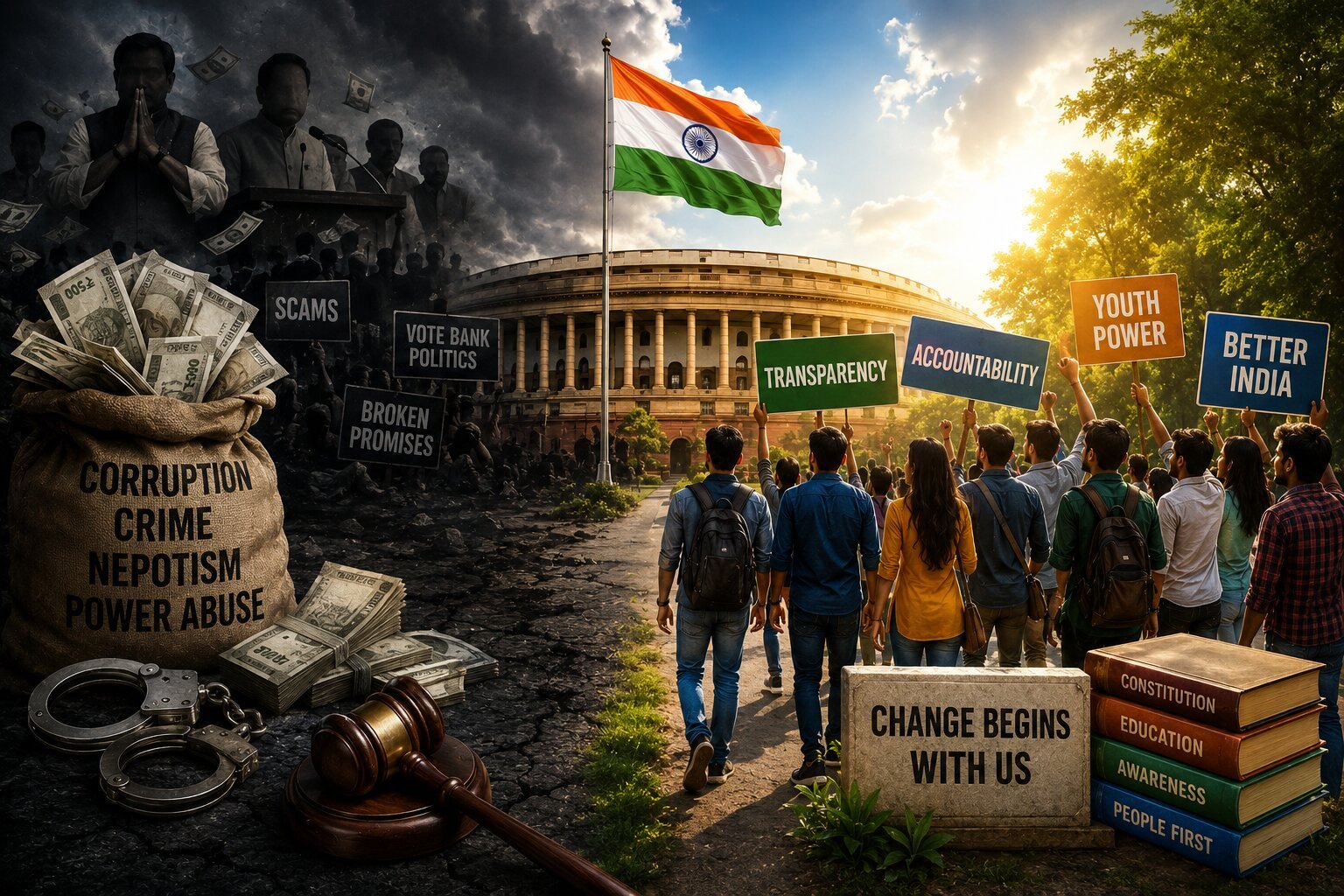
Strengthen Transparency
Government decisions, spending, and policy implementation should be transparent and easily accessible to the public.
Electoral Reforms
Stricter regulations regarding campaign finance, political funding, and candidates with serious criminal records can improve the quality of governance.
Encourage Ethical Leadership
Political parties should prioritize integrity, competence, and public service when selecting candidates.
Promote Civic Education
Citizens should understand their rights, responsibilities, and the importance of informed voting. Political awareness helps people make better decisions during elections.
Increase Citizen Participation
Democracy becomes stronger when citizens actively engage in discussions, vote responsibly, and hold elected representatives accountable.
Responsible Media and Fact-Checking
Media organizations should focus on accurate reporting and fact-based journalism, helping citizens distinguish facts from misinformation.
Conclusion
Politics itself is not dirty; rather, certain unethical practices have created a negative perception. India’s democracy has achieved significant progress since independence, but challenges such as corruption, criminalization, and lack of accountability continue to affect public trust. The solution lies in stronger institutions, transparent governance, responsible citizenship, and active participation by educated and ethical individuals. A healthy democracy requires both accountable leaders and informed citizens working together for the nation’s progress.
Frequently Asked Questions (FAQs)
1. Why do many people call politics dirty in India?
People often associate politics with corruption, criminal allegations, broken promises, and misuse of power, leading to a negative perception.
2. Is every politician corrupt?
No. Many politicians serve honestly and work for public welfare. However, high-profile scandals often receive more public attention.
3. How does corruption affect society?
Corruption can reduce trust in government, waste public resources, slow development, and weaken democratic institutions.
4. Why is youth participation important in politics?
Young people bring new ideas, energy, and accountability. Their involvement can help improve governance and strengthen democracy.
5. What role do citizens play in improving politics?
Citizens can vote responsibly, stay informed, reject divisive politics, demand accountability, and participate actively in democratic processes.
Also Like: Why Yoga and Naturopathy Are Important for a Better Lifestyle?
 Kavya
Kavya