
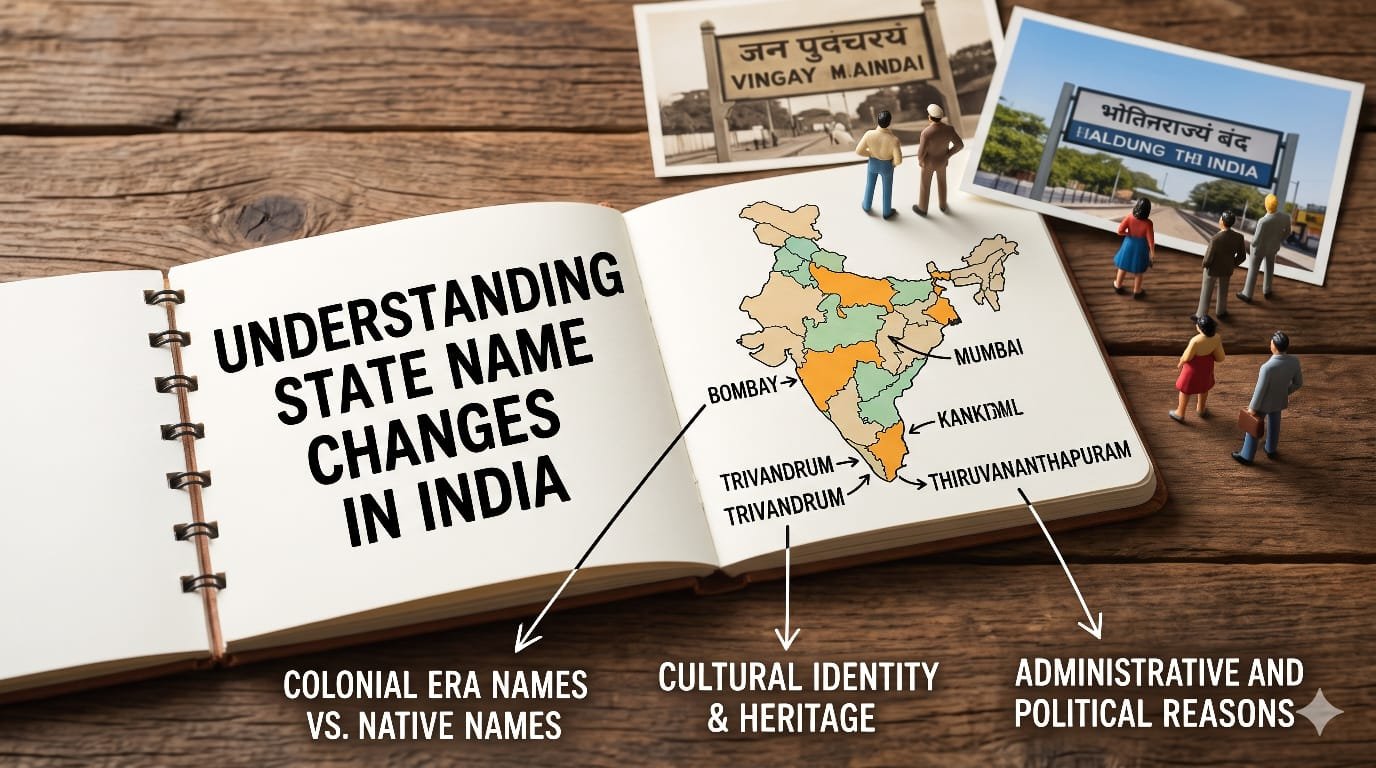
Names are more than just words on a map or identity cards. They carry history, cultural pride, and deep emotions. In recent years, you might have noticed headlines about various places getting renamed across India. The most notable recent example is the proposal to change the official name of Kerala to “Keralam”.
This raises an important question: why are so many state and city names changing today, and what is the real purpose behind these decisions?
The Story Behind Changing Kerala to Keralam
To understand this trend, the Kerala example gives us a very clear picture.
In Malayalam, the native language of the region, the land has always been referred to as “Keralam”. The word is believed to come from “Kera” (meaning coconut tree) or from ancient words like “Cheram”, linked to the historical Chera dynasty.
When the British ruled India, they often modified local pronunciations to make words easier for English speakers to pronounce and write. As a result, Keralam became Kerala, just like Kolkata became Calcutta, Mumbai was called Bombay, and Chennai was known as Madras.
When the Kerala Legislative Assembly passed a resolution requesting the central government to officially change the name to Keralam across all languages, the primary goal was simple: to restore the authentic linguistic and cultural identity of the region.
Key Reasons Behind Place Name Changes
There are several major factors driving the demand to rename states, districts, and cities:
- Shedding the Colonial Legacy: During colonial rule, hundreds of place names were anglicized. Changing them back is often seen as a way to step out of the colonial shadow and take pride in indigenous heritage.
- Linguistic Pride: India is built on diverse linguistic identities. Most Indian states were reorganized in 1956 along linguistic lines. For local communities, having their state called by its native language name feels more natural and respectful.
- Historical and Cultural Reclamation: Many renamings aim to revive ancient civilizational roots or honor regional historical figures. For instance, changing Allahabad to Prayagraj was rooted in reviving the ancient name mentioned in historical and religious texts.
How Does a State Name Actually Change?
Renaming a state is not just a quick local announcement; it involves a formal constitutional process under Article 3 of the Indian Constitution:
- State Assembly Resolution: The state assembly passes a unanimous or majority resolution proposing the new name.
- Central Government Approval: The proposal goes to the Ministry of Home Affairs at the Centre. The ministry checks with agencies like the Survey of India, the Ministry of Railways, and the Department of Posts for any conflicts.
- Presidential Recommendation & Parliament Approval: A constitutional amendment bill is introduced in Parliament. Once passed by both houses and signed by the President, the official name is updated in the First Schedule of the Constitution.
Changing a name from Kerala to Keralam is not just about altering letters in an atlas. For local communities, it represents a step toward honoring their roots, their language, and their self-identity. While it requires administrative effort and costs, for many people, it is a meaningful journey to reconnect with their original cultural voice.
 Raghab
 Srijitap