

Mobile phones have become an essential part of modern life. Children use them for online classes, educational videos, games, and communication. However, when screen time becomes excessive, it can turn into mobile addiction. Spending too much time on smartphones may affect a child’s physical health, mental well-being, academic performance, and social skills. The good news is that parents can help children develop healthier digital habits by making small but consistent changes.
Here are ten effective ways to reduce mobile addiction in children.
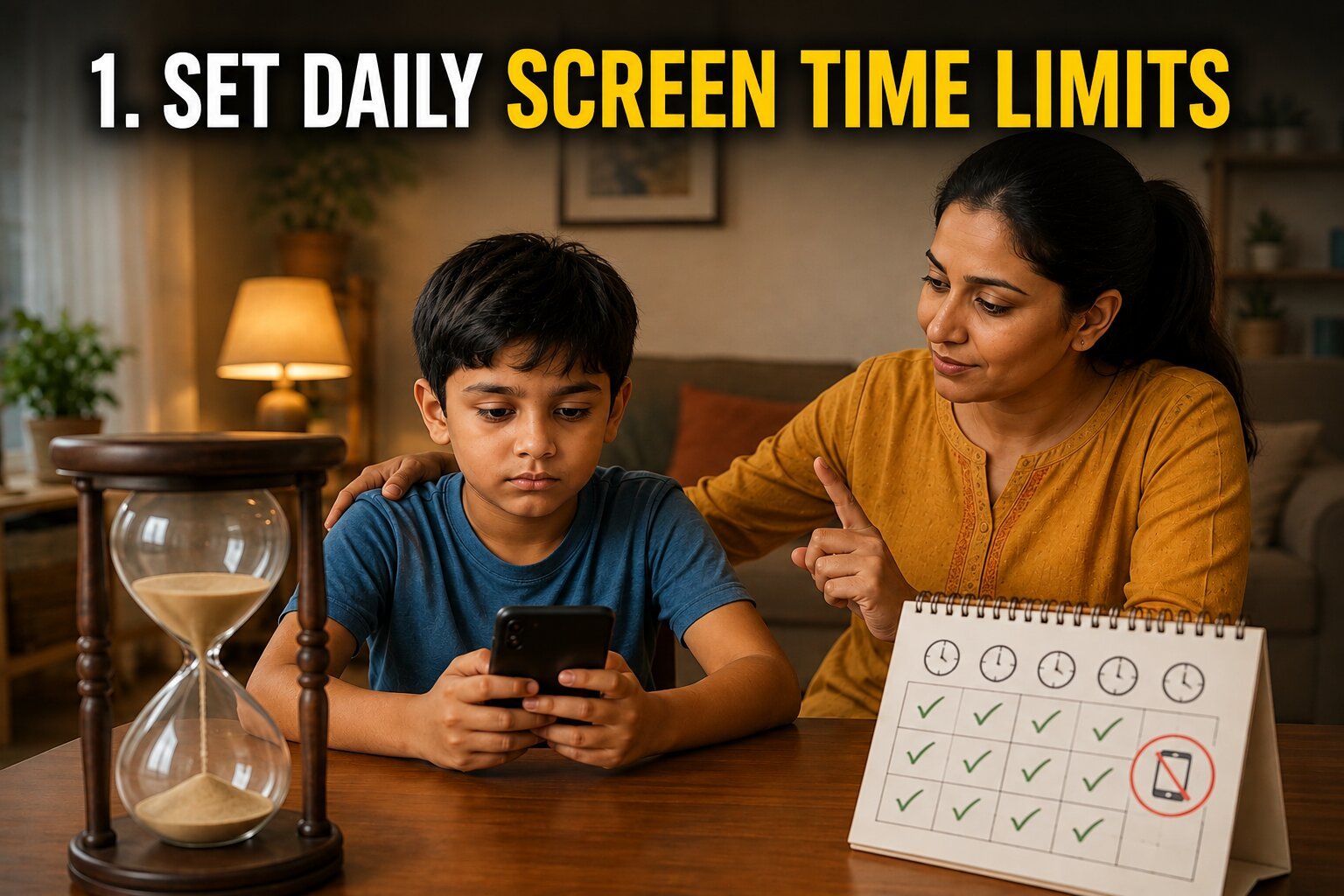
1. Set Daily Screen Time Limits
The first step in reducing mobile addiction is to establish clear daily screen time rules. Decide how much time your child can spend on a mobile phone based on their age and daily routine. Avoid giving unlimited access, and be consistent with the rules. Gradually reducing screen time is usually more effective than banning phones completely.
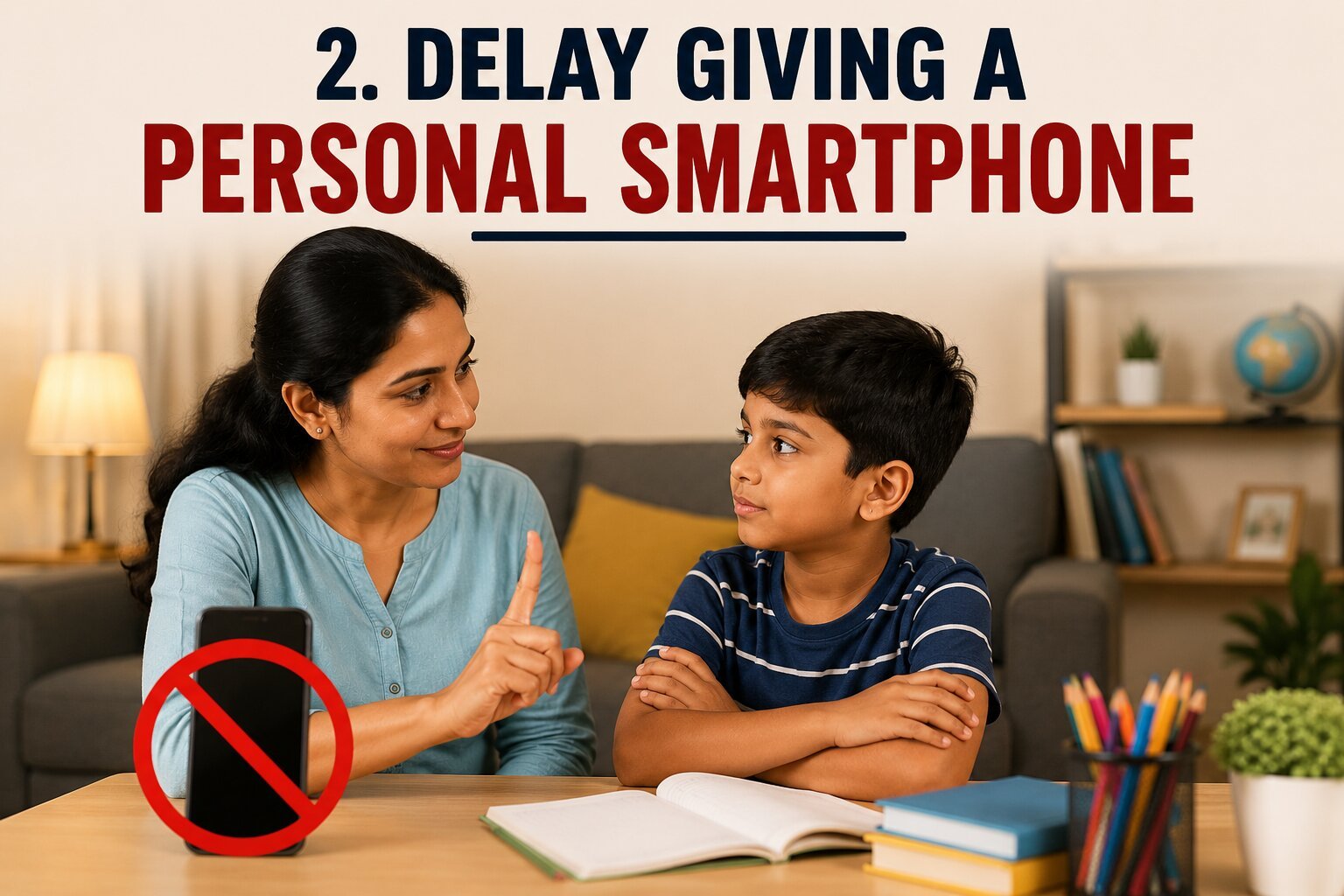
2. Delay Giving a Personal Smartphone
If your child does not really need a personal smartphone, avoid giving one too early. Younger children can use a family device only when necessary and under adult supervision. Delaying smartphone ownership helps children develop better self-control and healthier habits before they have unrestricted access to technology.

3. Encourage Outdoor Activities
Outdoor play is one of the best alternatives to mobile phones. Encourage your child to play sports, ride a bicycle, go for walks, or spend time in parks. Physical activities improve fitness, reduce stress, and naturally decrease the amount of time children spend on screens.
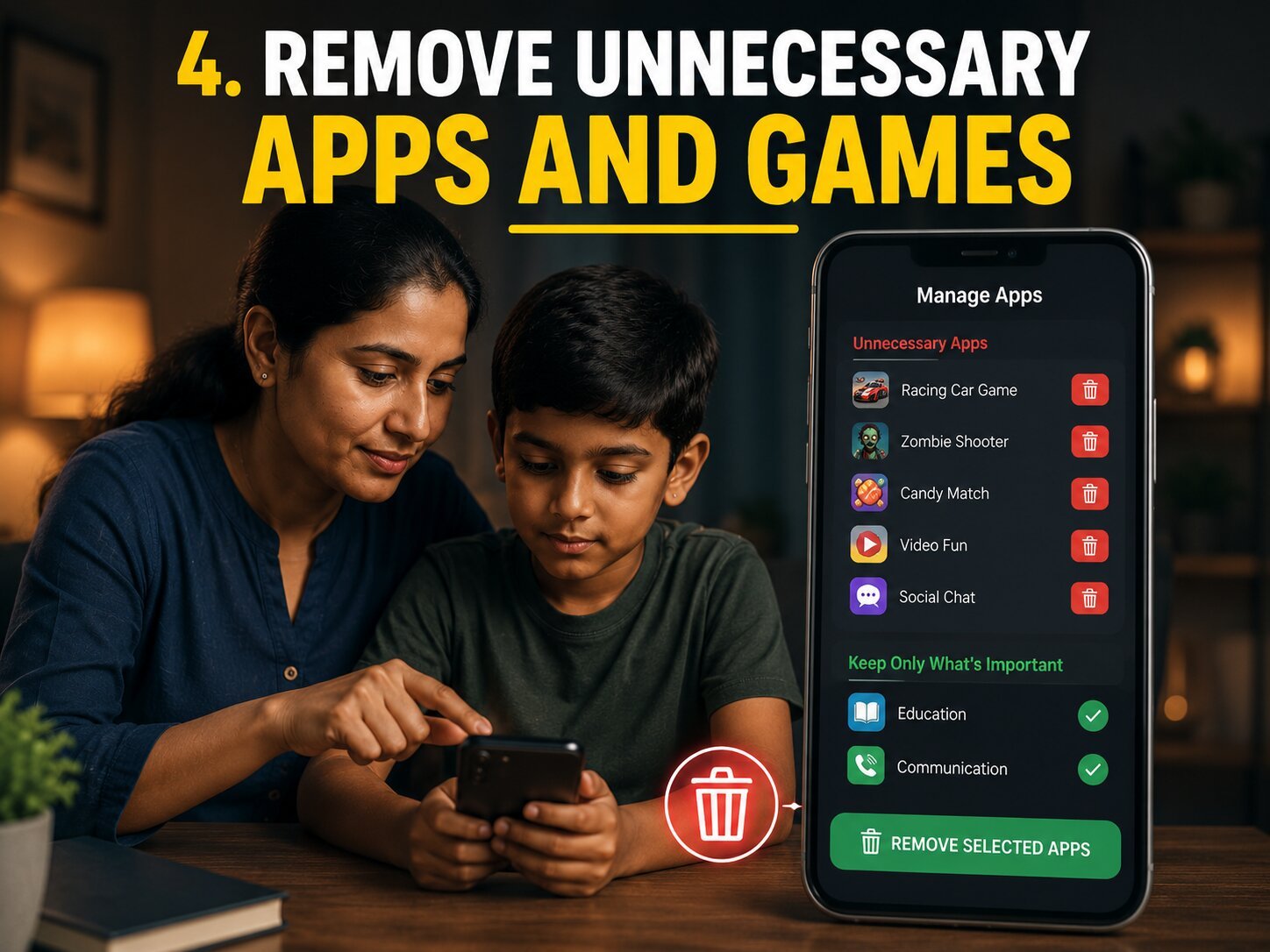
4. Remove Unnecessary Apps and Games
Many games and social media apps are designed to keep users engaged for long periods. Remove apps that are not useful or age-appropriate, and keep only those needed for learning or communication. This reduces unnecessary screen time and distractions.

5. Spend More Quality Time Together
Many children turn to mobile phones because they feel bored or lonely. Spending quality time together as a family can reduce this dependence. Play board games, cook together, tell stories, visit relatives, or enjoy weekend outings. Strong family relationships often reduce the desire for excessive screen use.

6. Encourage Reading Instead of Scrolling
Replace some screen time with books, comics, magazines, or educational stories. Reading improves vocabulary, imagination, creativity, and concentration while giving children’s eyes a break from digital screens.

7. Monitor Online Friends and Content
Know what your child watches, who they interact with online, and which apps they use. Open communication about internet safety helps protect children from harmful content and unhealthy online behaviour.
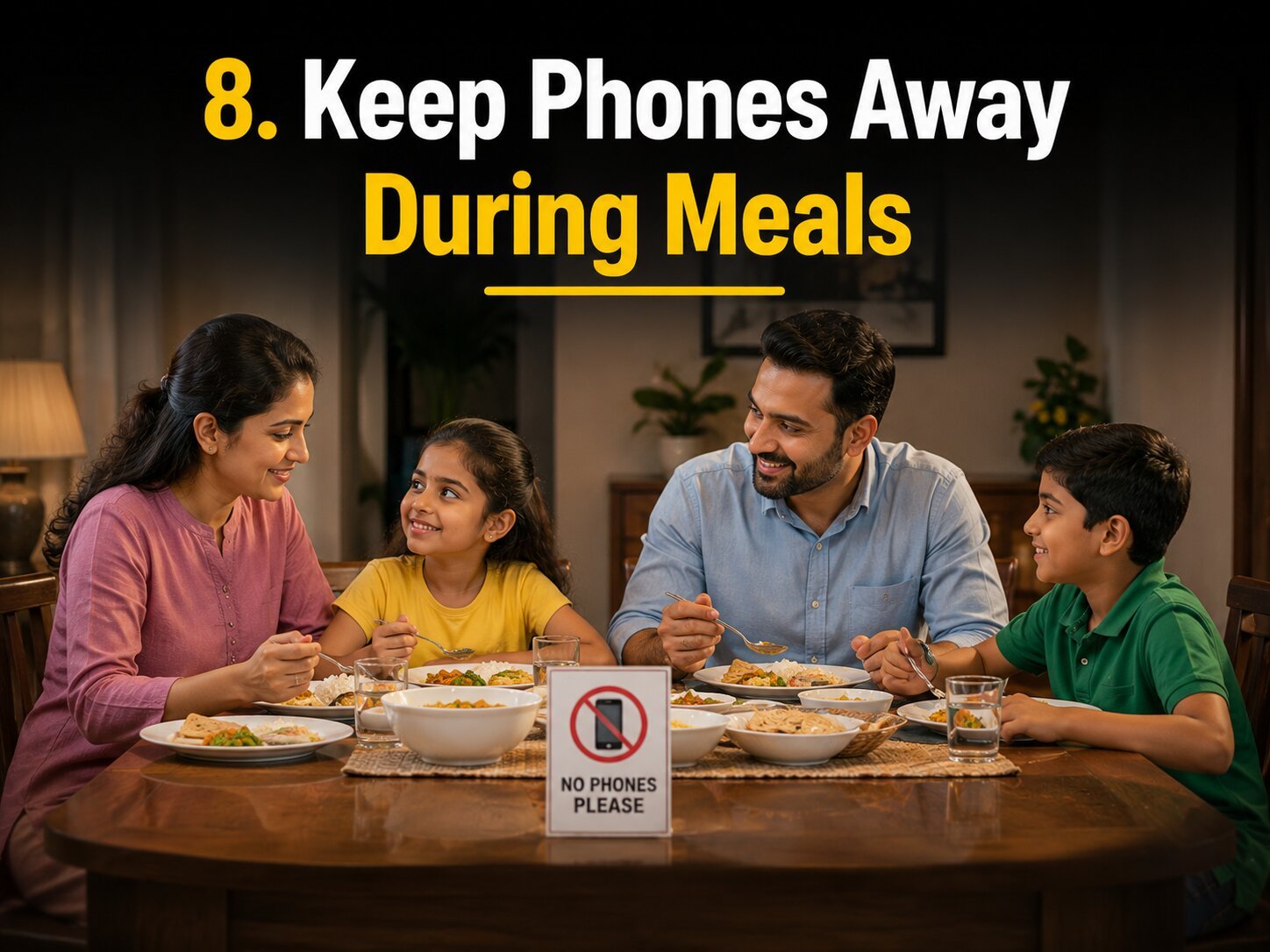
8. Keep Phones Away During Meals
Family mealtimes should be free from mobile phones and other digital devices. Eating together without screens encourages conversation, strengthens family relationships, and helps children develop mindful eating habits.
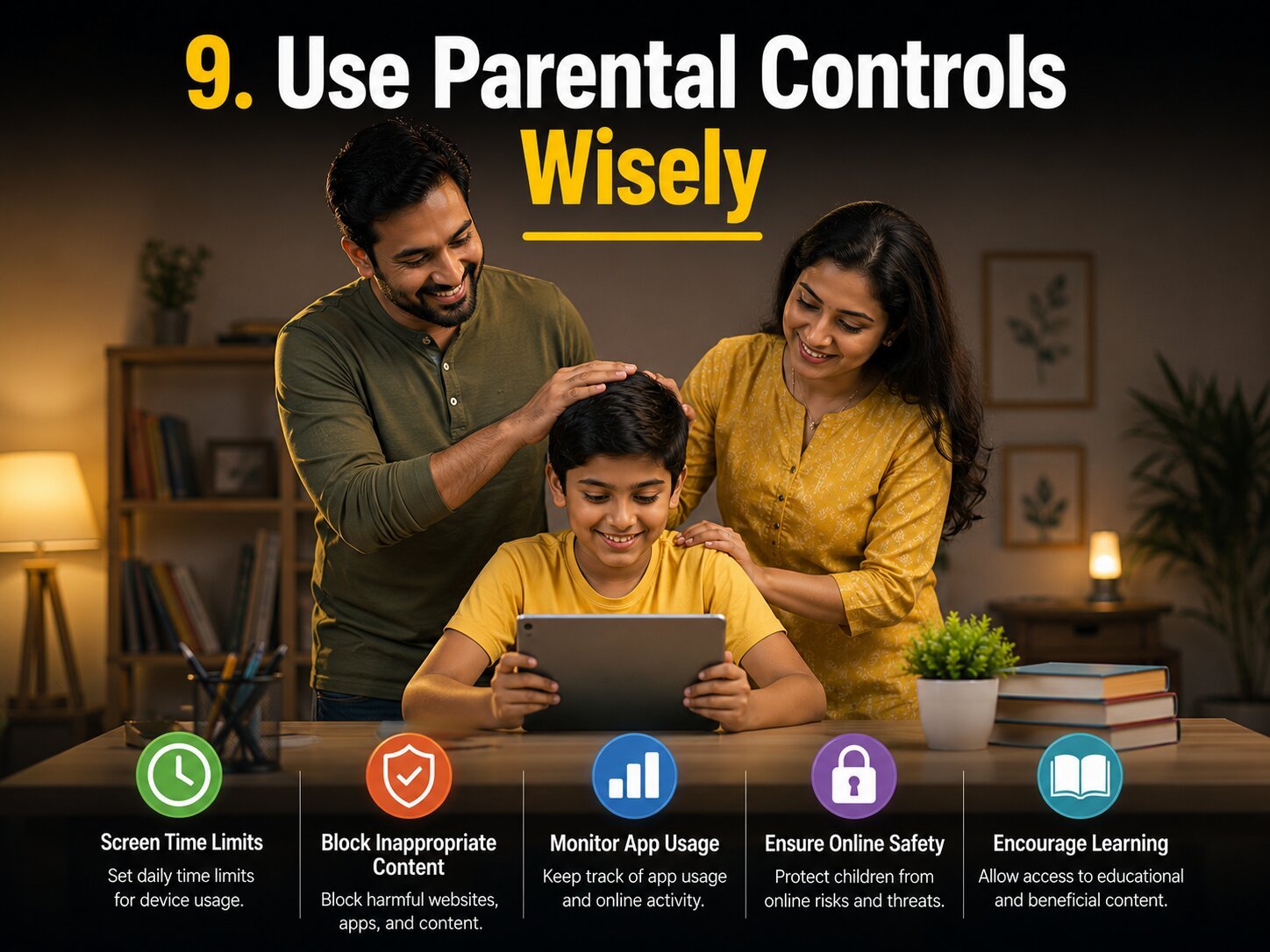
9. Use Parental Controls Wisely
Most smartphones include parental control features that allow parents to set screen time limits, block inappropriate content, and monitor app usage. These tools can help children use technology safely while still allowing them to benefit from educational content.
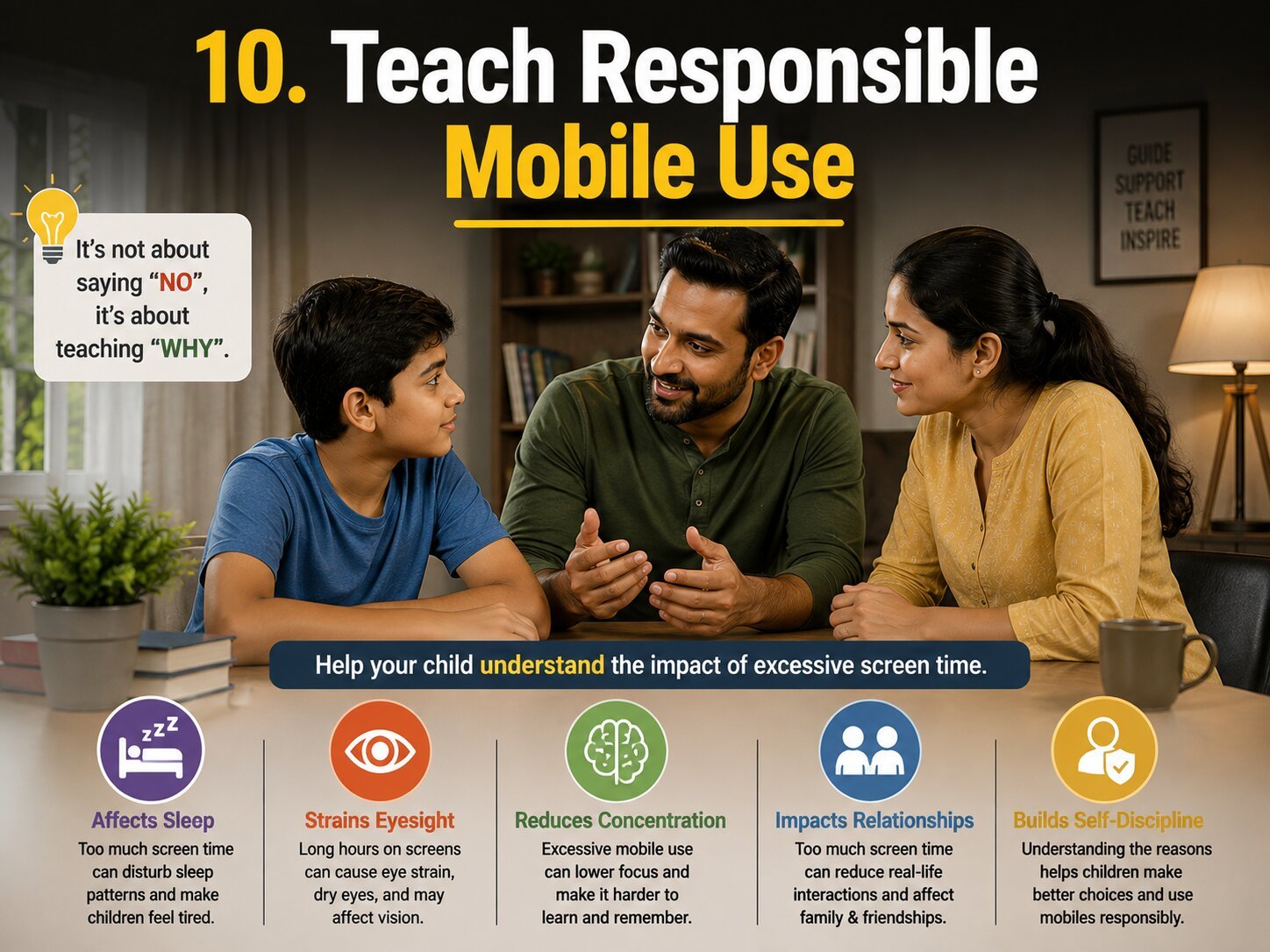
10. Teach Responsible Mobile Use
Rather than simply saying “no,” explain why excessive mobile use can be harmful. Talk about how too much screen time can affect sleep, eyesight, concentration, and relationships. When children understand the reasons behind the rules, they are more likely to use mobile devices responsibly and develop self-discipline.
Conclusion
Mobile phones are useful tools, but they should not replace real-life experiences, physical activity, or family time. By setting clear boundaries, encouraging healthy hobbies, spending quality time together, and leading by example, parents can help children build a balanced relationship with technology. Reducing mobile addiction is a gradual process, but with patience and consistency, children can develop healthier habits that support their overall growth and well-being.
Frequently Asked Questions (FAQs)
1. How can I stop my child from using the mobile phone too much?
Set a simple daily time limit and encourage your child to spend more time playing, reading, studying, or doing other activities.
2. Why does my child always want to use the mobile phone?
Children enjoy games, videos, and other things on mobile phones. If they use them too often, they can easily get used to them and find it difficult to stay away.
3. How much mobile phone time is okay for children?
It depends on the child’s age and daily routine. Parents should make sure that mobile use does not affect sleep, studies, physical activity, or family time.
4. What should I do if my child gets angry when I take the phone away?
Stay calm and do not argue. Set clear rules about when the phone can be used and slowly help your child get used to spending less time on it.
5. What can I do instead of giving my child a mobile phone?
Encourage activities like drawing, reading, outdoor games, music, dancing, crafts, or spending time with family and friends.
 Shreyan
 Amisha26