

Introduction
The world is changing fast, with all tools and systems becoming advanced and automated. In India, many states are adopting AI policies to automate their operations. However, Odisha has made a strong move by becoming the first Indian state to establish a separate Artificial Intelligence Policy.
With the Odisha AI Policy 2025, the state has made a significant step in the field of digital transformation for the state. The Odisha AI Mission aims to use AI in many different sectors, including healthcare, agriculture, education, governance, and energy systems, as well as use it for disaster management.
Why is Artificial Intelligence so significant for the state of Odisha? How is it already changing for the better the lives of people in Odisha? What is the probable future of the state after the successful implementation of all these plans?
Let’s explore.
Why AI Matters for Odisha
Artificial Intelligence is no longer a futuristic concept. For a developing state like Odisha, AI offers an opportunity to solve existing challenges, improve public services, and drive economic growth.
Improving Public Services
AI can help government departments process information faster, make data-driven decisions, and deliver better services to citizens.
Empowering Rural Communities
Since a large part of Odisha’s population depends on agriculture, AI can provide farmers with valuable insights on weather, crop management, and productivity.
Creating Future-Ready Jobs
As AI adoption grows, new career opportunities will emerge in fields such as data science, machine learning, software development, and digital services.
Driving Economic Growth
By investing in AI infrastructure and innovation, Odisha can attract businesses, support startups, and strengthen its position as a technology-driven economy.
How Odisha Is Building an AI Ecosystem?
Odisha’s AI strategy is anchored in the Odisha AI Policy 2025.
https://dowr.odisha.gov.in/sites/default/files/2025-07/Odisha%20AI%20Policy-2025.pdf
It also established the Odisha AI Mission, which serves as the primary body for the planning, operationalization, and coordination of AI initiatives across all departments.
The Mission concentrates on four pillars:
- AI Infrastructure
- Skills Development
- Energy Sustainability
- Ethical and Regulatory Frameworks
This approach ensures the adoption of AI, and also integrates the development of the workforce, sustainability, and governance.
How AI Is Transforming Key Sectors in Odisha?
AI in Healthcare

The Department of Health and Family Welfare of Odisha Government is currently utilizing AI techniques to bridge existing gaps between healthcare services in the region, emphasizing maternal and child healthcare (MCH) and early diagnosis.
Odisha has adopted an approach in which technology, through smart mobile devices, is used by health practitioners at the front lines in rural and tribal communities. The most visible success story currently unfolding is the AI-driven maternal healthcare pilot in the Rayagada district. Historically, this region has faced significant challenges with maternal and infant mortality due to mountainous terrain and limited connectivity. (Innovation Library ET Government)
The Impact: Data is synced to a centralised system that uses machine learning to flag high-risk pregnancies before they become emergencies. This allows for proactive medical intervention rather than reactive, last-minute hospital runs. (APOIO)
The Tech: Frontline workers—ASHAs (Accredited Social Health Activists) and ANMs (Auxiliary Nurse Midwives)—are equipped with AI-powered diagnostic kits.
The Workflow: These kits monitor fetal development and maternal vitals throughout the entire gestation period.
AI in Agriculture
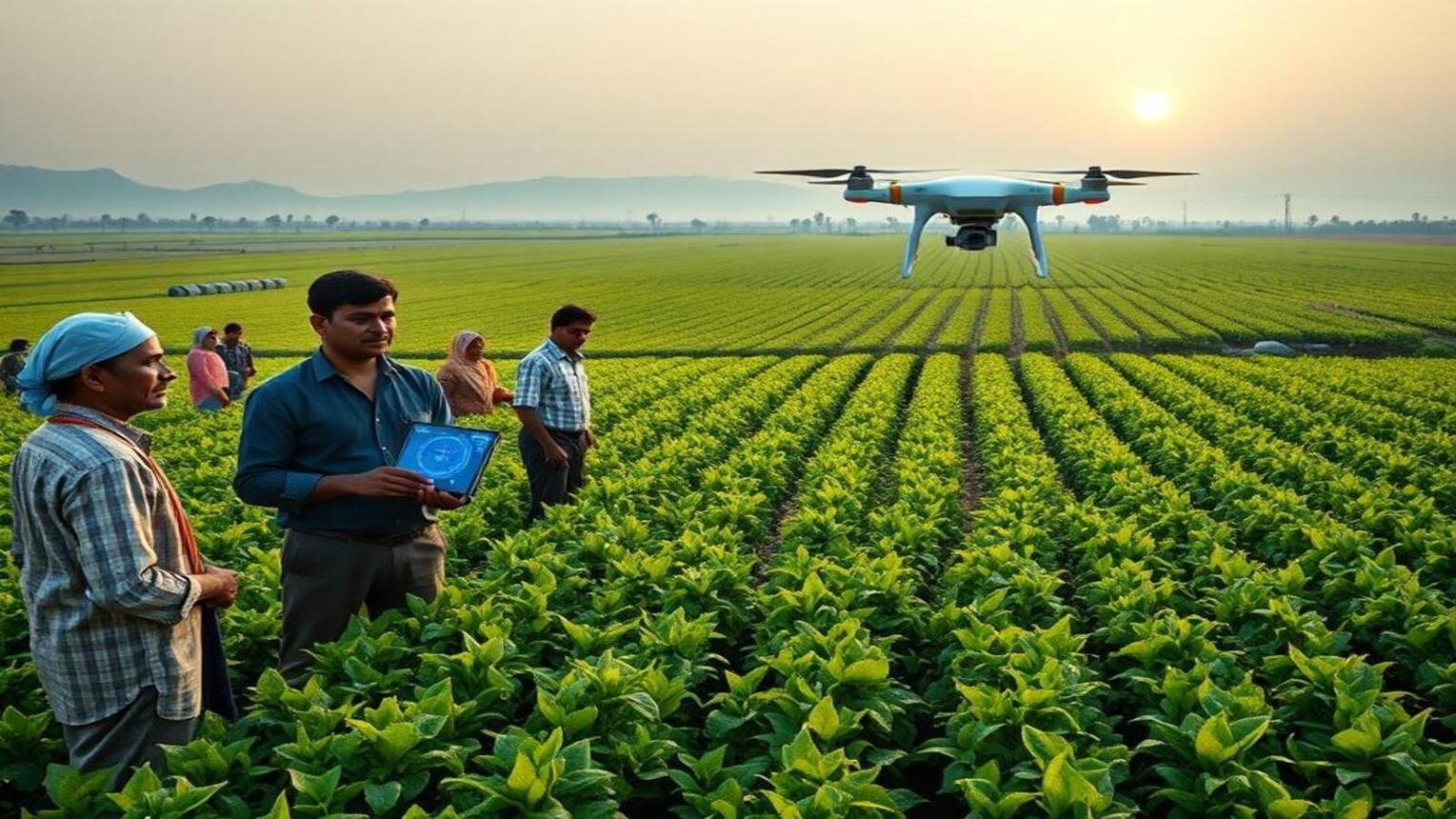
Agriculture has long been the backbone of Odisha’s economy, but AI is helping modernise the sector in powerful ways. Through the Odisha AI Mission, the state is moving toward data-driven and precision-based farming. (Tathya)
Some key AI initiatives include:
AI Chatbots: Platforms like Ama KrushaAI and PaddyMitra provide farmers with crop, weather, and pest-related advisories in Odia and Sambalpuri through WhatsApp. (IRRI)
Dairy Management: AI-powered systems help connect farmers with certified technicians, improving livestock management and productivity. (Samagra)
Sapling Health Monitoring: The AI based mobile applications process the geotagged photos of plant saplings and assign the health to real time and farmers take action on the plants on time against plant diseases. (IEEE)
To ensure these solutions are relevant to local conditions, the government is collaborating with institutions such as IIT Bhubaneswar and OUAT (Odisha University of Agriculture and Technology) to train these AI models on local soil conditions and crop varieties.
As Deputy Chief Minister Kanak Vardhan Singhdeo recently noted, the goal is simple: technology is not a luxury, but a fundamental tool for economic mobility. By giving farmers the same insights that large-scale global agribusinesses use, Odisha is leveling the playing field for the smallholder farmer.
“When a farmer can look at their phone and know exactly how to protect their crop from a coming storm, or how to optimize their soil health for the next harvest, they aren’t just farming—they’re thriving.”
AI in Education

As AI becomes increasingly important in the modern workforce, education systems across India are adapting to prepare students for a technology-driven future. Following the National Education Policy (NEP) 2020, AI literacy and computational thinking are gradually becoming part of mainstream education.
Odisha has emerged as an active participant in this transformation through several initiatives:
School-Level Integration: Many schools in Bhubaneswar have introduced AI modules that focus on problem-solving, creativity, and the ethical use of AI from an early age. (Odishanewstimes)
Women-focused empowerment: Odisha government, in collaboration with Edunet Foundation and Microsoft, kick-started a special program for higher education students to provide thousands of girls with training in niche technology areas like Generative AI, Data Science, Machine Learning, and Cybersecurity to improve the gender ratio in STEM courses. (uniindia.com, indiaverve.com)
Industry Partnerships: By partnering with organisations such as Reliance Jio, the government is enabling large-scale AI training. Using platforms like “Jio AI Classroom”, more than thousands of students and teachers in a few hundreds of schools are being educated for free on AI tools, training from experts and certifications. (Odisharay.com)
University-Level Advancement: Odisha Universities have started offering dedicated AI courses through the initiative “AI For All” to make sure youth are technically well-qualified in the digital world economy.
https://www.youtube.com/watch?v=E4pav_wFkZw
Through this blend of systemic policy changes and grassroots-level training, coupled with industry-driven skill development programs, Odisha is actively working to ensure that its students whether from an urban hub or from a rural district, can adapt and thrive in an AI-driven environment.
AI in Governance
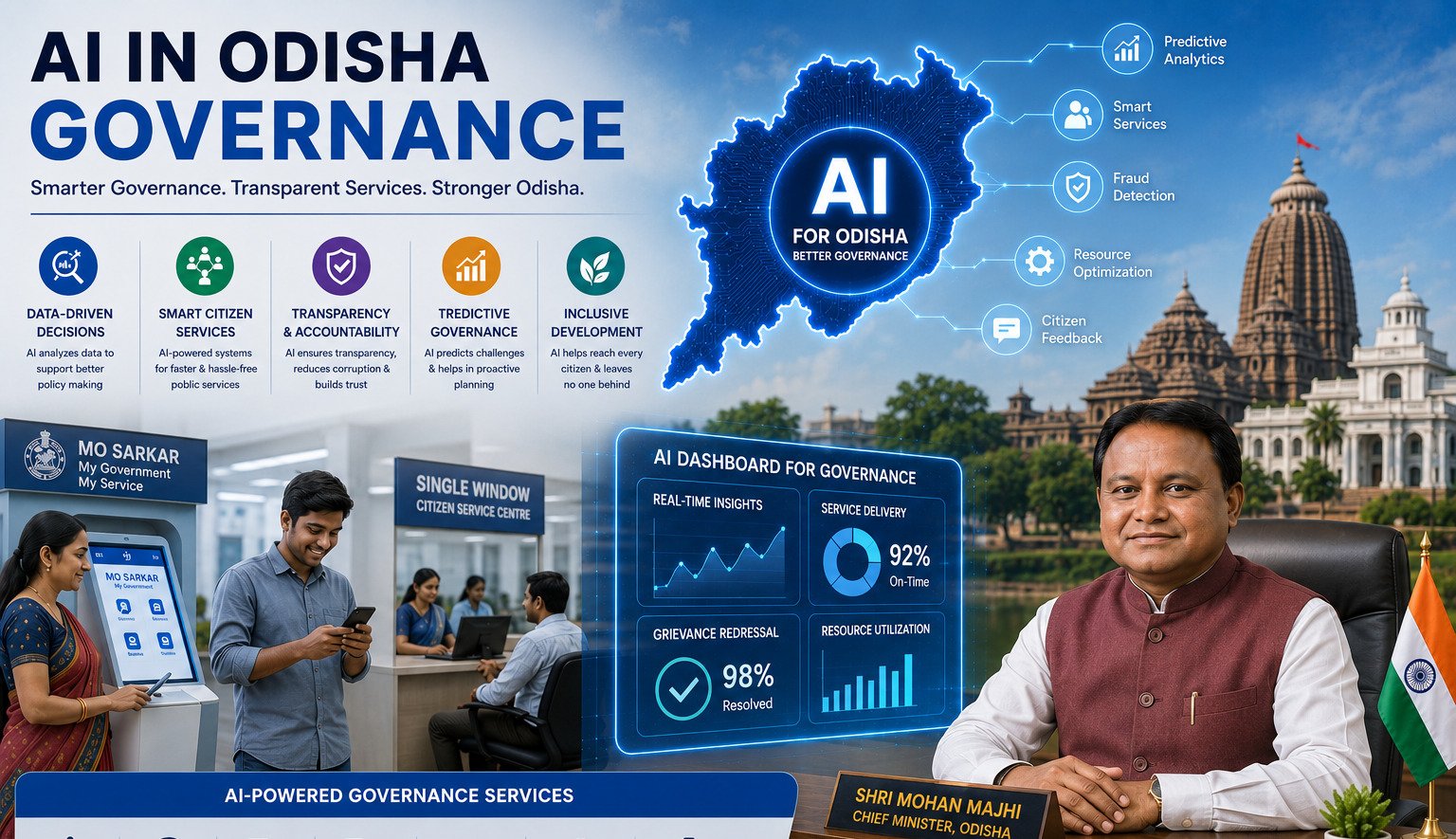
The Government of Odisha has taken an innovative and pragmatic execution driven approach towards AI adoption in Governance in the State to facilitate scaling from discrete pilots to large-scale population based deployment. Odisha was the first state to have launched the “AI policy” in 2025 with an allocated budget of Rs 885 crore for the year 2025-27. (egov.eletsonline.com)
Some key AI applications in governance include:
Intelligent Document Processing: The eDespatch portal now uses Robotic Process Automation (RPA) and Optical Character Recognition (OCR). These tools automatically read, sort and route official documents, drastically cutting down manual errors and time taken to process government correspondence.
Inclusive Citizen Engagement: Odia-first and voice-enabled, one of the major pillars of the state’s approach. The government is also focusing on local language and low-literacy-friendly interfaces so that AI tools like feedback collection mechanisms for government schemes are available to all citizens. (Indiatimes)
Land and Resource Management: Bhubaneswar Land Use Intelligence System (BLUIS) and similar systems use high-resolution satellite imagery and AI to monitor changes in government land. Further, platforms such as BHU-ARJAN integrate with land records to automate plot valuations and ease grievance management for land acquisition. (Informatics(An eGovernance Publication from National Informatics Centre)
Enforcement and Transparency: AI-powered systems are used to detect non-compliant vehicles by cross-referencing data from toll plazas and the Vahan database, thus automating the issuance of e-Challans. Also face recognition technology is used in applications like E-Pravesh which is used to verify and allow visitors inside government buildings.
Financial Accountability: The state is integrating AI into its financial auditing mechanisms to automatically classify documents, extract relevant information, and perform complex analyses to improve fiscal management.
Through these initiatives, Odisha aims to position itself as a “governance laboratory,” creating replicable models that use AI to bridge the gap between complex digital infrastructure and the everyday needs of its citizens.
AI in Odisha Disaster Management

Odisha has long been recognised for its strong disaster management systems, especially in dealing with cyclones and floods. With the Odisha AI Policy 2025, the state is now looking to strengthen this expertise through Artificial Intelligence.
Under the Odisha AI Policy 2025, disaster management is one of the priority sectors for AI adoption. The state plans to use predictive analytics, geospatial mapping, and AI-based simulations to assess risks, identify vulnerable areas, and improve early warning systems.
AI can also support evacuation planning, shelter management, infrastructure monitoring, and faster emergency response by analysing satellite images, weather data, and environmental patterns in real time.
For a state as disaster-prone as Odisha, this could make disaster preparedness more accurate, proactive, and resilient in the years ahead.
What Does the Future of AI in Odisha Look Like?
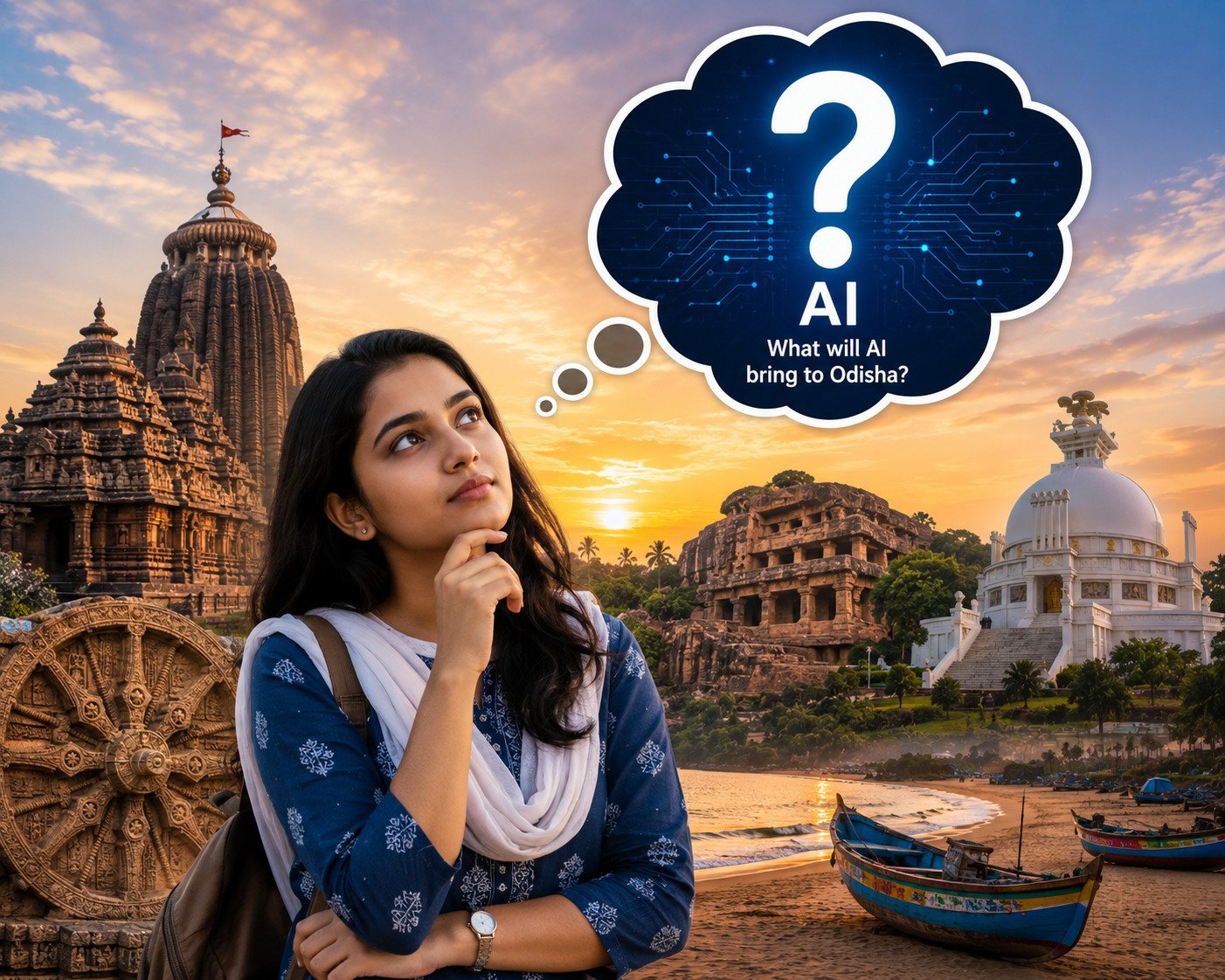
Odisha has long been known for its agriculture- and mining-based economy. However, as Artificial Intelligence (AI) reshapes industries worldwide, the state is taking important steps toward becoming a technology-driven economy.
Through the Odisha AI Policy 2025, the government is integrating AI into key sectors such as healthcare, education, agriculture, disaster management, and governance. While these initiatives are still in their early stages, they reflect Odisha’s ambition to emerge as a major technology hub in India.
Bhubaneswar’s Info Valley is at the center of this transformation, offering strong digital infrastructure, reliable connectivity, and sustainable energy resources. These advantages are crucial for supporting AI technologies, which require significant computing power and energy.
Odisha has also partnered with Sarvam AI to develop Odia-language AI solutions and strengthen its AI ecosystem. Alongside growing investments in digital infrastructure and data centers, these efforts are helping build a foundation for future innovation.
While it may be too early to compare Odisha with Silicon Valley, the state’s proactive approach to AI suggests that it could become one of India’s leading technology and innovation destinations in the years ahead.
Conclusion
Odisha’s AI journey is no longer a vision for the future—it is already underway. Through the Odisha AI Policy 2025, the Odisha AI Mission, sector-wide deployments, and strategic partnerships, the state has positioned itself as one of India’s most ambitious AI innovators.
The real success of these initiatives will depend on how effectively AI improves the lives of citizens, supports businesses, empowers farmers, strengthens governance, and creates opportunities for future generations.
If implemented responsibly and inclusively, AI could become one of the most important drivers of Odisha’s development over the next decade.
Frequently Asked Questions
What is the Odisha AI Policy 2025?
It is a statewide policy that aims to integrate Artificial Intelligence across sectors such as healthcare, education, agriculture, governance, and disaster management.
Why is Odisha’s AI Policy significant?
Odisha became the first Indian state to adopt a comprehensive statewide AI policy.
How is AI helping farmers in Odisha?
AI is being used for crop surveys, weather forecasting, precision agriculture, and rice fallow management.
Is Odisha developing AI in the Odia language?
Yes. The state is partnering with organizations to create AI solutions that support Odia-language interactions and applications.
What is the Odisha AI Mission?
The Odisha AI Mission is the central institutional framework responsible for implementing and coordinating AI initiatives across the state.
 Shreyan
 Kavya
Kavya