
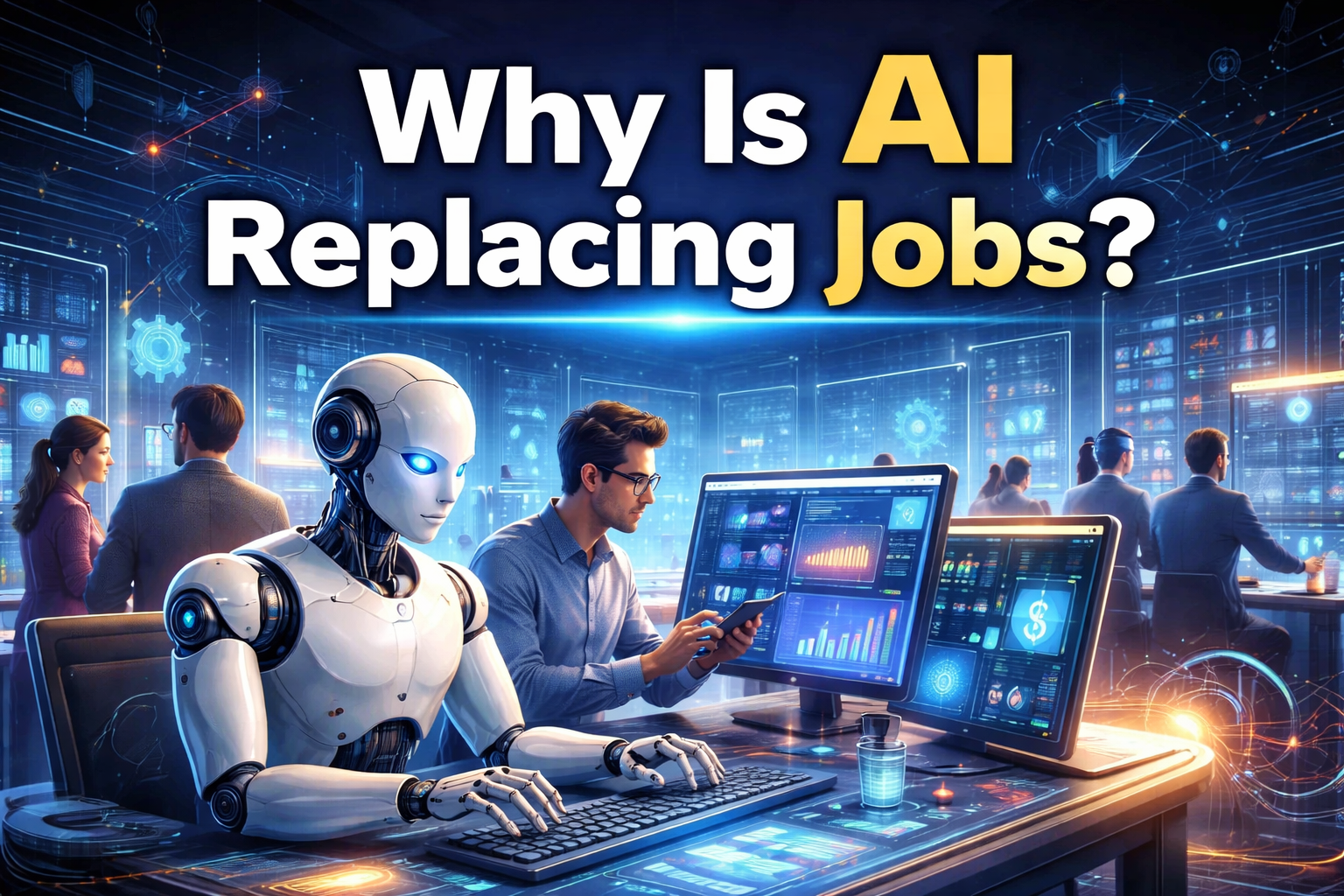
Artificial Intelligence (AI) is no longer a futuristic concept—it’s a present-day force reshaping how work gets done across industries. From automating routine tasks to making complex decisions faster than humans, AI is transforming the workplace at an unprecedented pace. As businesses strive for greater efficiency, accuracy, and cost-effectiveness, many are turning to AI-driven systems to replace roles that were once performed by people.
But the question isn’t just whether AI is replacing jobs—it’s why. The shift is driven by a combination of technological advancement, economic pressure, and evolving business needs. Tasks that are repetitive, predictable, or data-heavy are especially vulnerable, as AI can perform them faster, cheaper, and often with fewer errors. At the same time, companies are under constant pressure to stay competitive, pushing them to adopt automation wherever possible.
However, this transformation is not purely about job loss. It also signals a broader change in the nature of work itself. While some roles are disappearing, new ones are emerging—often requiring different skills, adaptability, and a willingness to work alongside intelligent machines. Understanding why AI is replacing jobs is the first step toward navigating this shift and preparing for the future of work.

The Silent Revolution: Is Your Desk Next?
Imagine walking into your office on a Monday morning and finding that half of your team’s daily reports have already been analyzed, summarized, and sent to stakeholders—all before you even finished your first cup of coffee. This isn’t science fiction; it’s the standard operating procedure in 2026. While the efficiency is breathtaking, it brings with it a chilling question that keeps millions of professionals awake at night: “Why AI is replacing jobs, and will it eventually replace mine?”
What is Artificial Intelligence (AI) in Simple Terms?
At its core, Artificial Intelligence (AI) is not a sentient robot planning world domination. Instead, think of it as a highly sophisticated digital apprentice.
Traditional software follows strict instructions: “If X happens, do Y.” AI, however, is designed to learn from patterns. By feeding it massive amounts of data, we “train” it to recognize speech, solve complex problems, and even generate creative content. Imagine a personal assistant that has read every book in the world, remembers every customer interaction, and can perform million-fold calculations in the blink of an eye.
In simple terms, AI is technology that mimics human cognitive functions—like learning and problem-solving—to perform tasks that previously required human intelligence.
The Engine of Change:Why AI is Replacing Jobs
The primary reason why AI is replacing jobs isn’t because machines “hate” humans, but because they are exceptionally good at solving the “Three Cs”: Cost, Consistency, and Capability.
1. The Cost Reduction Factor
For any business, labor is often the largest expense. Unlike human employees, AI systems don’t require health insurance, paid leaves, or retirement benefits. Once the initial infrastructure is built, the cost of running an AI model is a fraction of a human salary. Businesses are incentivized to automate tasks to maintain competitive pricing and maximize profit margins.
2. Hyper-Efficiency and Scalability
A human worker can focus on one complex task at a time. AI can handle thousands. Whether it’s processing insurance claims or analyzing legal documents, AI works 24/7 without fatigue. This level of efficiency allows companies to scale their operations exponentially without a corresponding increase in headcount.
3. Precision and Accuracy
To err is human, but in industries like data entry, accounting, or quality control, errors are expensive. AI thrives in environments where precision is paramount. By removing human “fatigue-induced” errors, companies ensure a higher standard of output, further accelerating the shift toward automation.
4. Advanced Pattern Recognition
AI can see things we can’t. In marketing and finance, AI algorithms can analyze trillions of data points to predict market shifts or consumer behavior with startling accuracy. Tasks that once required a team of analysts can now be handled by a single algorithm, leading to a leaner, more data-driven workforce.
Industry Spotlight: Real-World Examples of the Shift
To truly understand the impact of AI on employment, we need to look at how specific sectors are being disrupted.
Customer Service: The Frontline of Automation
In 2026, the first person you “speak” to when you have a problem is almost certainly an AI agent. Modern Large Language Models (LLMs) can handle nuances, sarcasm, and complex emotional tones.
.The Shift: Companies like Klarna and H&M have already reported that AI handles the workload of hundreds of agents, resulting in faster resolution times and millions in savings.
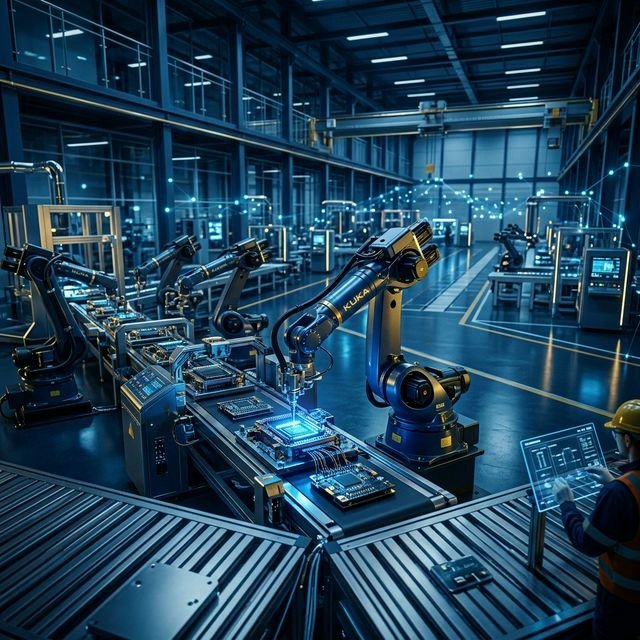
Manufacturing: From Workers to Overseers
The “smart factory” is the new gold standard. Collaborative robots (cobots) now work alongside humans, but the humans are no longer the ones tightening the bolts.
.The Shift: AI-driven robots handle assembly, sorting, and quality inspection with sub-millimeter precision. The human role has shifted from “doing” to “supervising” the machines.
Healthcare: The Digital Diagnostician
While surgeons aren’t being replaced yet, radiologists and administrative staff are seeing a massive shift.
.The Shift: AI can analyze MRI scans and X-rays faster and more accurately than the human eye in many cases. Meanwhile, AI-driven billing and scheduling systems have automated the “back-office” of hospitals entirely.
Marketing and Content Creation:The Creative Disruption
Copywriters, graphic designers, and social media managers are currently in the eye of the storm.
.The Shift: Tools like Midjourney and ChatGPT-5 can generate marketing campaigns, high-end visuals, and SEO-optimized blogs in seconds. This has led to a major “hollowing out” of entry-level creative roles.
The Numbers Speak: Latest Statistics and Trends (2025-2026)
Recent data from the World Economic Forum (WEF) and the Stanford AI Index 2025 provides a sobering yet nuanced look at the future of jobs with AI:
.Net Gain vs. Loss: While 92 million jobs are expected to be displaced by 2030, an estimated 170 million new roles will be created. However, the transition period is where the friction lies.
.Global Exposure: Approximately 40% of all jobs globally are exposed to AI, but in advanced economies, this number jumps to 60%. Hiring Trends: Interestingly, India has seen the highest year-over-year growth in AI-related hiring (33.4%), signaling a massive shift towards a skill-based economy.
.Hiring Trends: Interestingly, India has seen the highest year-over-year growth in AI-related hiring (33.4%), signaling a massive shift towards a skill-based economy.
.Salary Premiums: Workers with AI skills are now commanding 13–17% higher salaries compared to their non-AI-proficient peers.
At the Crossroads: Which Jobs are Most at Risk?
If your job involves routine, repetitive, or data-heavy tasks, it is highly susceptible to AI replacement. High-risk roles include:
.Data Entry and Administrative Clerks: AI is perfect for structured data. Customer Support Agents: Rule-based inquiries are now fully automated.
.Entry-Level Accountants/Auditors: AI handles ledger reconciliation effortlessly.
.Basic Content Writing and Translation: Generic content is now the domain of GenAI.
The Human Advantage: Which Jobs are Safe?
AI struggles with what researchers call “soft skills”—empathy, ethics, and high-level strategy. “Safe” jobs often fall into these categories:
.Healthcare Professionals (Doctors/Nurses): Requiring bedside manner and complex physical movements.
.Skilled Trades (Electricians/Plumbers): Dexterity in unpredictable physical environments is hard to robotize.
.Creative Visionaries: AI can iterate, but humans still drive the “soul” of a project.
.Leadership and Crisis Management: Navigating human politics and ethical dilemmas requires a human touch.
The Silver Lining: Jobs AI will Create in the Future
The phrase “future of jobs with AI” isn’t just about what we lose; it’s about what we gain. A whole new category of “New-Collar” roles is emerging:
.AI Ethicists: Ensuring that algorithms don’t develop bias or violate privacy.
.Prompt Engineers: Specialists who can “talk” to AI to get the best results.
.AI Solution Security Analysts: Protecting AI models from digital “poisoning.”
.Human-AI Interaction Designers: Crafting the user experience for our digital coworkers.
.Data Curators: Ensuring the “fuel” for AI (data) is clean, ethical, and accurate.
India’s AI Revolution: The Unique Impact
India is in a unique position. As the “back office of the world,” the impact of AI on employment in India is double-edged.
On one hand, the traditional IT service model—which relied on millions of entry-level engineers performing routine coding and testing—is under threat. On the other hand, India is home to some of the world’s most talented developers.
The Indian government’s “AI for All” initiative and the sudden surge in AI skill concentration (2.5x the global average) suggest that India might skip the “automation struggle” and jump straight into being a global AI powerhouse. However, this requires a massive re-skilling of the current 5-million-strong IT workforce.
Strategic Adaptation: How to Future-Proof Your Career
The goal isn’t to beat the AI; it’s to use it. Here are actionable tips to ensure you remain indispensable:

1. Adopt an “AI-First” Mindset: Instead of avoiding AI tools, become the person in your office who knows how to use them best.
2.Focus on “Human-Only” Skills: Double down on negotiation, empathy, public speaking, and creative strategy.
3.Continuous Upskilling: The half-life of a technical skill is now less than five years. Use platforms like Coursera or LinkedIn Learning to stay current on AI trends.
4.Learn Data Literacy: You don’t need to be a coder, but you must understand how data works.
5.Cultivate Adaptability: The most valuable trait in 2026 is the ability to unlearn and relearn quickly.
The Great Debate: Pros and Cons of AI Replacing Jobs
| Pros | Cons |
| Increased Productivity: Higher output at lower costs. | Short-term Displacement: Loss of livelihoods for thousands. |
| New Career Paths: Emergence of jobs we haven’t even named yet. | Growing Inequality: Disparity between AI-skilled and unskilled workers. |
| Elimination of Mundanity: Humans focus on more fulfilling, creative work. | Ethical & Bias Risks: AI can inherit human prejudices if not monitored. |
| Economic Growth: AI could add trillions to the global GDP. | Psychological Impact: Automation anxiety among the workforce. |
Conclusion:
An Optimistic Outlook The history of progress is a history of automation. From the steam engine to the internet, every leap has sparked fear of mass unemployment, yet every leap has ultimately led to more prosperity and higher standards of living.
Yes, AI and jobs are currently in a state of friction. Roles are being redefined, and yes, some are disappearing. But as we step into this new era, we aren’t being replaced; we are being upgraded. By offloading the boring, the repetitive, and the mundane to our silicon assistants, we are finally free to do what humans do best: innovate, empathize, and create.
The future belongs not to the AI, and not to the worker who fears it—but to the professional who learns to master it.
Frequently Asked Questions (FAQs)
1. Why is AI replacing jobs?
AI is replacing jobs due to its ability to automate repetitive tasks, reduce costs, improve efficiency, and deliver higher accuracy compared to human workers.
2. Which jobs are most affected by AI?
Jobs involving repetitive and predictable tasks such as data entry, telemarketing, customer support, and manufacturing roles are most affected by AI.
3. Will AI create new jobs?
Yes, AI is expected to create new roles such as AI engineers, data scientists, machine learning specialists, and AI ethics experts.
4. Is AI a threat to employment?
AI is both a challenge and an opportunity. While it replaces certain jobs, it also creates new career opportunities and transforms existing roles.
5. How can I protect my job from AI?
You can stay relevant by upskilling, learning AI tools, improving creativity, and focusing on skills like communication and problem-solving.
 Amisha26