
Introduction
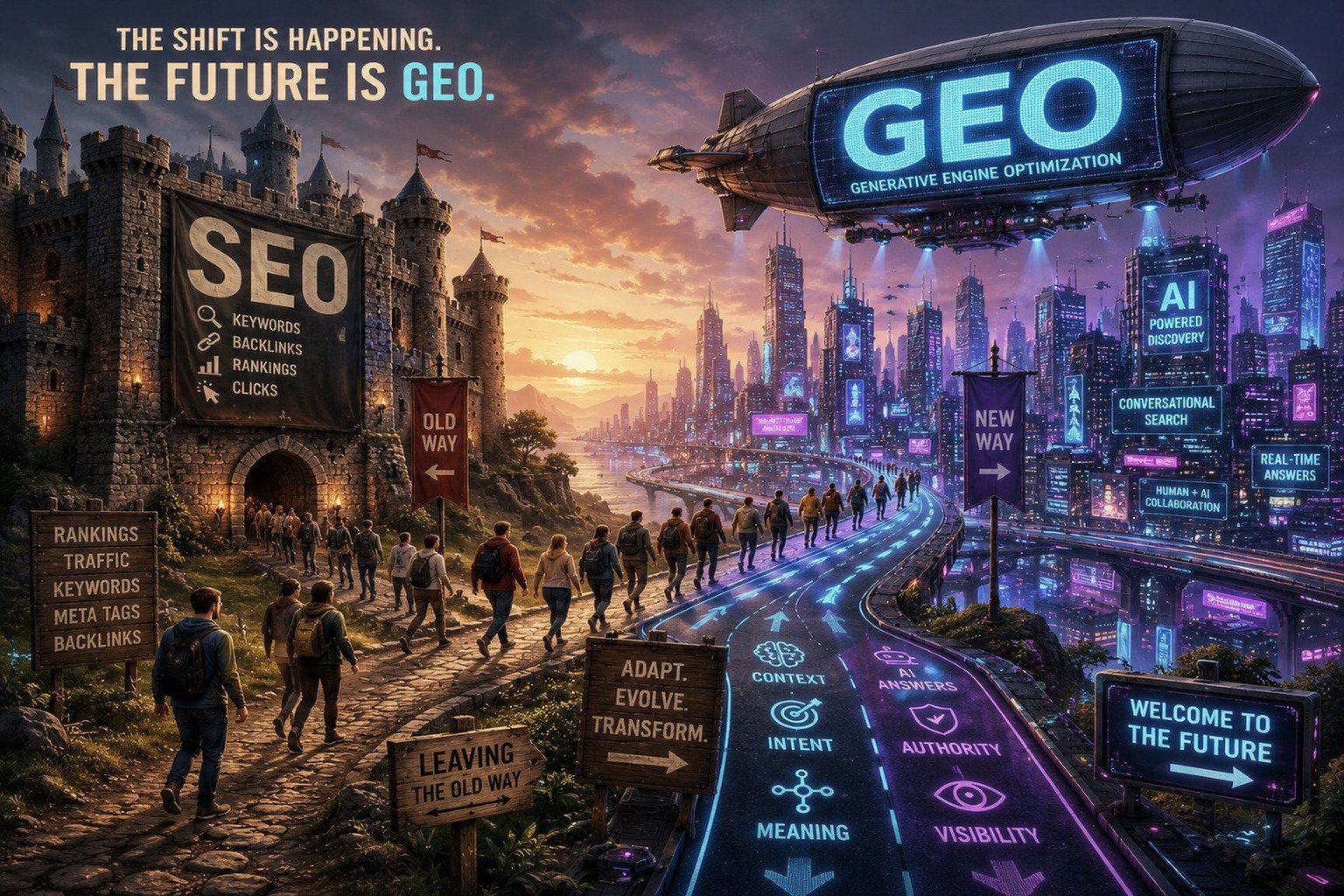
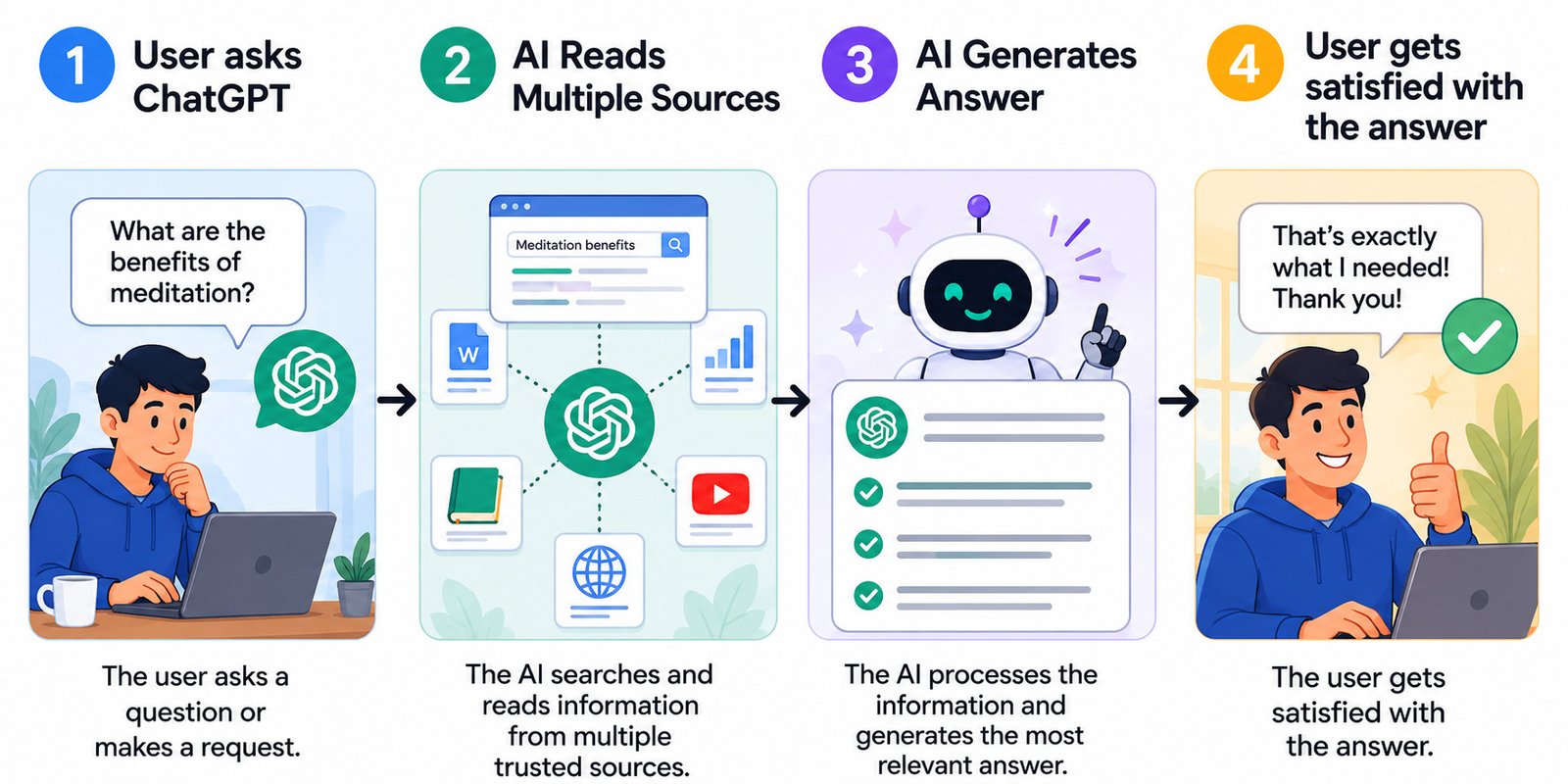
When was the last time you opened Google or any other search engine, searched for something, scrolled through pages of blue links, and clicked on a website? Chances are, you didn’t. Instead, you probably asked ChatGPT, Perplexity, or Google’s AI Overview for a direct answer—and moved on.
If you took the second option, you are not alone. And as it happens, you’ve also been quietly disassembling probably the most profitable industry to date over the last two decades…and that would be Search Engine Optimisation (SEO) services.
For over 20 years, SEO has been the backbone of digital marketing. Businesses, bloggers, and brands spent billions of dollars optimising their content so that Google’s algorithm would rank them at the top of its results pages. The goal was simple: appear first, get the click, earn the visitor.
But today, a new force has arrived — Generative Engine Optimization (GEO).
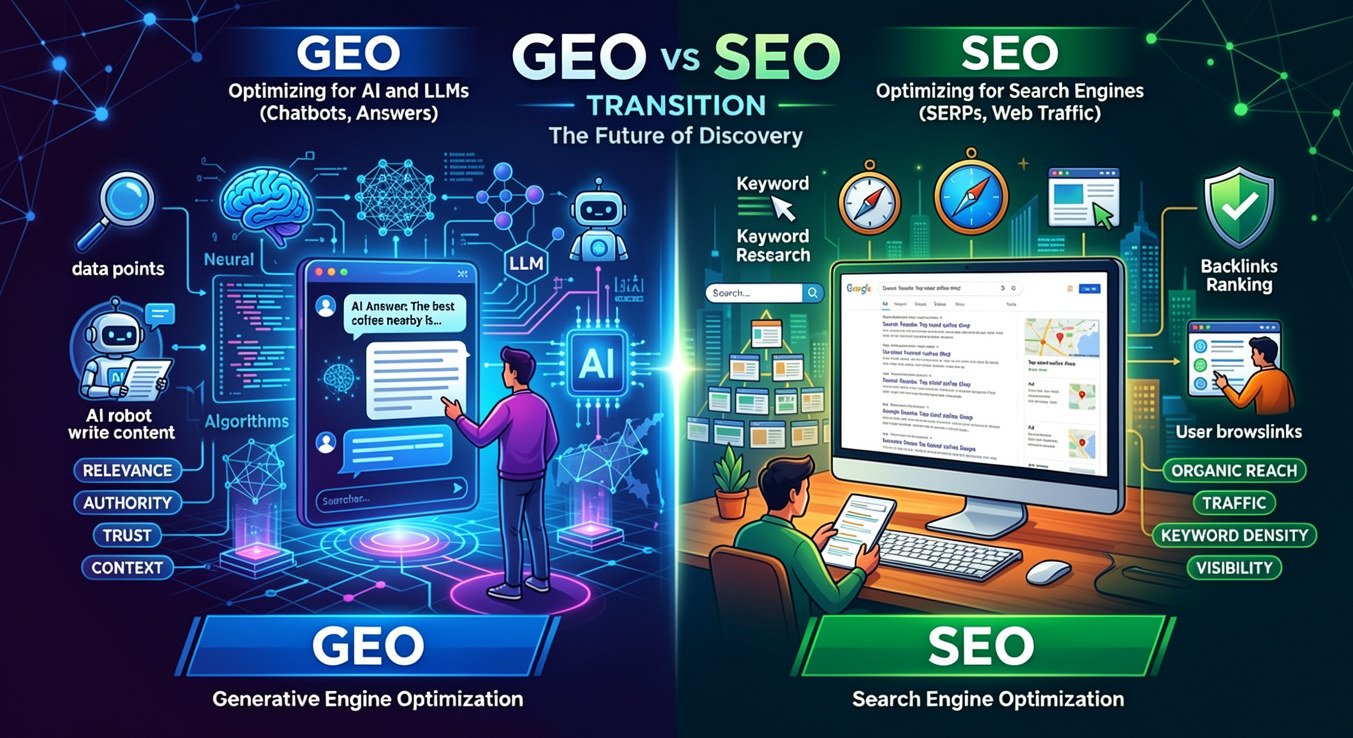
Unlike SEO, which focuses on ranking in search results, GEO ensures that when an AI system generates a response to a user’s query, it draws from your brand, expertise, and content as the source material for its answers.
So why is GEO gradually taking over? How is it different from SEO? And what does this shift mean for the future of how we discover information online?
Let’s explore.
Why GEO Is Rising: The Numbers Tell the Story
The transition from traditional search to AI-integrated search is not merely a future trend; it is already accelerating at an incredible pace.
Gartner, a leading global research and advisory firm, projects that 25% of all searches will move to generative AI engines by 2028. Meanwhile, ChatGPT has surpassed 400 million active weekly users and 5.2 billion monthly visits, and Perplexity AI is growing rapidly, now recording over 500 million queries annually.
According to Gartner, 35% of Gen Z now use AI tools as their first stop for research questions, compared to 19% for millennials and just 7% for Gen X.
58% of users have already replaced traditional search engines with AI-driven tools for products and services related search results. 63% of websites now report traffic originating from AI-based search engines.
The message is clear: if your brand is not appearing in AI-generated answers, for a growing number of users, it simply does not exist.
Why Is This Happening?
The answer lies in human convenience. When AI tools give you a precise, well-structured answer in seconds without forcing you to click through five different websites, it saves time and effort. People naturally prefer the most time-efficient path, and AI-powered search offers exactly that.
Since the launch of AI search features, traditional website clicks for top search results have dropped by 18%. For example, one retailer saw their organic traffic from top rankings fall by 35%, yet their brand mentions within AI answers jumped by 200%. This shows that customers are still finding the business—they are just using a new, AI-driven path to get there.
This is the new reality. Visibility has moved from the search results page to inside the AI-generated answer itself.
What Is SEO? Let’s understand the Old Standard
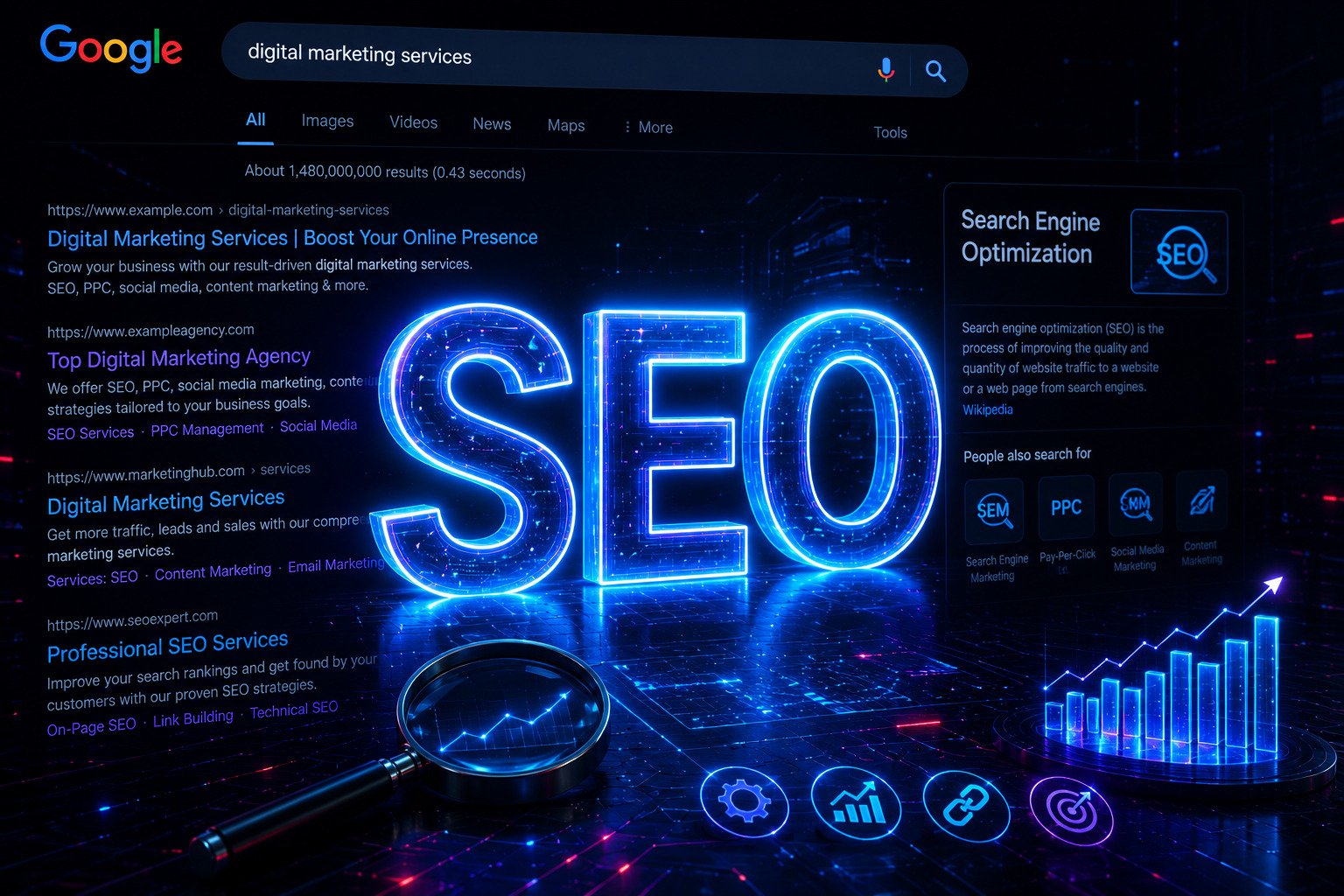
Search Engine Optimisation (SEO) is the process of optimising your website and content so that it ranks as high as possible on search engines like Google or Bing when someone searches for relevant keywords.
The traditional SEO process looks something like this:
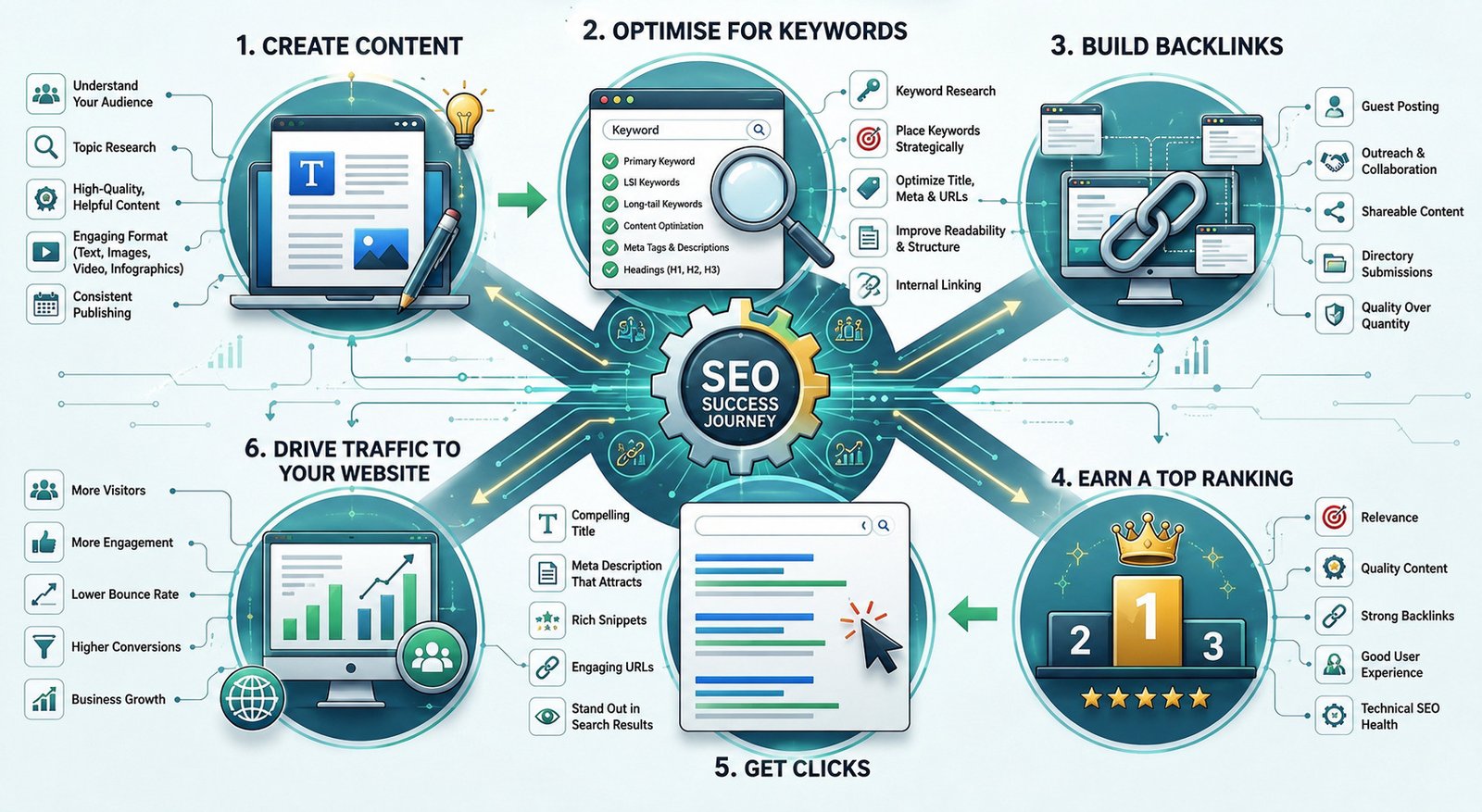
Create content → Optimise for keywords → Build backlinks → Earn a top ranking → Get clicks → Drive traffic to your website
The Key Pillars of Traditional SEO
- Keywords: Identifying the words and phrases people search for and incorporating them naturally into your content.
- Backlinks: Getting other websites to link back to yours, which signals authority and trustworthiness to Google.
- Technical SEO: Ensuring your website loads fast, is mobile-friendly, and is easy for search engine crawlers to index.
- On-page optimisation: Structuring your content with proper headings, meta descriptions, image alt tags, and internal links.
- Content quality: Publishing relevant, useful, and original content that satisfies what the user is actually looking for.
For years, this formula worked brilliantly. Rank high on Google, get traffic, grow your business. But then generative AI arrived, and the rules of the game began to change.
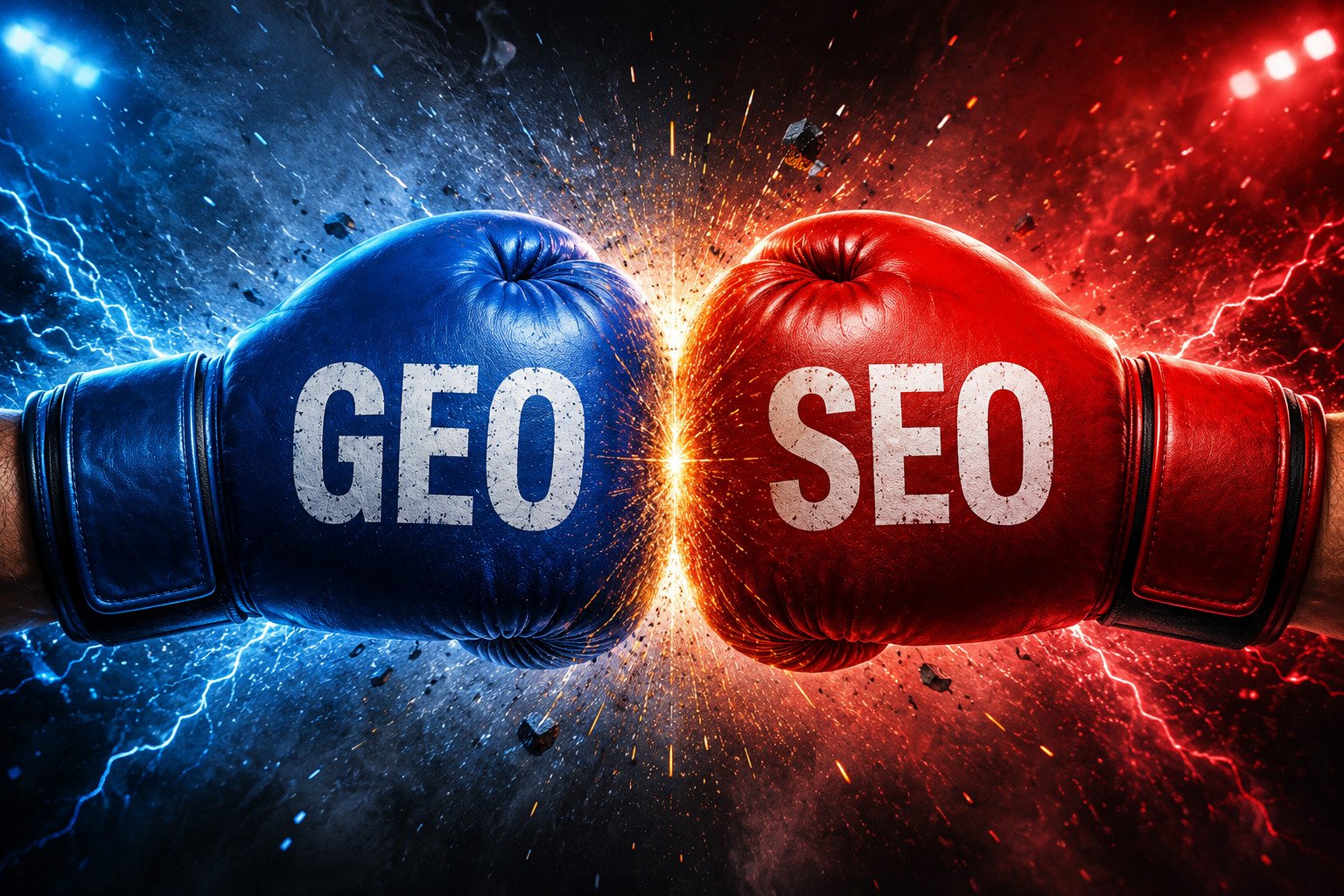
How GEO Differs from SEO: A Clear Comparison
| Category | SEO (Search Engine Optimization) | GEO (Generative Engine Optimisation) |
|---|---|---|
| 🌐 Target Platform | Google, Bing, Yahoo, and other search engines. | ChatGPT, Perplexity, Google AI Overviews, Gemini, Microsoft Copilot, Claude, and other AI assistants. |
| 📄 Result Type | Displays a list of web pages for users to choose from. | Generates a direct, synthesized answer by combining information from multiple trusted sources. |
| 🔑 Content Approach | Optimized around keywords, backlinks, metadata, and technical SEO. | Optimized for context, semantic meaning, conversational language, and AI comprehension. |
| 🎯 Primary Goal | Earn higher rankings, more clicks, and increased website traffic. | Become the trusted source AI systems cite and recommend in their responses. |
| 📊 Success Metrics | Rankings, click-through rate (CTR), impressions, organic traffic, conversions. | AI citations, brand mentions, AI referral traffic, visibility in AI-generated answers, and trust signals. |
| 👥 User Journey | User searches → sees results → clicks a website → reads content. | User asks AI → AI generates an answer → user often gets the answer without visiting a website. |
| 📚 Content Style | Keyword-focused, optimized for search intent and ranking factors. | Comprehensive, authoritative, question-based, and easy for AI to extract and summarize. |
| 🔗 Authority Signals | High-quality backlinks, domain authority, internal linking, technical SEO. | Expertise, citations, statistics, trustworthy sources, semantic clarity, and E-E-A-T.(Experience, Expertise, Authoritativeness, and Trustworthiness) |
| 🚦 Traffic Behaviour | Encourages users to visit websites through search results. | Frequently creates zero-click experiences where users stay inside the AI platform. |
| 🔮 Future Focus | Ranking higher on Search Engine Results Pages (SERPs). | Becoming the preferred knowledge source for AI-generated responses. |
How GEO Actually Works: The Mechanics Behind It
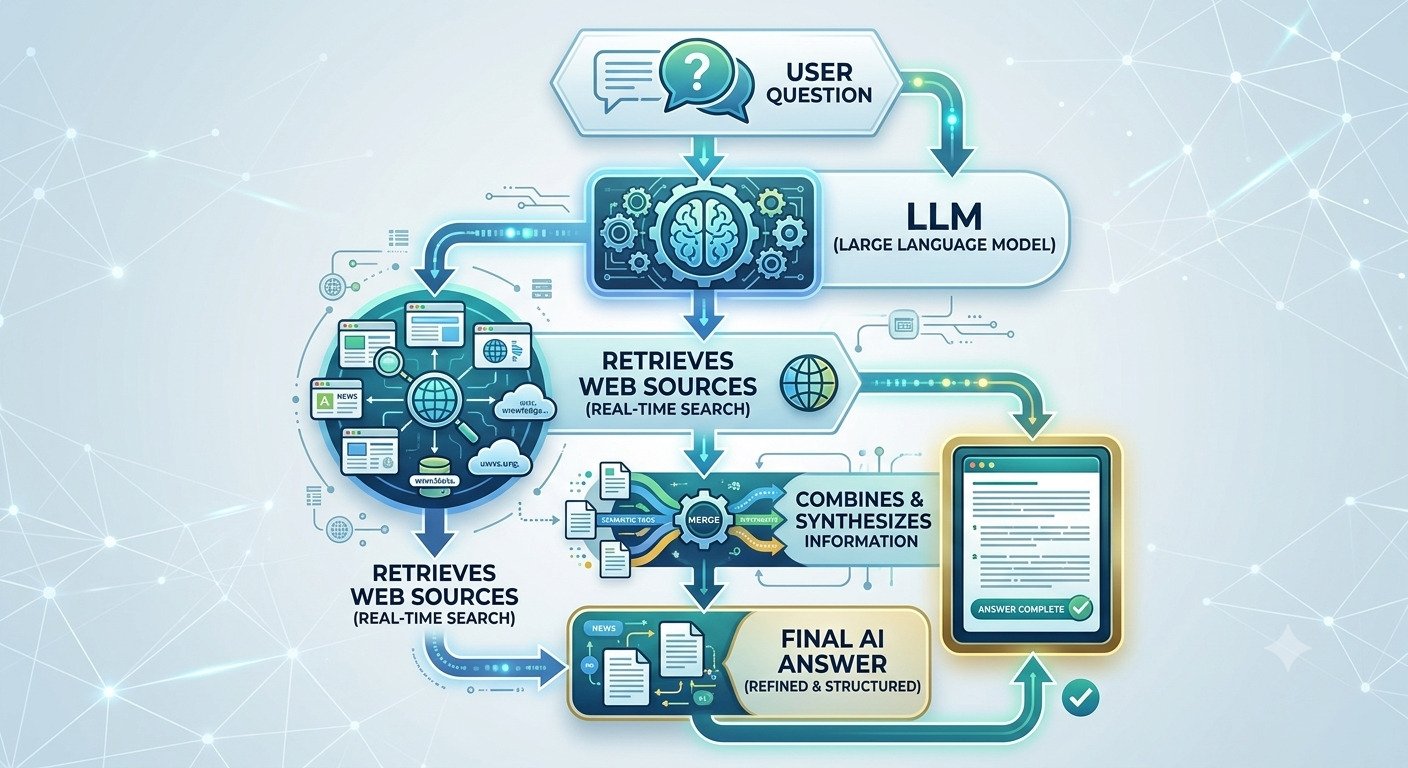
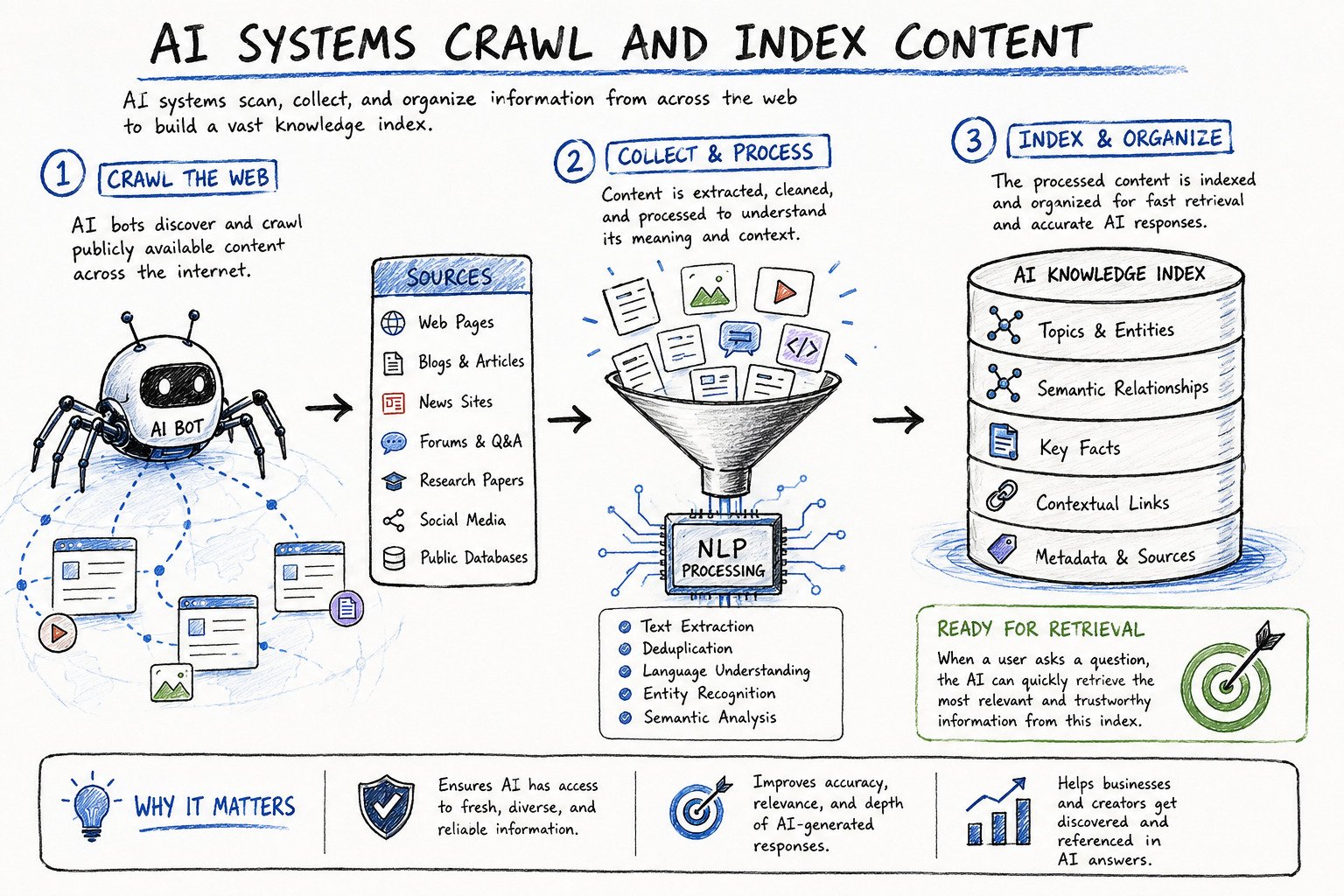
Step 1: AI Systems Crawl and Index Content
Just as Google’s bots crawl websites, AI systems also pull from vast amounts of publicly available web content, trusted databases, news sources, forums, and published research.
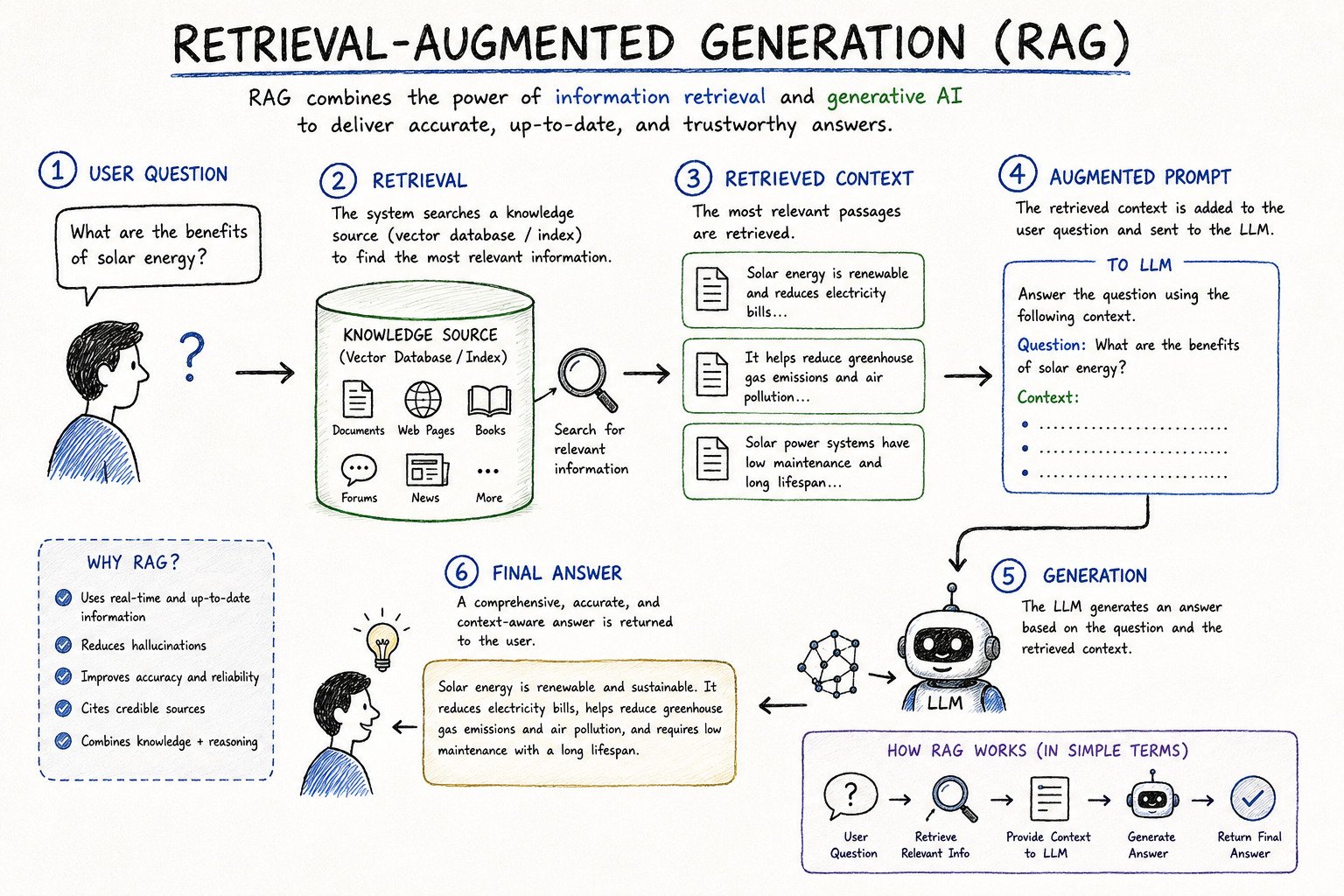
Step 2: RAG
In AI, RAG stands for Retrieval-Augmented Generation. It is a technique that connects a Large Language Model (LLM) to external data sources, allowing the AI to fetch up-to-date or private information and use it to generate accurate, context-aware responses.
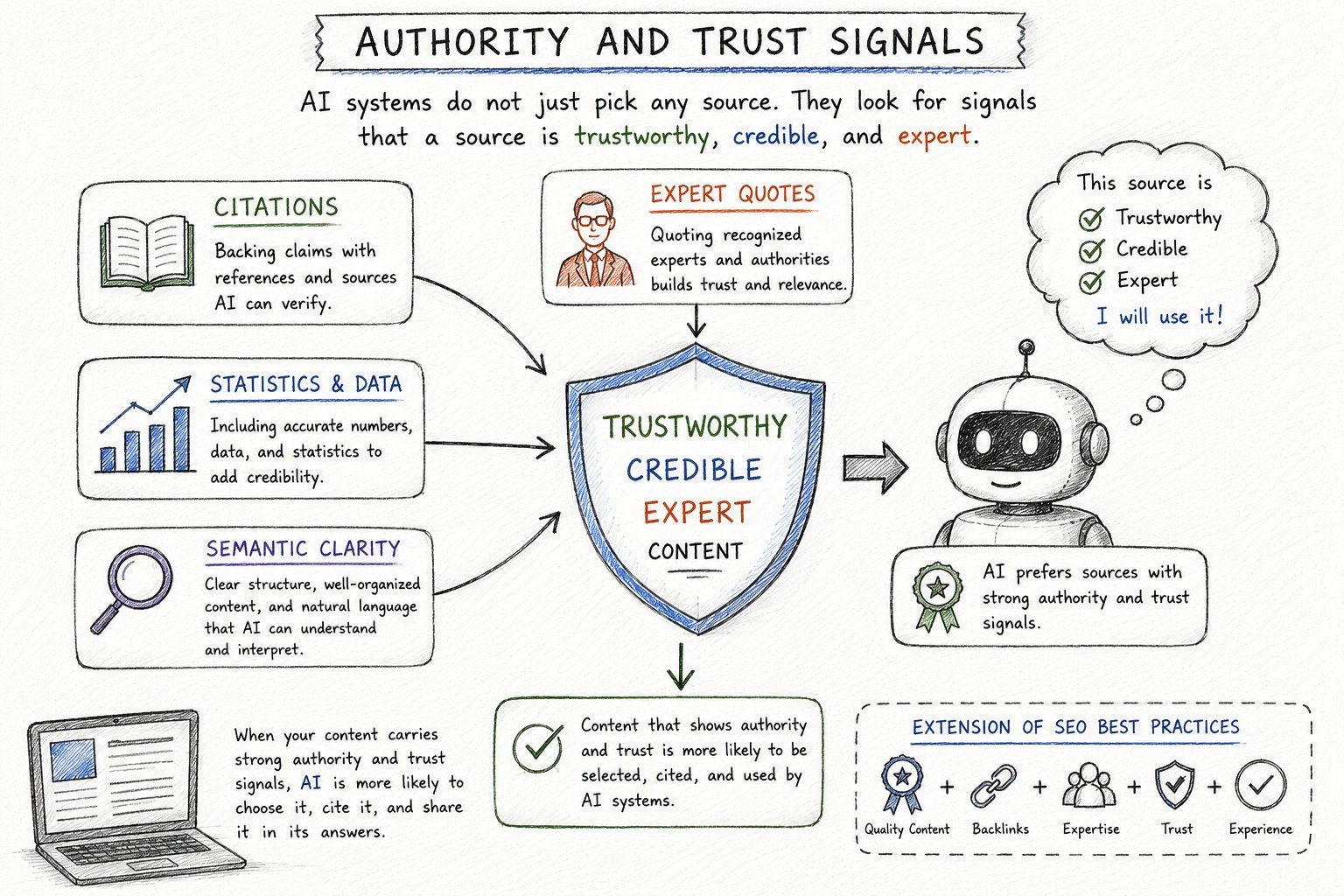
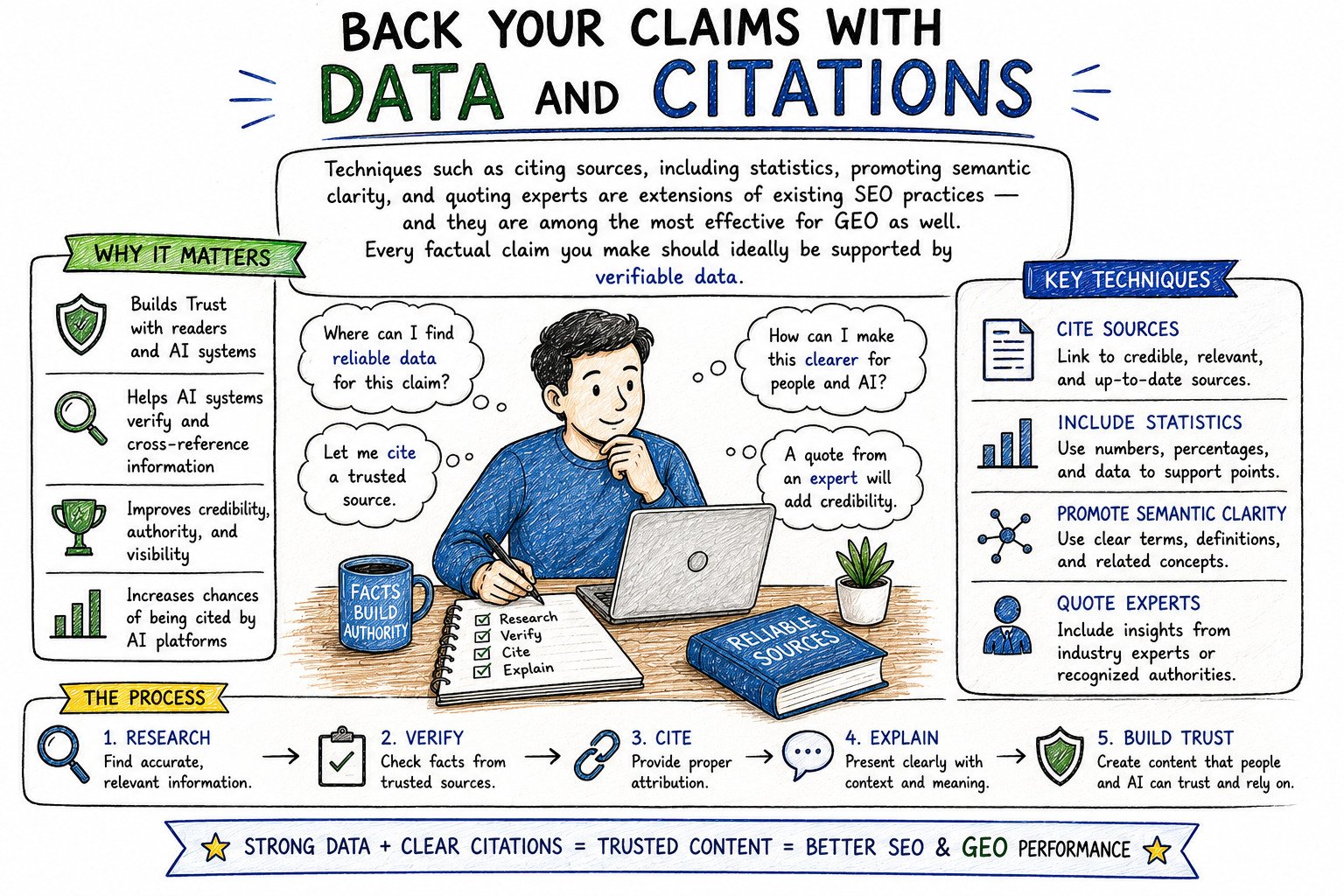
Step 3: Authority and Trust Signals
AI systems do not just pick any source. They look for signals from sources that are trustworthy, credible, and expert. The most effective GEO techniques include adding citations, including statistics, promoting semantic clarity, and quoting recognised experts — all of which are extensions of established SEO practices.
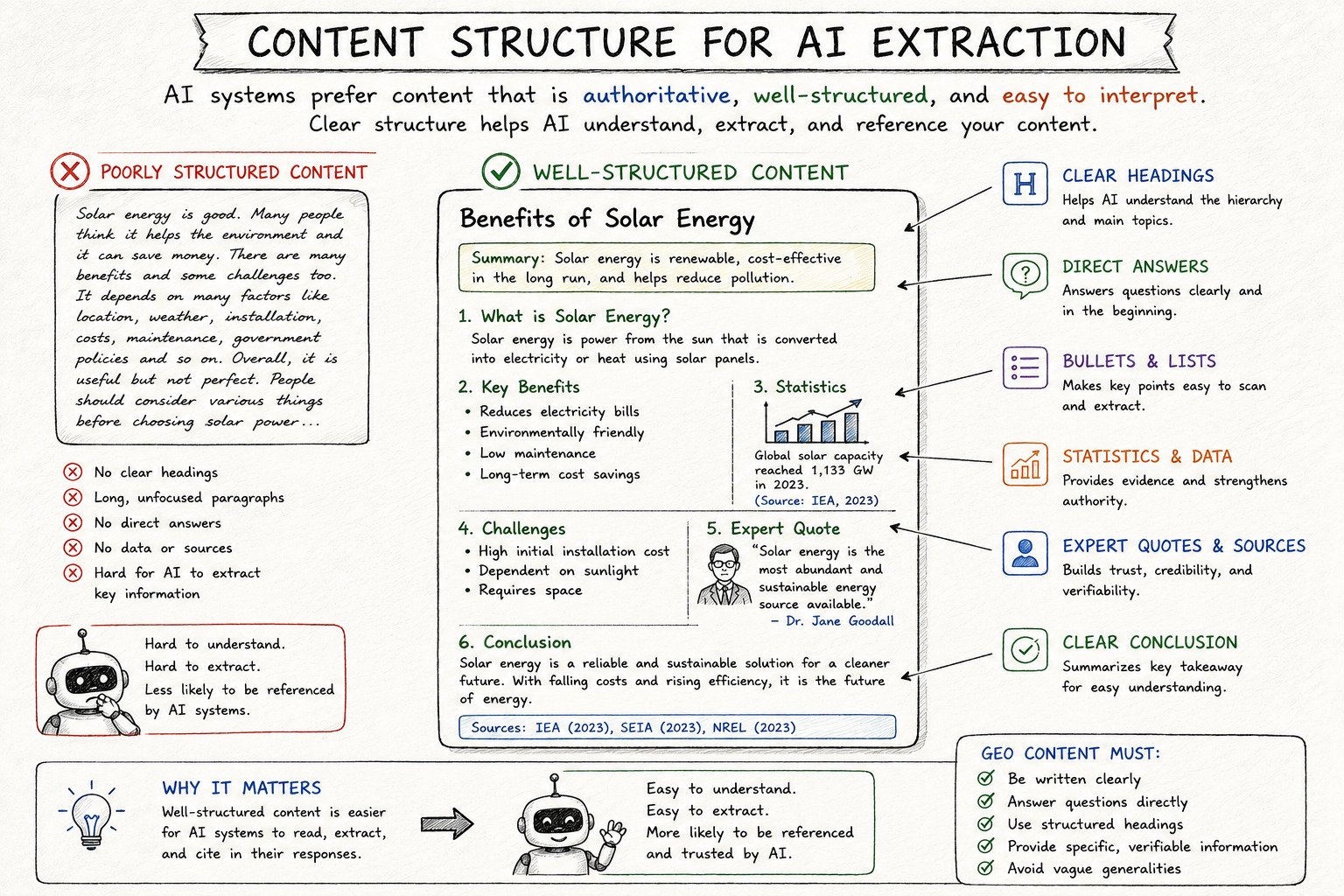
Step 4: Content Structure for AI Extraction
AI systems tend to reference content that is authoritative, well-structured, and easy to interpret. When accessibility, readability, or clear attribution are weak, even strong content becomes harder for AI systems to reference reliably.
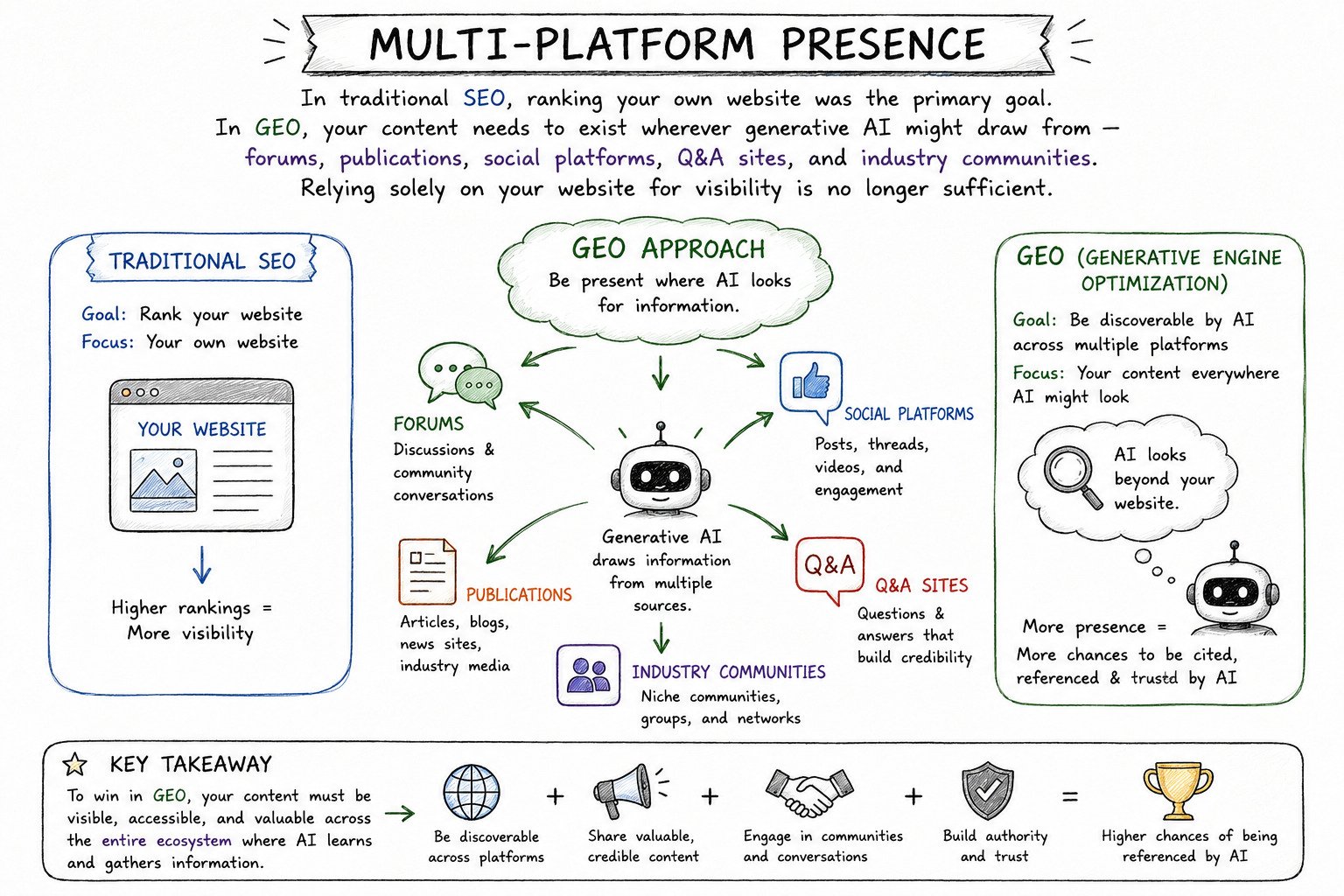
Step 5: Multi-Platform Presence
In traditional SEO, ranking your own website was the primary goal. In GEO, your content needs to exist wherever generative AI might draw from — forums, publications, social platforms, Q&A sites, and industry communities.
Why GEO Is Expected to Shape the Future of Online Search

The Death of the Click-Through?
Zero-click searches continue to rise as AI searches become more prominent. In the first four months of 2026, a whopping 68.01% of Google searches ended without a click. With AI Overviews sitting at the top of search results with a summary for the query, people get what they need and leave.
The traditional measure of SEO success, driving traffic to a website, is becoming less meaningful.
The Search Journey Is Diversifying
Users may start their research on ChatGPT, Claude or Gemini and complete their journey through Google. They may go back and forth between AI search platforms and traditional search engines, depending on the nature of their query.
This fragmented search behaviour means businesses can no longer rely on a single channel. Visibility must be earned across multiple touchpoints, which is precisely what GEO is designed to address.
The Rise of Conversational and Intent-Based Search
AI search engines excel at understanding nuance and intent, and they reward content or search answers that provide comprehensive, authoritative answers.
Traditional SEO optimised for short keywords like “best running shoes.” GEO must account for full conversational questions like “What are the best running shoes for someone with flat feet who runs on uneven terrain?” and provide genuinely useful, specific answers.
E-E-A-T Becomes More Important Than Ever
Both Google and AI systems are placing increasing emphasis on what Google calls E-E-A-T: Experience, Expertise, Authoritativeness, and Trustworthiness. Building up your E-E-A-T will help you rank better in both traditional and generative search engines.
Content written by subject-matter experts, backed by real data, and published on credible platforms will naturally perform better in both SEO and GEO environments. The bar for quality has simply been raised.
How to Start Optimising for GEO: Practical Steps

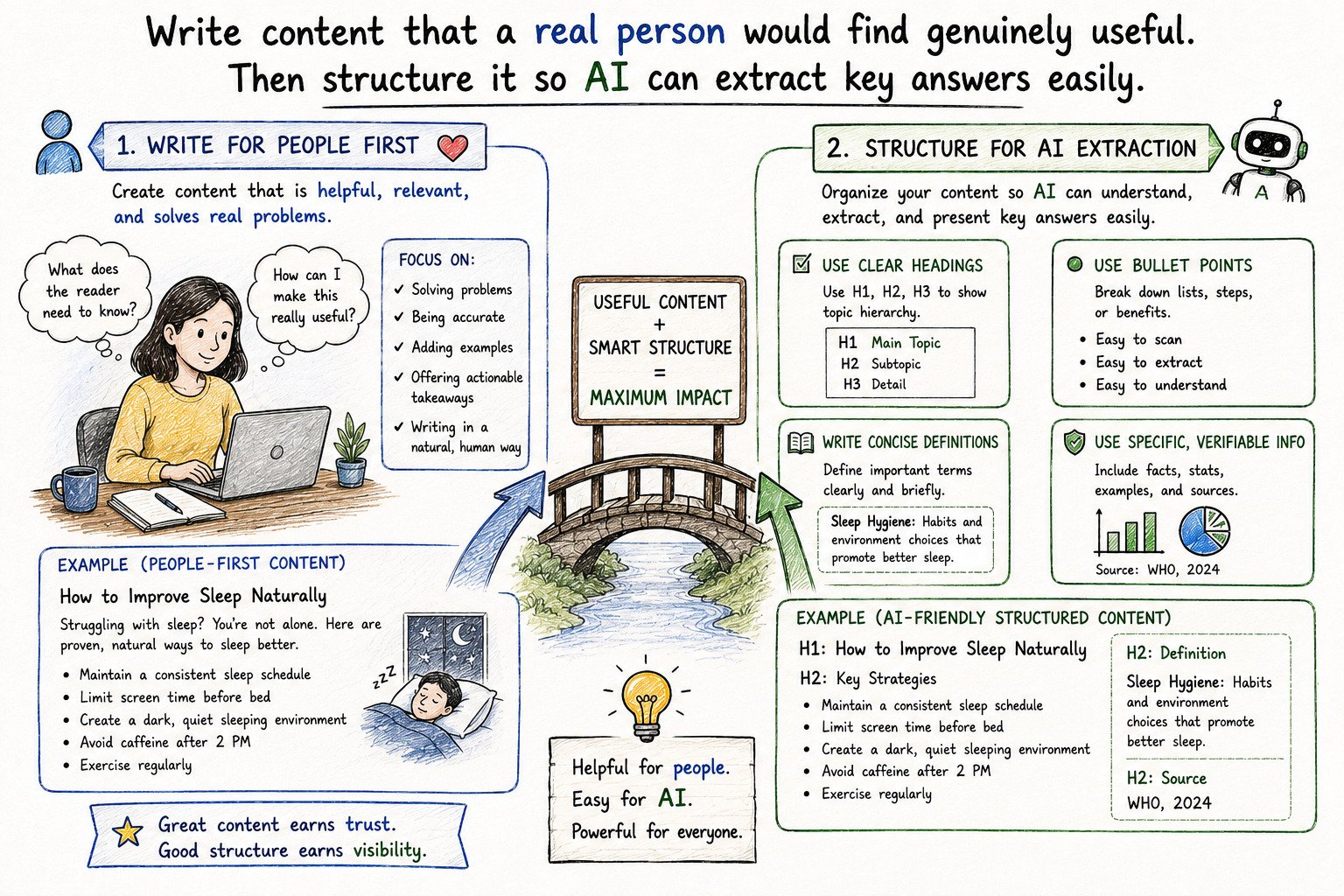
Write for Humans, Structure for AI
Write content that a real person would find genuinely useful. Then structure it so AI can extract key answers easily — use clear headings, bullet points for lists, and concise definitions for important terms.
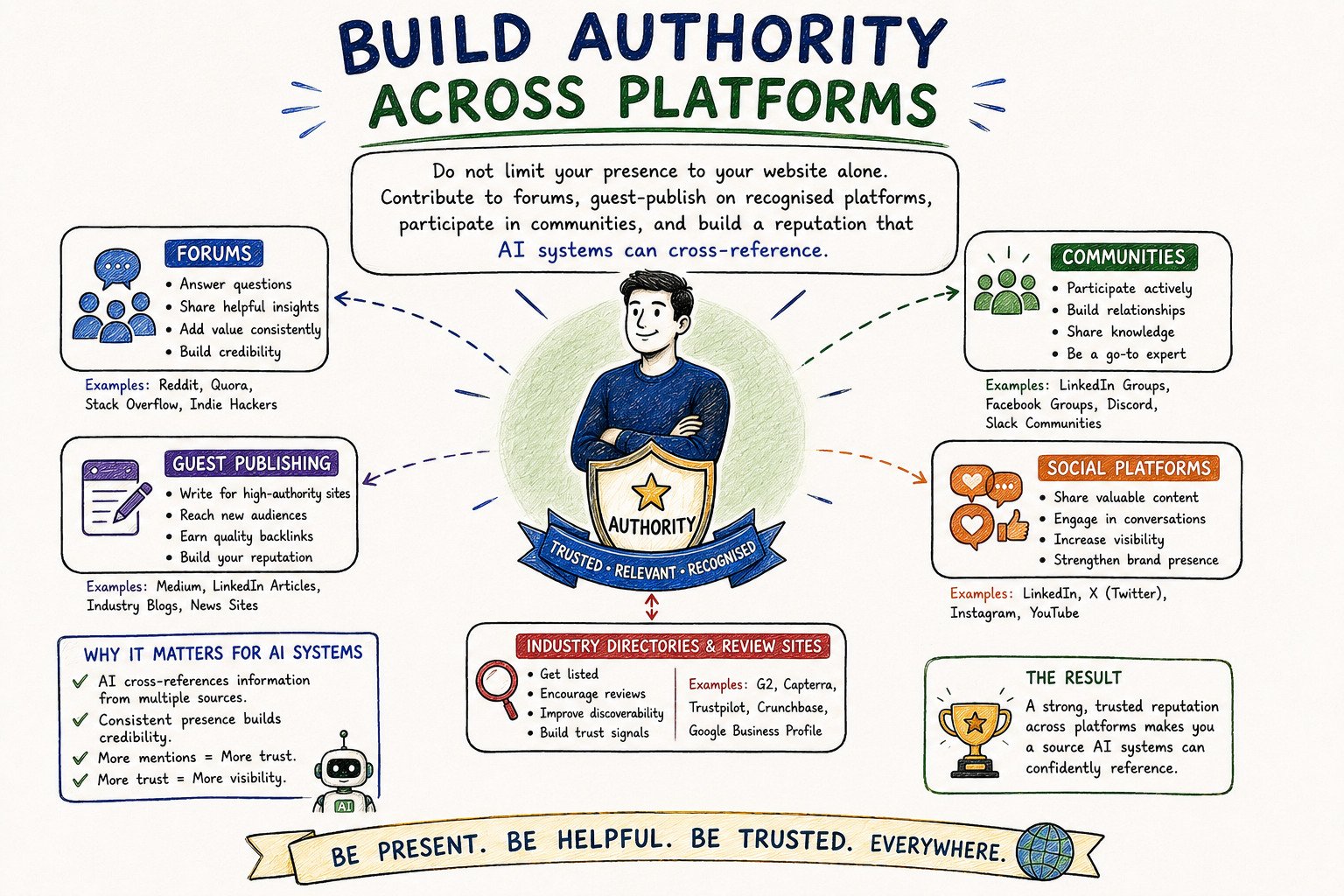
Build Authority Across Platforms
Do not limit your presence to your website alone. Contribute to forums, guest-publish on recognised platforms, participate in communities, and build a reputation that AI systems can cross-reference.
Optimise for Questions, Not Just Keywords
GEO rewards content that directly and thoroughly answers questions. Instead of stuffing a paragraph with keywords, write a dedicated section that uses a question as its heading and answers it clearly beneath it, much as this very article does.
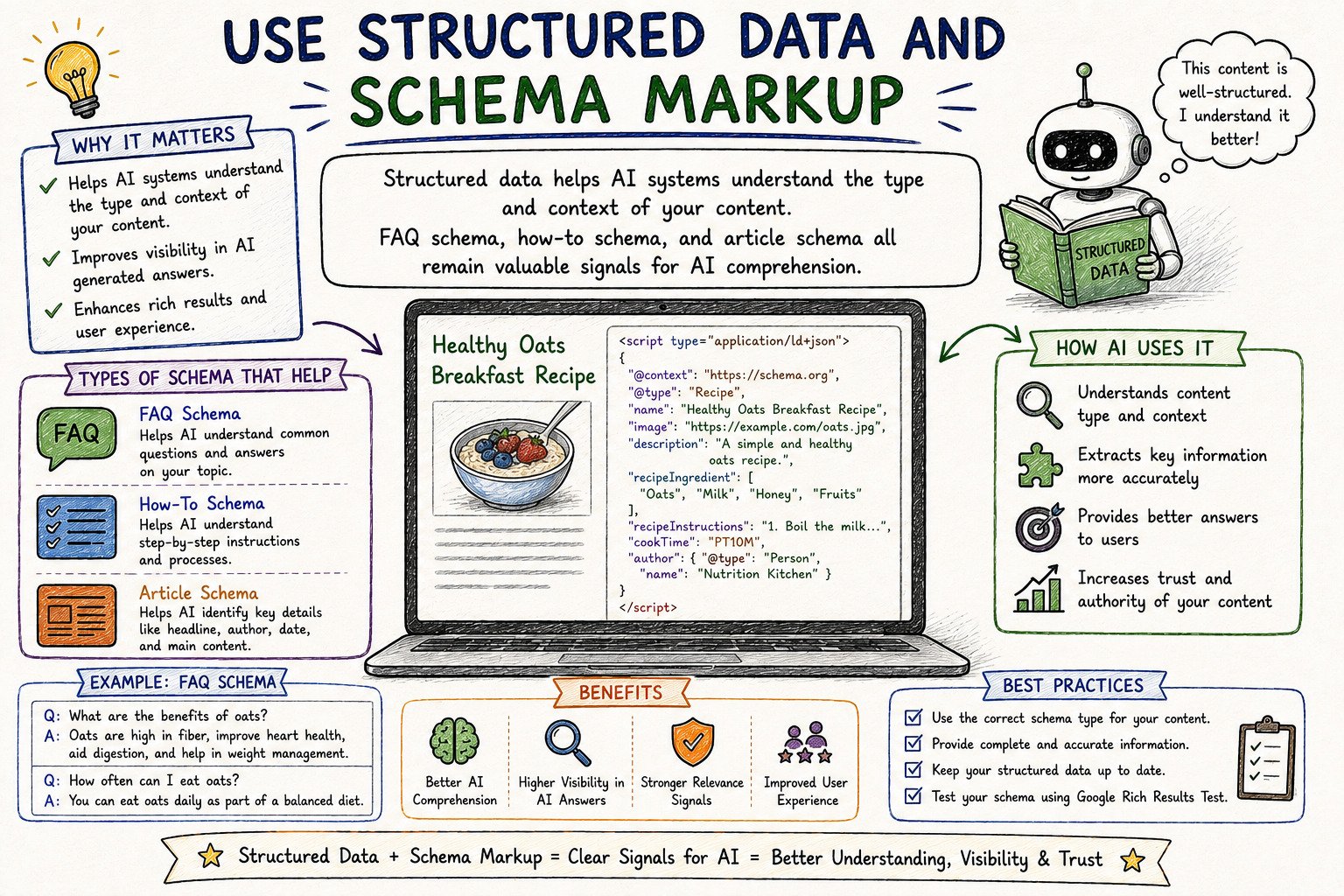
Use Structured Data and Schema Markup
Structured data helps AI systems understand the type and context of your content. FAQ schema, how-to schema, and article schema all remain valuable signals for AI comprehension.
Conclusion
The way people find information is changing faster than ever since Google started. Most people are now using AI tools to explore the world, and this trend is growing quickly.
GEO is not a replacement for SEO. It is an evolution of it. The brands, creators, and businesses that understand this shift early and start building the kind of authoritative, AI-friendly, multi-platform presence that GEO demands will be the ones that remain visible in the years ahead.
It is no longer just about being found on Google. Now, the real question is: when people ask AI about your field, does it draw on your expertise to provide an answer?
If your answer is not yet yes — it is time to start building toward it.
Frequently Asked Questions
What is Generative Engine Optimization (GEO)?
GEO is the practice of optimising your content so that AI platforms like ChatGPT, Perplexity, Google AI Overviews, and Gemini cite and reference it when generating answers to user questions.
Is GEO replacing SEO?
Not entirely. GEO complements SEO rather than replacing it. Both work together — SEO ensures your content is discoverable by search engines, while GEO ensures AI systems can understand and cite it.
Why is GEO becoming more important?
Because a rapidly growing number of users are turning to AI tools instead of traditional search engines to find information. If your content does not appear in AI-generated answers, you are invisible to those users.
How is GEO different from SEO?
SEO focuses on ranking in search engine results pages to earn clicks. GEO focuses on becoming the authoritative source that AI systems reference when generating direct answers — often without the user clicking anywhere.
How do I optimise my content for GEO?
Write authoritative, well-structured, question-answering content backed by data. Build your presence across multiple platforms. Use structured data. Demonstrate expertise, and ensure your content is accessible and easy for AI crawlers to process.
Will SEO become irrelevant?
Not in the near future. Traditional SEO remains important for reaching users who still rely on search engines — which remains a large portion of internet users. But its dominance as the sole strategy for online visibility is clearly diminishing.
 Starlin
 Sumitrap
 Sushreep