
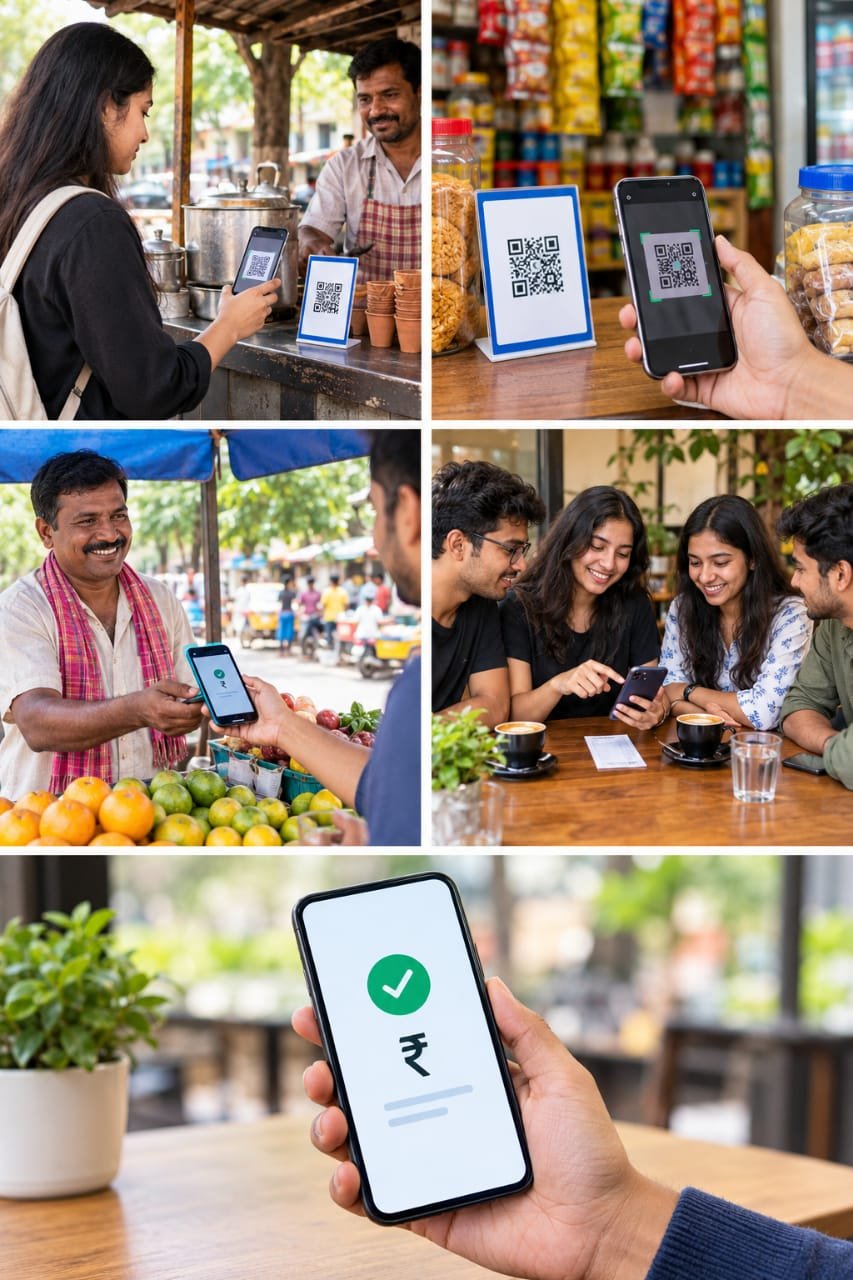
UPI Has changed the way people make payment in india. Earlier,people mostly used cash for shopping,paying bills and sending money.but now,with UPI, people can make instant payments using their smartphones.
UPI Has made digital payment simple,fast and convenient.people can scan QR codes at shops,pay online,transfer money to friends and family,and pay bills without carrying cash.Even small shopkeepers,street vendors and local business now accept UPI payments.apps like google Pay,phone Pay and system have made digital transaction easier for millions of I Indian.
KEY POINTS;
- Easy and instant money transfers.
- No need to carry cash.
- QR code payments at shopes.
- Online shopping and bills payments.
- Supports small businesses.
- Promotes digital india.
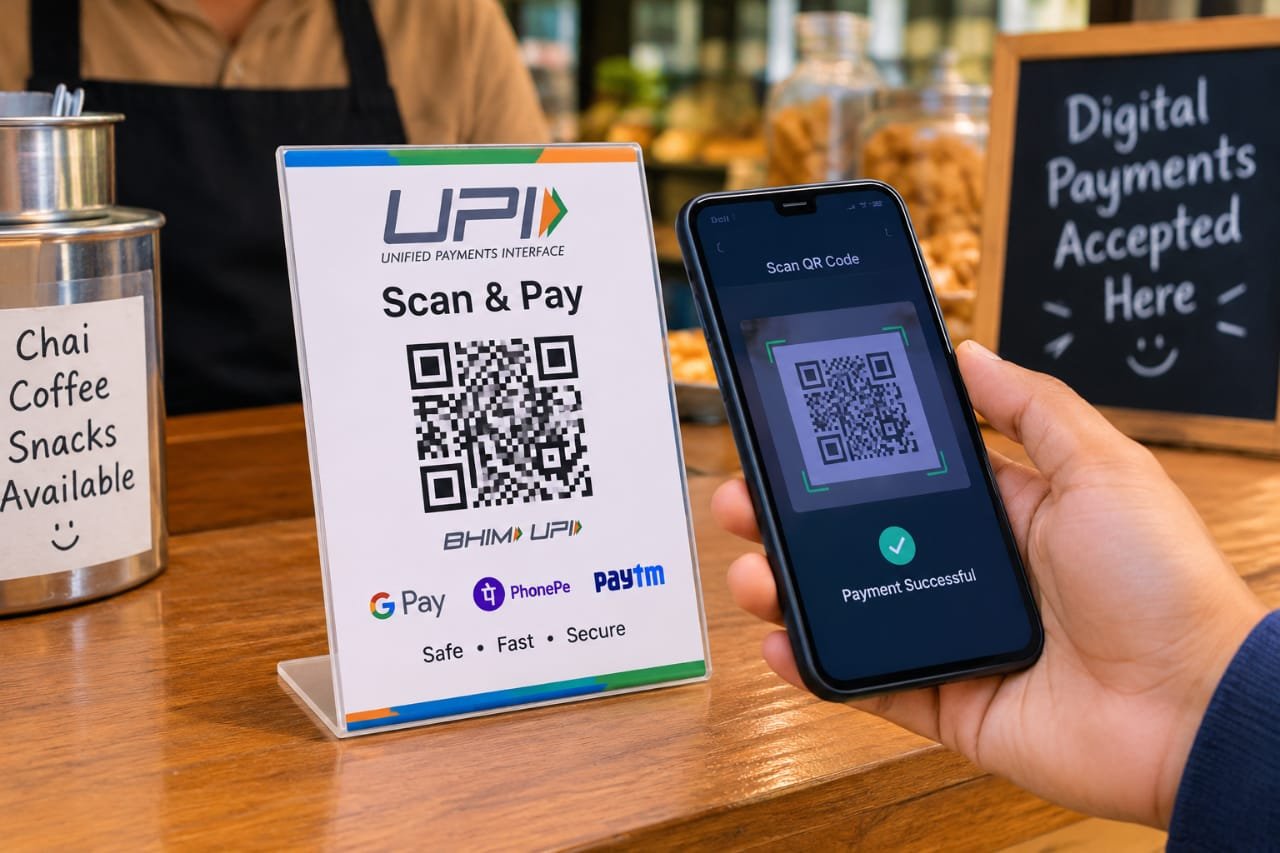
If you are anything like me, your physical wallet is basically just a graveyard for old receipts and a college ID. Whether it is paying ₹10 for a cutting chai outside the campus gate or awkwardly calculating how to split a massive dinner bill with five friends, the answer is always the same: “Bro, just scan it.”
We use it ten times a day without thinking, but India’s digital payment system is actually a global engineering marvel. Let’s break down the What, How, and Why of the tech that made cash obsolete for us.
What Exactly Is UPI ?
UPI stands for Unified Payments Interface. Launched in 2016 by the National Payments Corporation of India (NPCI), it is an instant real-time payment system that facilitates inter-bank peer-to-peer and person-to-merchant transactions.
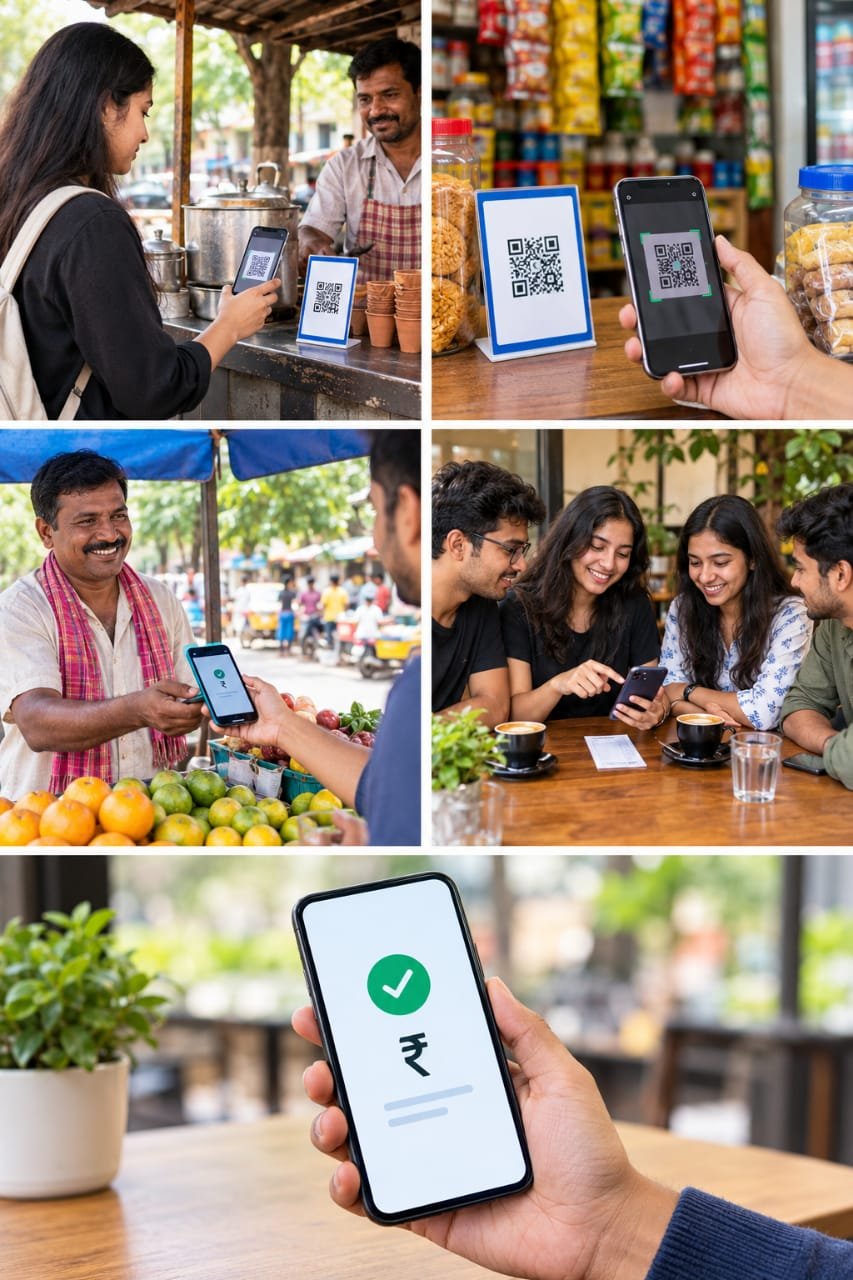
To put it in perspective, it is not an app or a digital wallet like the old days where you had to load money first. It is the underlying architecture that allows apps like PhonePe, Google Pay, and Paytm to talk directly to your bank account. As of recent data, UPI processes over 10 billion transactions in a single month. It is literally the largest and most active real-time payment network on the planet.
How Does UPI Actually Work?
The genius of UPI lies in its interoperability and simplicity. Here is how the magic happens behind the scenes:
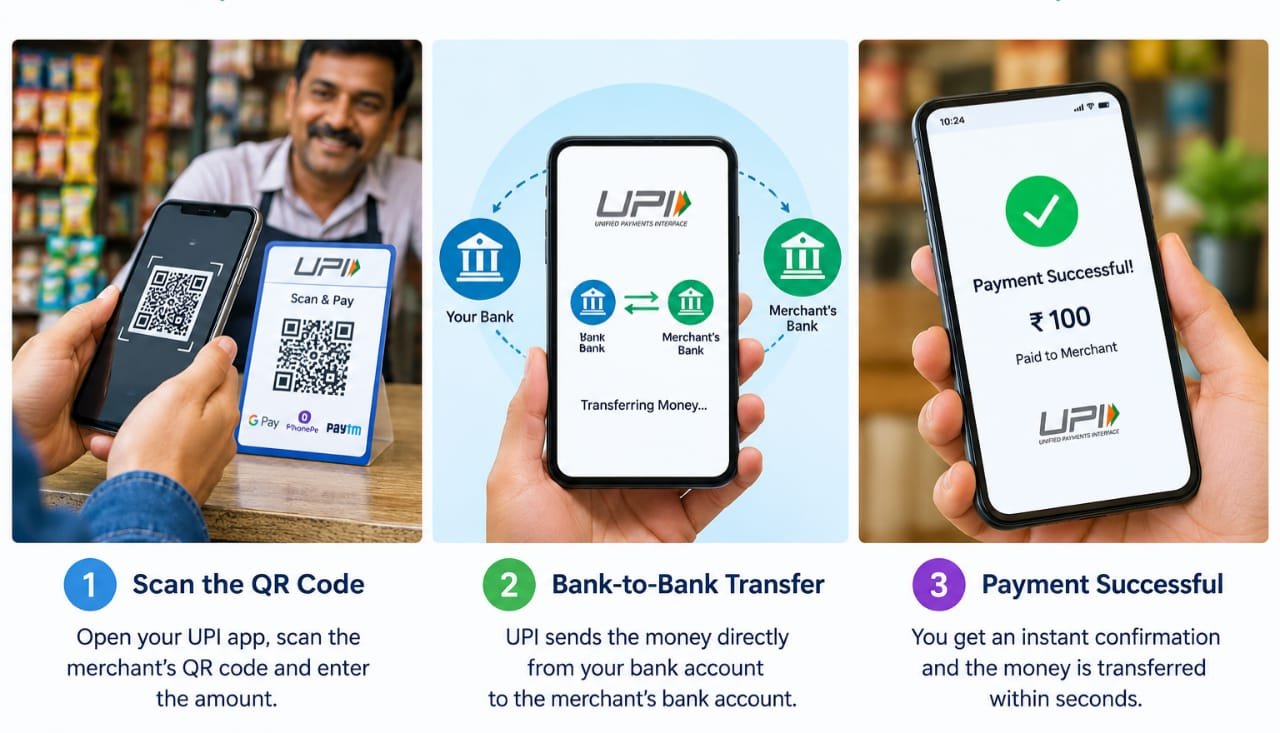
- The Virtual ID: Instead of sharing your 15-digit bank account number and IFSC code with a stranger, UPI maps your bank account to a Virtual Payment Address (VPA), usually your phone number (e.g., 9876543210@ybl).
- The IMPS Backbone: It runs on the Immediate Payment Service (IMPS) infrastructure. When you scan a QR code, your app sends a request to the NPCI switch.
- The Handshake: NPCI instantly verifies the receiver’s bank and your bank. Once you enter your UPI PIN, the money is directly debited from your account and credited to the receiver’s account in milliseconds.
- No Middlemen: Unlike credit cards (Visa/Mastercard) that have complex clearing steps and merchant fees, UPI just moves the money directly from Bank A to Bank B.
Why Did We Build UPI (And Why is the World Watching)?
Before 2016, moving money in India was a headache of waiting for NEFT transfers, paying hidden fees, or dealing with the nightmare of exact change.
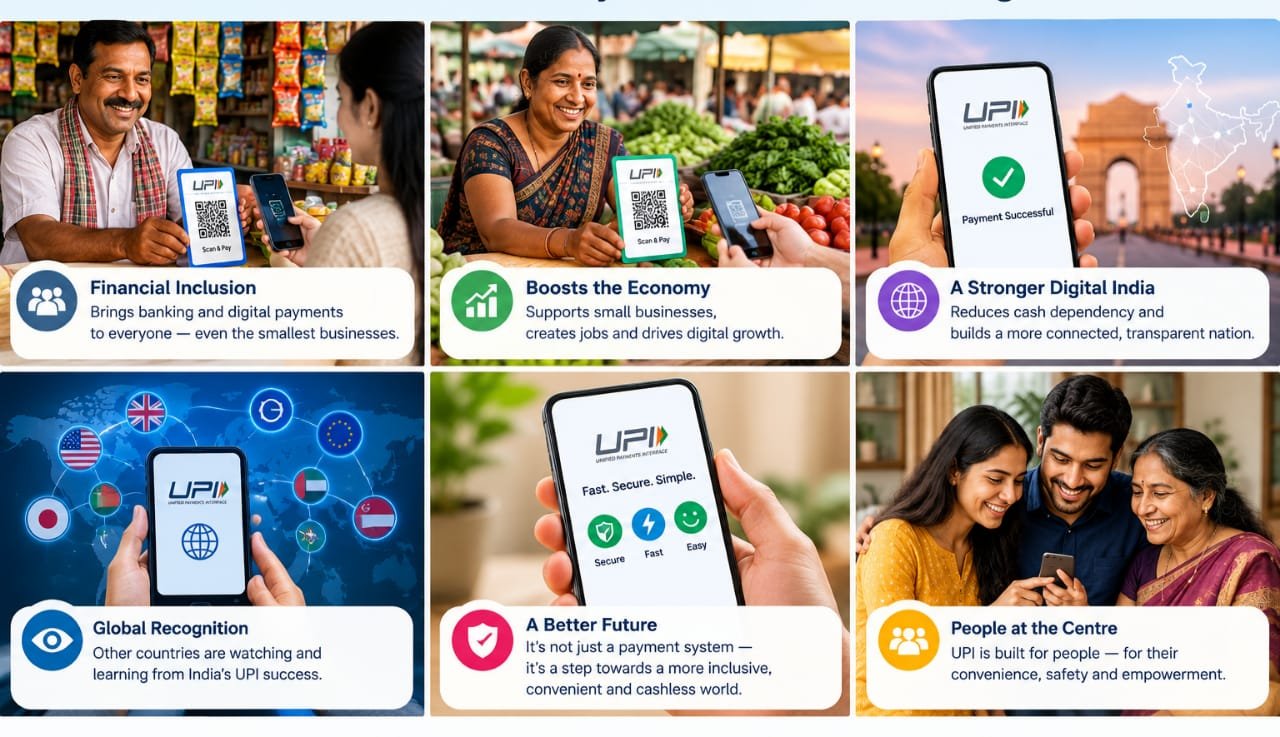
The RBI and NPCI built UPI for one major reason: Financial Inclusion. India is a massive, diverse country. For the economy to grow, the street vendor selling momos and the multi-million dollar tech startup needed access to the same frictionless payment ecosystem. By making the infrastructure open-source and free for users, it brought millions of unbanked Indians into the formal digital economy overnight.
Today, countries like France, Singapore, and the UAE are integrating with India’s UPI or trying to build their own clones. So next time you scan a faded, rain-damaged QR code at a tapri and the payment goes through instantly, remember—you are using a piece of tech that is literally changing the global financial system.
CONCLUSION;
UPI Has made india digital payment system stronger and easier.today,people can make payment anytime and anywhere without carrying cash.it has helprd small small businesses,shopkeepers and common people adopt digital payments.UPI has made india move toword a cashless economy and has becomes an important part of everyday life.
 Soumya
 Shreyan
 Anupd