
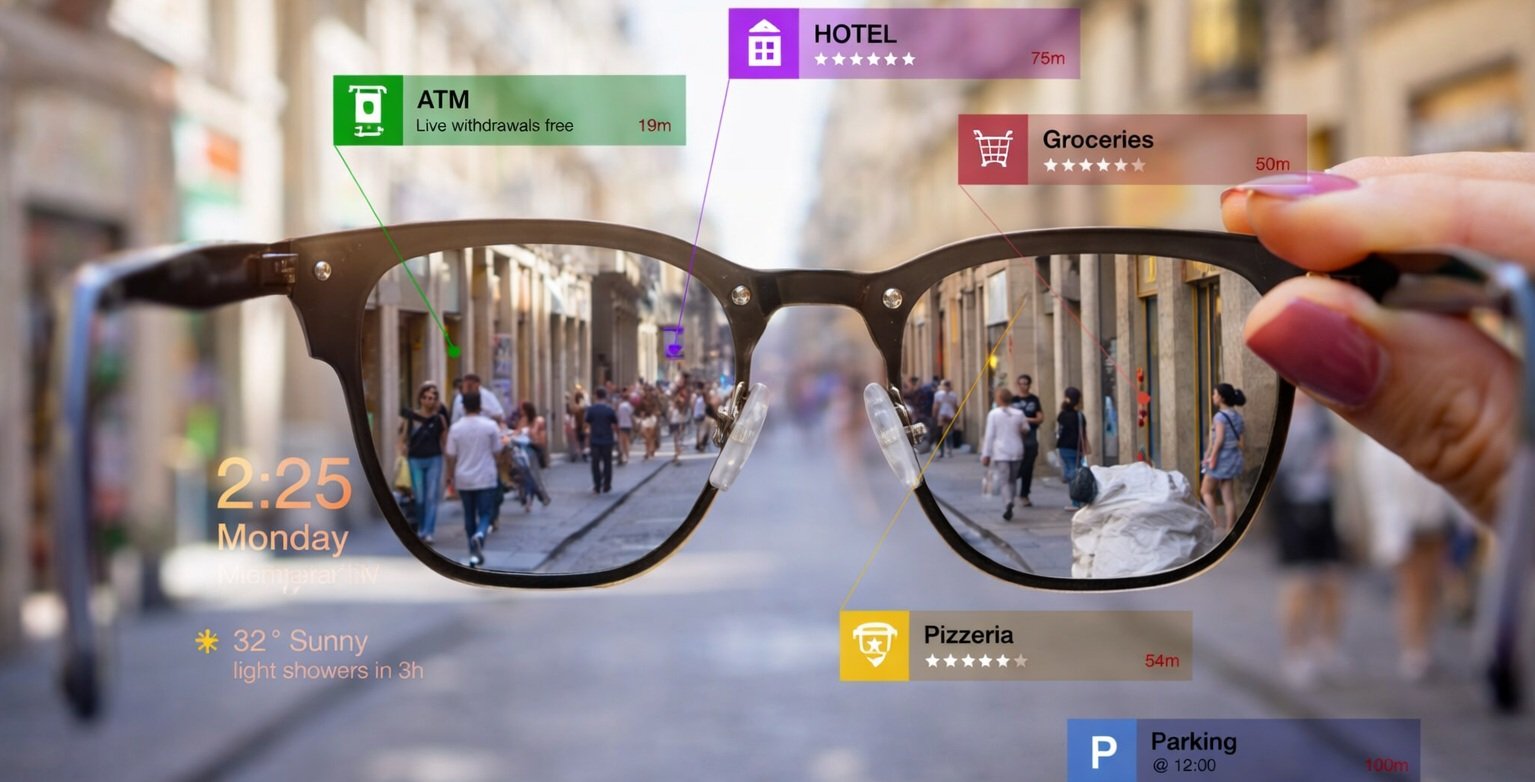
We have spent 15 years with our head tilted down, staring at glowing rectangles in our palms. But in 2026, the” smartphone Era” is finally facing its real challenger: AI- powered glasses.
With the recent launch of the Meta Ray-Ban Gen3 and Google “Iris” frames. AI glasses has moved from a movie to regular, stylish glasses for everyday wear. But they are just luxury, or they can actually replace your smartphone? The question is no longer if they can replace smartphones ,but how soon.
What Are AI Glasses?
AI glasses are smart wearable devices that look like regular eyeglasses but integrate artificial intelligence, camera , microphones, sensors and displays. Unlike traditional smart glasses, AI glasses actively assist users in real time. They can:
- Provide visual search by recognizing objects and places.
- Offer real-time translation with subtitles in your field of view.
- Deliver navigation cues without distracting you.
- capture hands- free photos and videos.
- Filter notifications intelligently.
Evolution of Meta Ray-Ban Smart Glasses
The biggest push toward mainstream AI glasses came from Meta, in partnership with Essilor luxottica( the company behind ray-ban).
Meta launched its next generation Ray-Ban smart glasses on September 27,2023 introducing features like improved cameras, open-ear audio, and a built-in AI assistant that works with voice commands.
Since then, Meta has continued to evolve the technology, including more advanced version with displays and gesture controls revealed at events like Meta Connect 2025 .
As for the Ray-Ban Meta gen3 ,adding visual displays inside the lenses and a neutral wristband for gesture control. Today, these glasses act as proactive assistants that can display notifications, provide real-time navigation, and even remember personal details from your day, like where you left your keys.
Evolution of Google Iris
Google has moved away from the “Project Iris” hardware name in favor of a partnership- driven model similar to the Android phone ecosystem.
Google efforts are now unified under Android XR. where “Iris” was the internal codename, the consumer devices are launching through partners like Samsung and Gentle Monster.
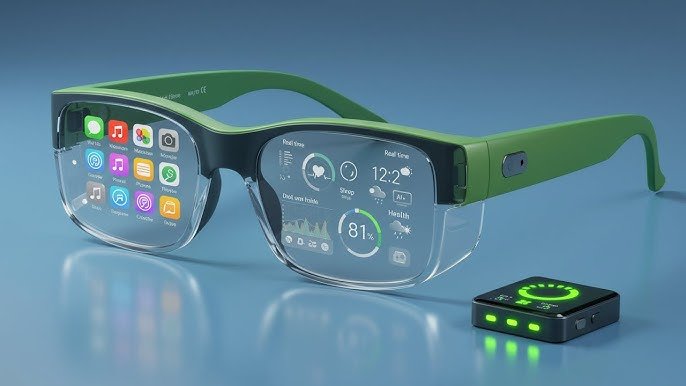
Here is how AI glasses are shifting from” cool Gadgets” to daily life necessity
- Visual Search: The “point and Know” Era
- The biggest change in 2026 is multimodal AI. This means your glasses aren’t just listening; they are seeing
- The Scenario: You’re walking in a park and see a rare bird or a historical monument.
- How: Instead of grabbing your phone ,unlocking it and snapping a photo to search, you simply ask” hey[AI], what am I looking at?”
- Utility: It makes the whole world searchable whether you are shopping a grocery or fixing something at home you will get your answer without using your hands.
2. Real-Time “Subtitle” Translation
- The early 2026, translation became instant- there is no longer a delay .For travelers, or people working on abroad ,this is the” killer features”.
- How: It shows tiny subtitles right infront of your eyes while someone speaks in another language.
- Utility: You don’t have to hold phone between you and the other person. You can just look them in the eye and talk like normal.
3. “Ambient” Navigation
- We’ve all walked into a pole or a person while looking at Google Maps on our phone. AI glasses solve the “Blue Dot” distraction.
- How: Instead of looking down you see a light arrow showing you the right way through your lenses.
- Utility: You can keep your head up. You can see the cars, the buildings, and the people around you while the glasses tell you exactly when to turn.
4. Hands-free Documentation
- Whether you are a parent at a birthday party or a field worker for site visit taking your phone out ruins the moment.
- How: High Quality cameras are hidden in the frame of the glasses. They record exactly what you are seeing.
- Utility: It allows for” invisible” documentation. You can record a cooking tutorial or a family memory without a lens acting as a barrier between you and the experience.
5. The End of “Notification Fatigue”
- The average persons checks the phone 150 times a day. Most of those checks are of trash Notifications
- How: AI glasses act as a filter .You can set them to alert for important peoples like boss ,families and friends.
- Utility: Instead of heavy phone buzzing in your pocket you hear a soft sound or see tiny icon. It helps you soft looking at a screen and playing attention to the real world.

Average cost of AI glasses
Meta Ray Ban AI glasses retailed around $499-$699 USD depending on models.
Google Iris AI glasses are expected to launch in similar range $450-$700 depending on the feature.
This position AI glasses are luxury -utility hybrids- affordable compared to high-end smartphones, but still costly for mass adoption.
Is it a Luxury or a Utility?
It is a luxury if: You only use your phone for scrolling social media or playing high end games. Current glasses don’t have the battery life to replace a screen for heavy entertainment.
Utility: you are a profession who needs hand free, a travelers who needs translation or someone wants to reduce screen time.
conclusion
AI glasses aren’t trying to be a “computer on your face” they are trying to be assistant for your life. we aren’t throwing smart phone in trash. we are finally started looking up again.
FAQs
- Can AI glasses completely replace smartphones today?
A– No, not yet. AI glasses are still developing. Smartphones are still better for activities like gaming, watching videos ,and using many apps.
2. How AI glasses are different from smartphone?
A-Smartphone require you to look down and actively engage with a screen, while AI glasses are hands-free and context-aware. They bring information to you without interrupting your real- world experience, making interaction faster and more natural.
 Kavya
Kavya
 Amisha26