
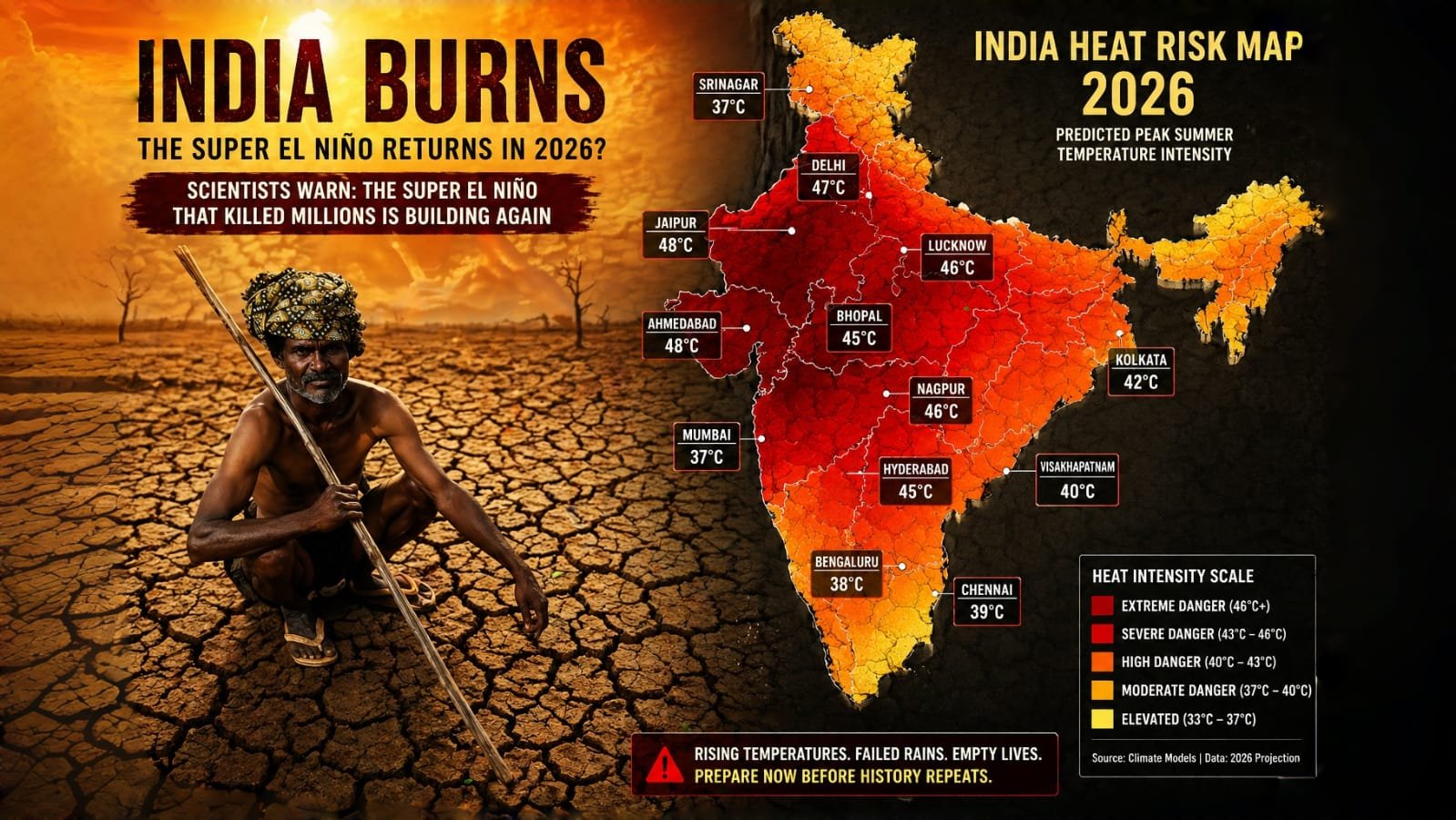
Step outside in April. Just for a second before even you fully opened the door, it hits you — the wave of heat that feels less like weather and more like a warning. That’s not summer warming up. That’s summer arriving in full force, two months early.
And every year, we say the same thing. “It’s so hot this year.” “This is unusual.” “I don’t remember it being this bad before.” But here’s the thing — we do remember. We said the exact same thing last year. And the year before that.
And then we move on.
But what if this time, we clearly shouldn’t?
Here’s What’s Happening, And It’s Getting Worse
Right now, in April 2026, 95 of the world’s 100 hottest cities are located in India. Not some. Not most. 95. Akola in Maharashtra has already recorded 44.2°C — the highest temperature anywhere in the country so far this year. And it’s not even May.
This isn’t new either. 2024 was already the third consecutive year of extreme heatwaves across India. That summer saw 536 heatwave days — the highest in 14 years — with over 40,000 suspected heatstroke cases and more than 100 deaths.
Then 2025 arrived and made it worse. That heatwave started in April, stretched all the way to July, and killed 455 people.
Here’s the number that should stop you and make you think — without climate change, a heatwave of this intensity would be expected once every 312 years. Today, it happens every 3.1 years.
We didn’t just get unlucky. Something much bigger is happening.
What Is Super El Niño — And Why It Matters More Than You Think?
Most of us have heard of El Niño. But let’s be honest — we nod along without fully understanding it.
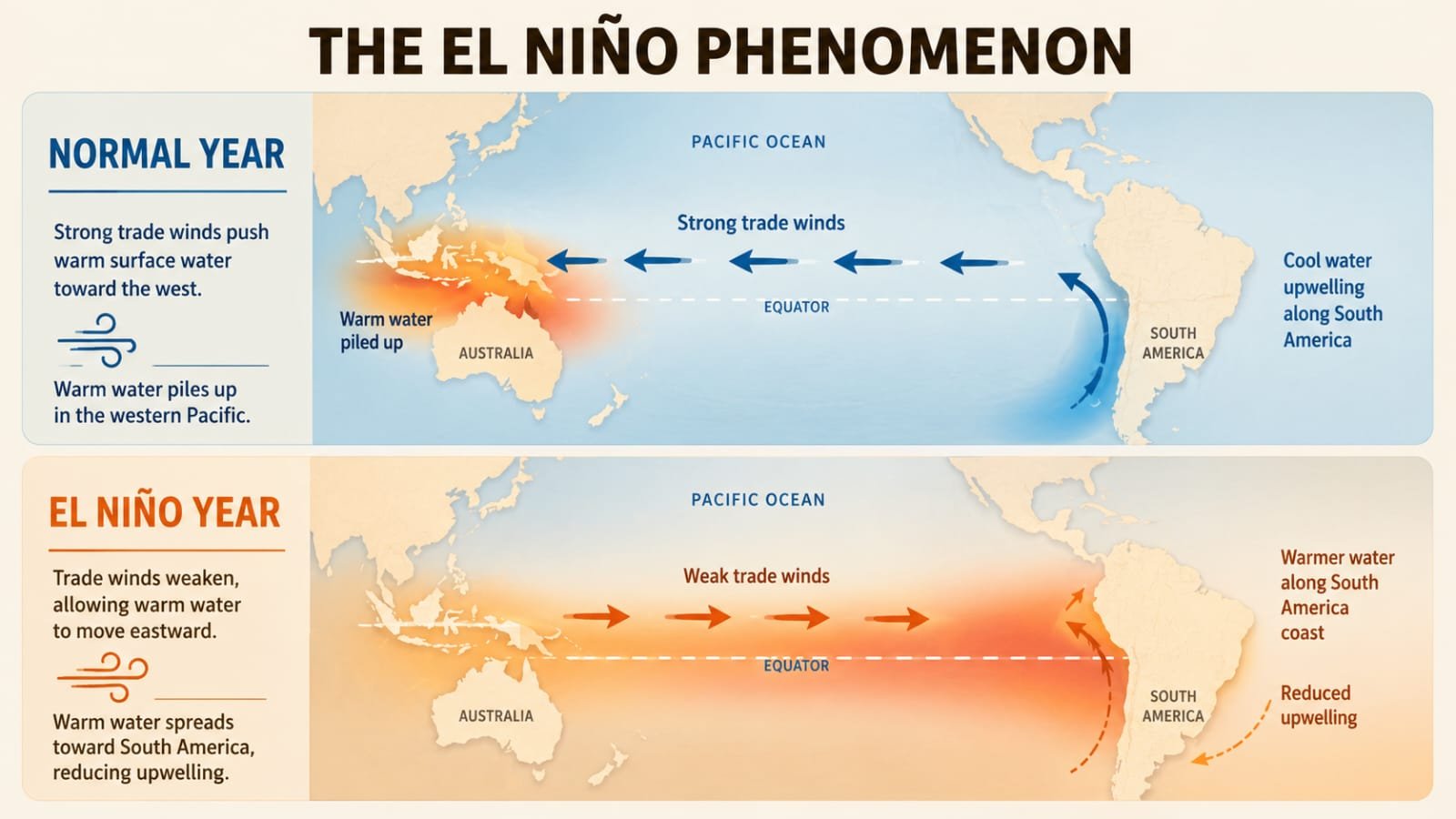
El Niño is a natural warming of the Pacific Ocean’s surface that disrupts weather patterns globally. It happens every few years. When it hits India, it weakens the monsoon, raises temperatures, and dries out the land. A regular El Niño is bad enough
A Super El Niño is what happens when ocean temperatures rise more than 2°C above normal — and climate change pours fuel on top of it. Think of regular El Niño as just a bad summer. Super El Niño is the worst summer that doesn’t know when to stop.
SkyMet’s President of Meteorology has confirmed: “We will definitely see El Niño starting from June 2026, as the monsoon sets in. It is a strong El Niño, which will disrupt normal weather patterns.”
The World Meteorological Organization has confirmed a rapid rise in sea-surface temperatures in the Equatorial Pacific, pointing toward onset as early as May–July 2026, with further intensification expected into 2027.
And then there’s the wet bulb problem — the one scientists talk about quietly but nobody puts in headlines. Because here is where heats stops being uncomfortable…. and starts become deadly.
When both heat and humidity rise together, sweat stops evaporating — meaning the body simply cannot cool itself. At a wet bulb temperature of 31°C, even young, healthy adults begin losing the ability to regulate body temperature. For context, 38°C with 60% humidity can already cross that threshold. We are not far from that in India. Some days, we are already there.
History Warned Us Before. But Are We Listening?
Here is the part that nobody is talking about loudly enough.
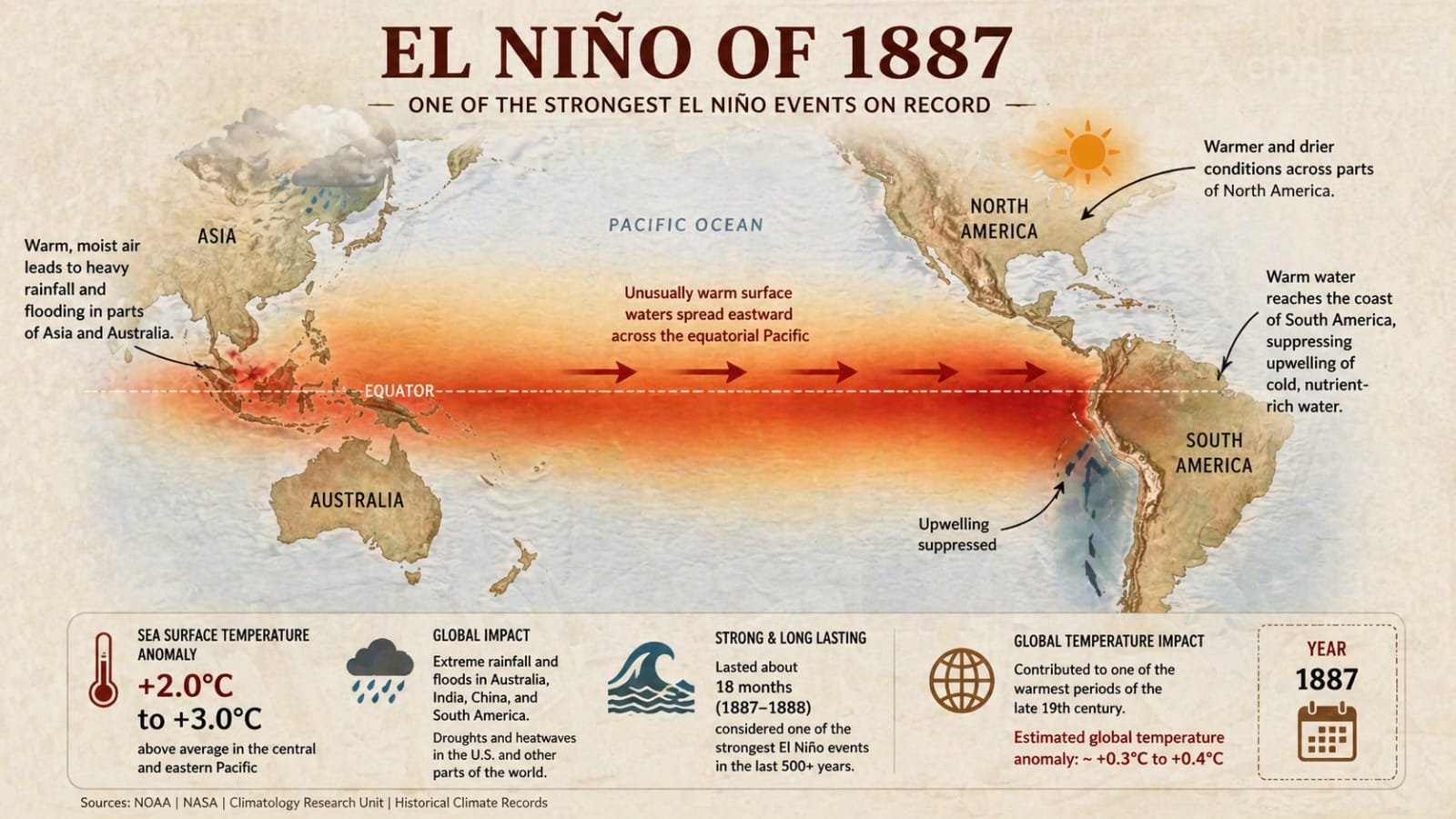
Around 150 years ago, our planet experienced one of the most extreme climatic episodes ever recorded. El Niño reached extraordinary intensity around 1877–78, unleashing prolonged droughts, relentless heatwaves and severe crop failures across India, China, Africa and Brazil simultaneously.
The famine ultimately affected 58.5 million people and caused an estimated 8.2 million deaths in India alone. Globally, total fatalities exceeded 50 million — roughly 3% of the entire world population at the time.
No deadlier environmental disaster has occurred since. That was not a different world with different problems. That was India — the same land, the same dependence on monsoon rains, the same vulnerability. And the trigger was the same phenomenon that scientists are now watching build again in the Pacific Ocean in 2026.
Who Actually Pays The Price?
What gets lost between all the memes and “it’s too hot” group chat messages is this—
for some people, heat is not just uncomfortable… it quietly takes things away from them.
In 2024 alone, extreme heat didn’t just make people sweat. It stole 247 billion hours of work across the world. That means lost time, lost strength, and nearly $194 billion in income gone. Most of that loss came from people working in fields, under the open sky, with no escape.
And the truth is, not everyone suffers equally.
People in informal jobs — daily wage workers, vendors, laborers are far more exposed. They don’t get to step inside, turn on a fan, or take a break when the sun feels unbearable. They just… endure.
Think about the construction worker who doesn’t have the option to stay home.
The vegetable seller sitting in the market at 2pm, waiting for customers instead of shade.
The elderly person inside a small house, where even air doesn’t move.
For some of us, heat is something we complain about and laugh off later.
For others, it slowly drains their energy, their health, and their income.
And somehow, we’ve turned all of that into one shared joke — something we talk about for a moment… and then forget.
The Uncomfortable Truth.
We have a very particular relationship with heat in India. We complain loudly, forward the memes, someone makes a global warming joke, everyone laughs, and then we go back to our routines. No real alarm. No urgency. Just the annual ritual of suffering together and calling it summer.
But 150 years ago, a version of what is building right now killed millions. It failed the monsoon for two consecutive years. It emptied fields. It broke a country.
We are not the same India. We have forecasts, science, early warning systems. We have things they didn’t have in 1877. But experts are already calling for immediate Heat Action Plans and robust water management strategies to mitigate a repeat of the 19th century catastrophe. Which means the people who study this for a living are worried enough to use the word “repeat.”
Maybe we should be too.
The question isn’t when it’s going to cool down. The question is — we’ve been here before, we know how it ended, and what exactly are we doing differently this time?
Between May and July 2026, with further intensification expected by 2027.
North, central and eastern India — particularly Rajasthan, UP, MP, Odisha and Maharashtra.
Yes — while it dries some regions, it can trigger extreme rainfall and flooding in others simultaneously.
 Amisha26
 Arpital
 Abhisekd