
Content marketing has never remained the same for long. As technology evolves, the way people search for information also changes. Earlier, marketers mainly focused on keywords and traditional SEO to rank their content on search engines. However, with the rise of artificial intelligence, search behavior is shifting rapidly. Today, people expect quick, clear, and direct answers instead of browsing multiple web pages. This change has led to the emergence of Generative Engine Optimization (GEO), a concept that is shaping the future of content marketing.
Understanding Generative Engine Optimization (GEO)
Generative Engine Optimization (GEO) focuses on creating content that AI-powered search engines can easily understand and use to generate answers. Unlike traditional search engines that only rank links, generative engines analyze meaning, context, and user intent. In simple words, GEO is about writing content that explains things clearly and genuinely helps users. When content is structured, informative, and easy to understand, AI systems are more likely to select it for generating responses.
How GEO Is Different from Traditional SEO
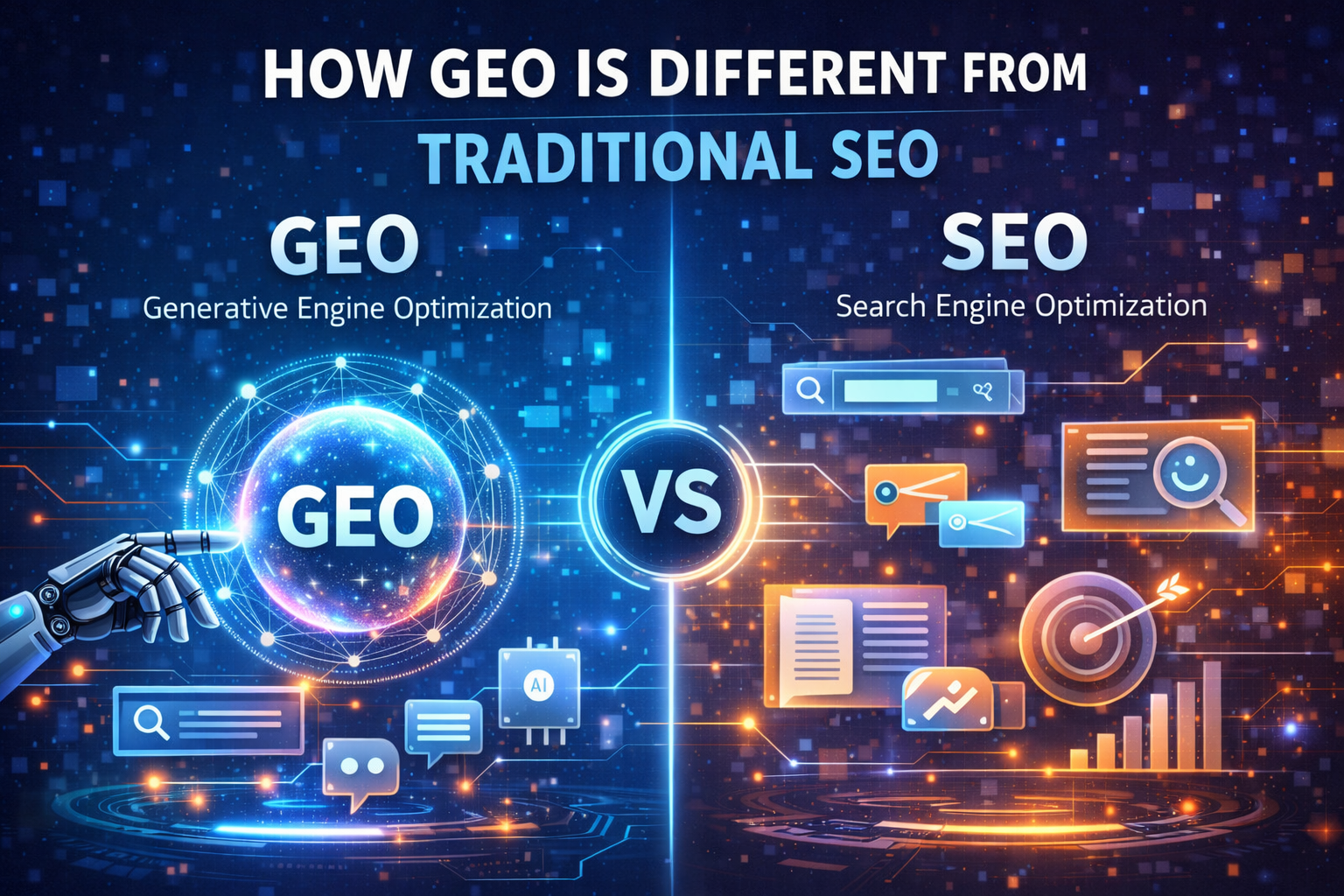
Traditional SEO mainly depends on keywords, backlinks, and technical optimization. While these elements are still important, GEO takes content optimization a step further. GEO focuses more on value than visibility. Instead of writing content only to rank higher, the goal is to become a reliable and trustworthy source of information. Content must be well-organized, easy to read, and aligned with what users are actually searching for.
The Role of AI-Powered Search Engines
AI-powered search engines are changing how people interact with information online. Users are now asking complete questions and expecting instant, summarized answers. Generative search tools gather information from multiple sources and present it in a conversational format. Because of this, content that is accurate, clear, and helpful has a much higher chance of being featured in AI-generated responses. This makes content quality more important than ever.
Why GEO Matters for Content Creators and Brands
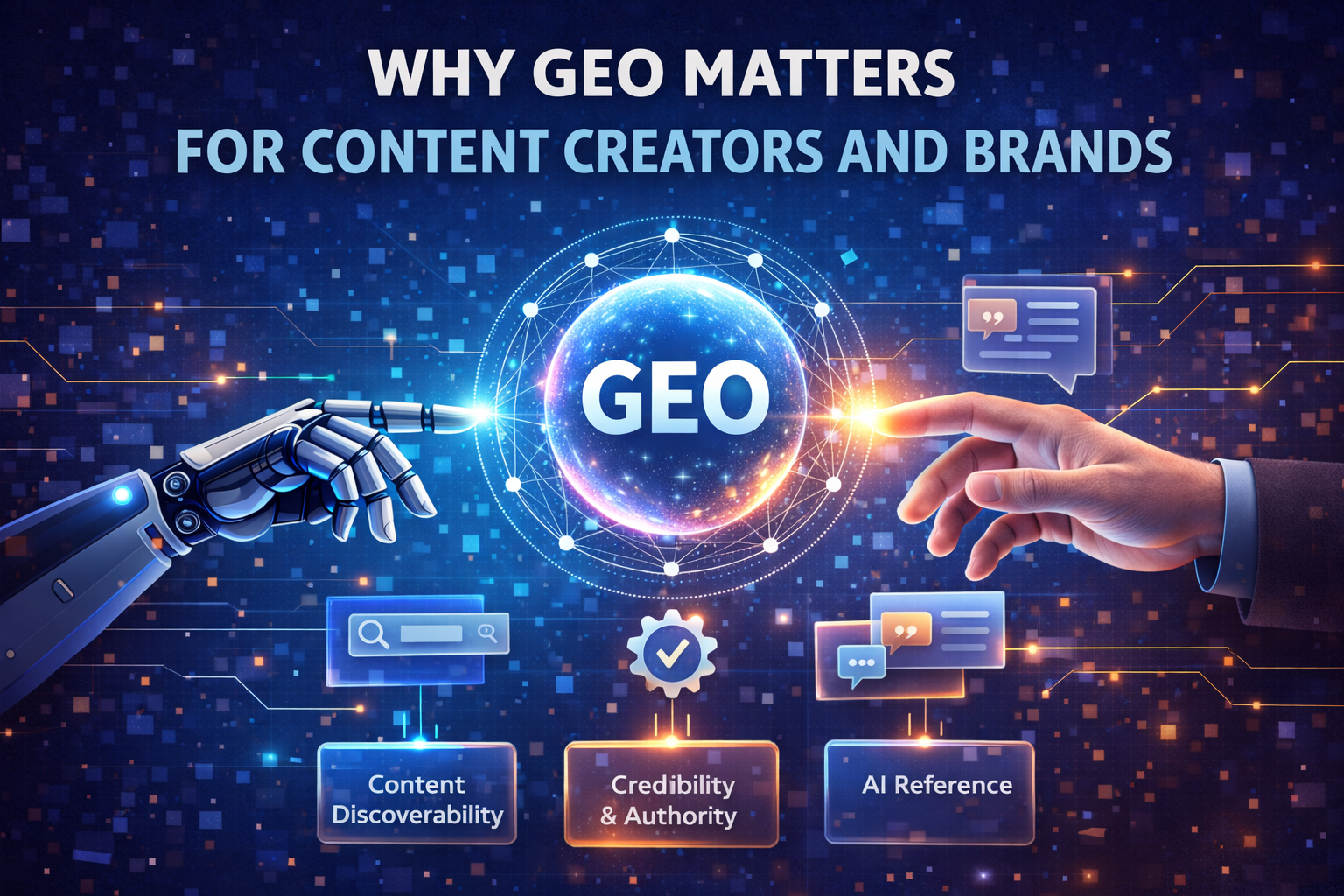
For content creators and brands, GEO is no longer optional—it is becoming essential. As generative search continues to grow, content written only for traditional SEO may lose visibility.
By adopting GEO practices, creators can:
- Increase content discoverability
- Build credibility and authority
- Improve chances of being referenced by AI search tools
This approach helps brands stay relevant in a rapidly changing digital landscape.
How GEO Is Shaping the Future of Content Marketing
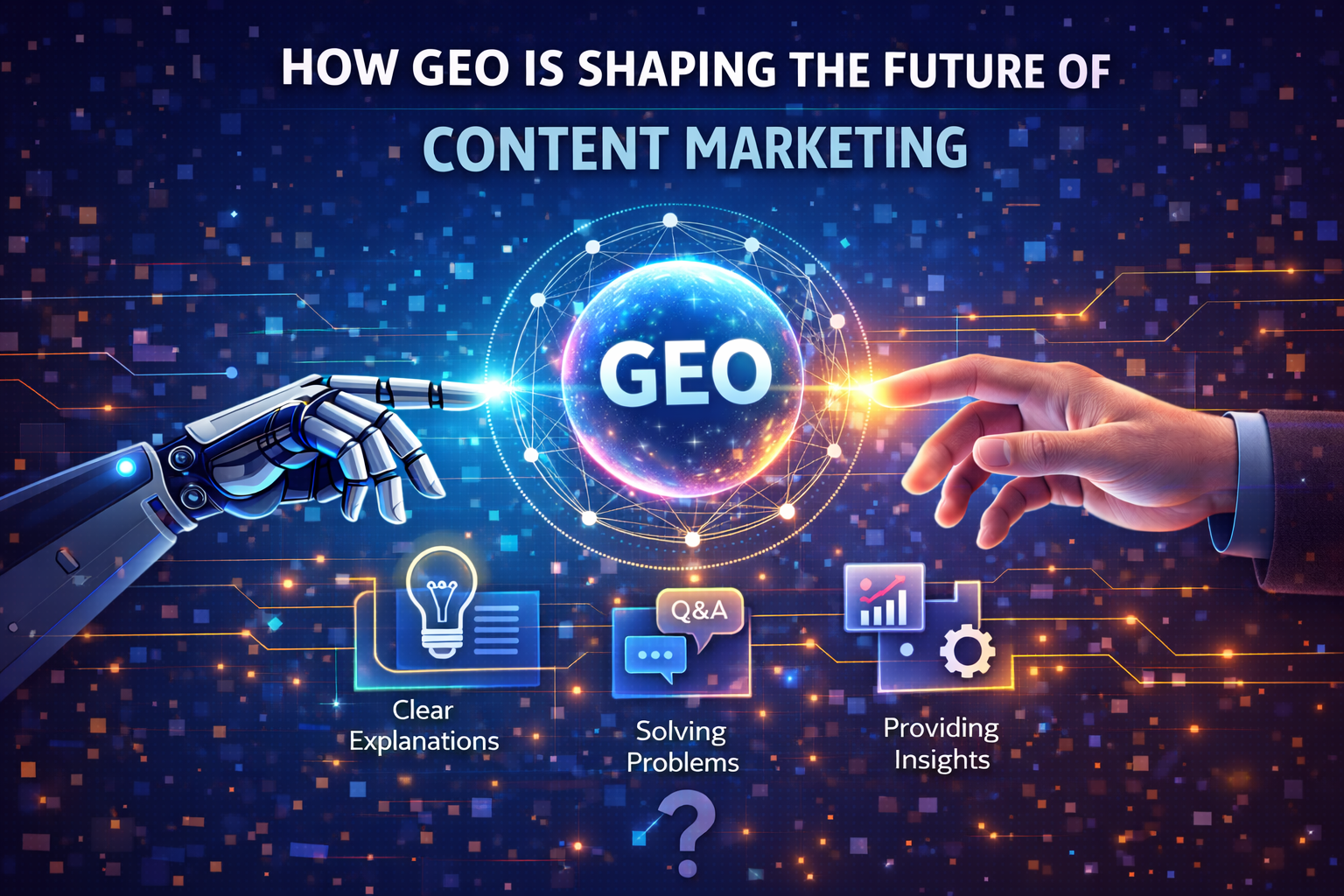
The future of content marketing is shifting from keyword-heavy strategies to value-driven communication. GEO encourages creators to focus on solving problems, answering real questions, and providing meaningful insights. Content that follows a clear structure, uses simple language, and delivers relevant information is more likely to perform well in generative search environments. Over time, this approach will redefine how content is planned, written, and distributed.
Challenges in Adopting GEO
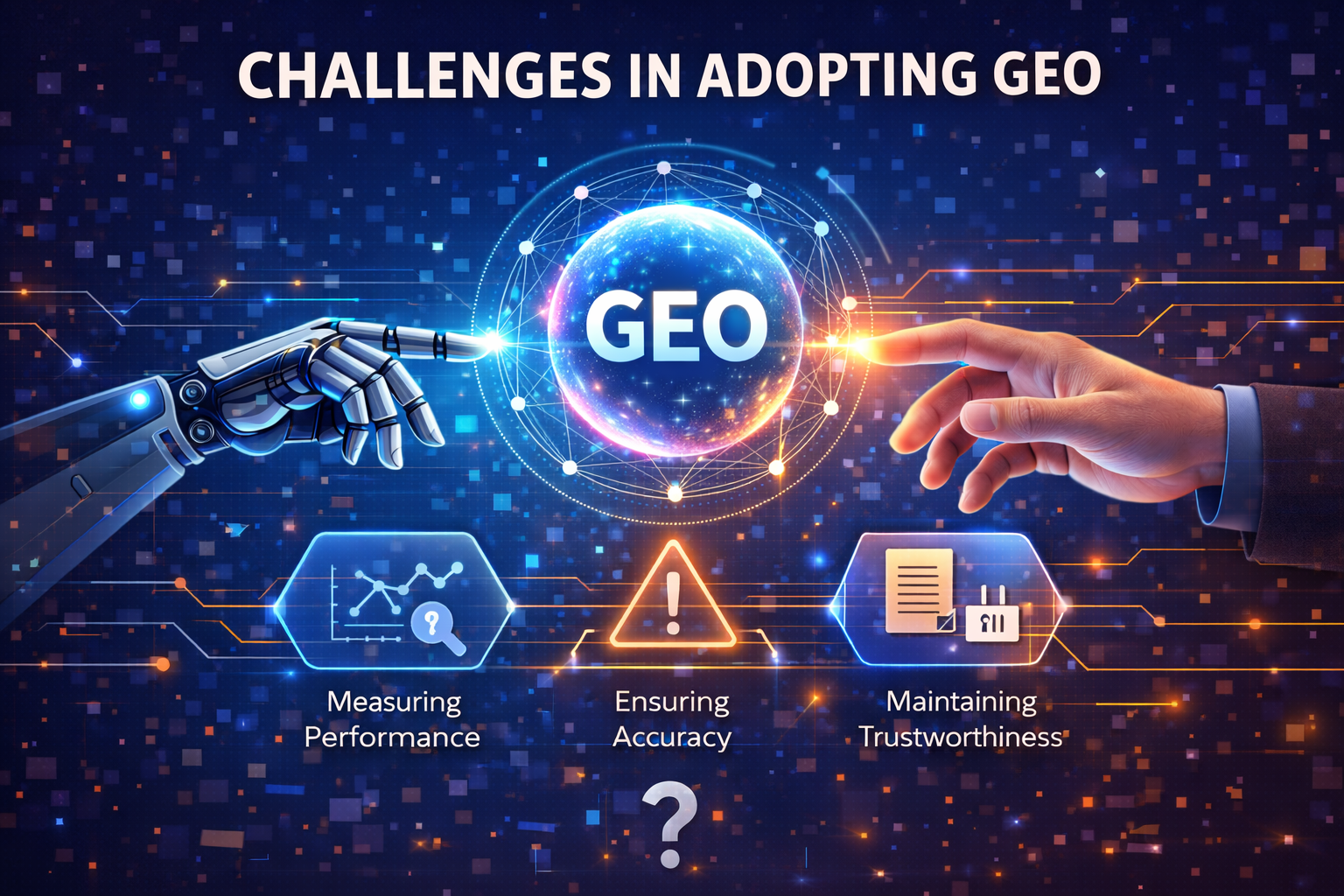
Like any emerging strategy, GEO comes with challenges. Measuring performance in AI-driven search is still evolving, and marketers must adapt to new metrics and tools. There is also a strong need for accuracy, originality, and trustworthiness, as AI systems prioritize reliable content. Despite these challenges, early adoption of GEO can offer long-term benefits.
Conclusion
Generative Engine Optimization represents the next phase of content marketing. As AI-powered search engines become more common, content must focus on clarity, relevance, and real value. GEO does not replace traditional SEO; instead, it expands it to match modern search behavior. Those who adapt to GEO today will be better prepared for the future of content marketing.
FAQs
No, GEO does not replace SEO. Instead, it expands traditional SEO by adapting content for AI-powered and generative search engines.
Content creators, digital marketers, bloggers, and businesses should adopt GEO to stay competitive in the evolving search landscape
Beginners can start by writing clear, well-structured content that answers real user questions and focuses on accuracy and usefulness.
 Sobhanginim
 Nishantp