
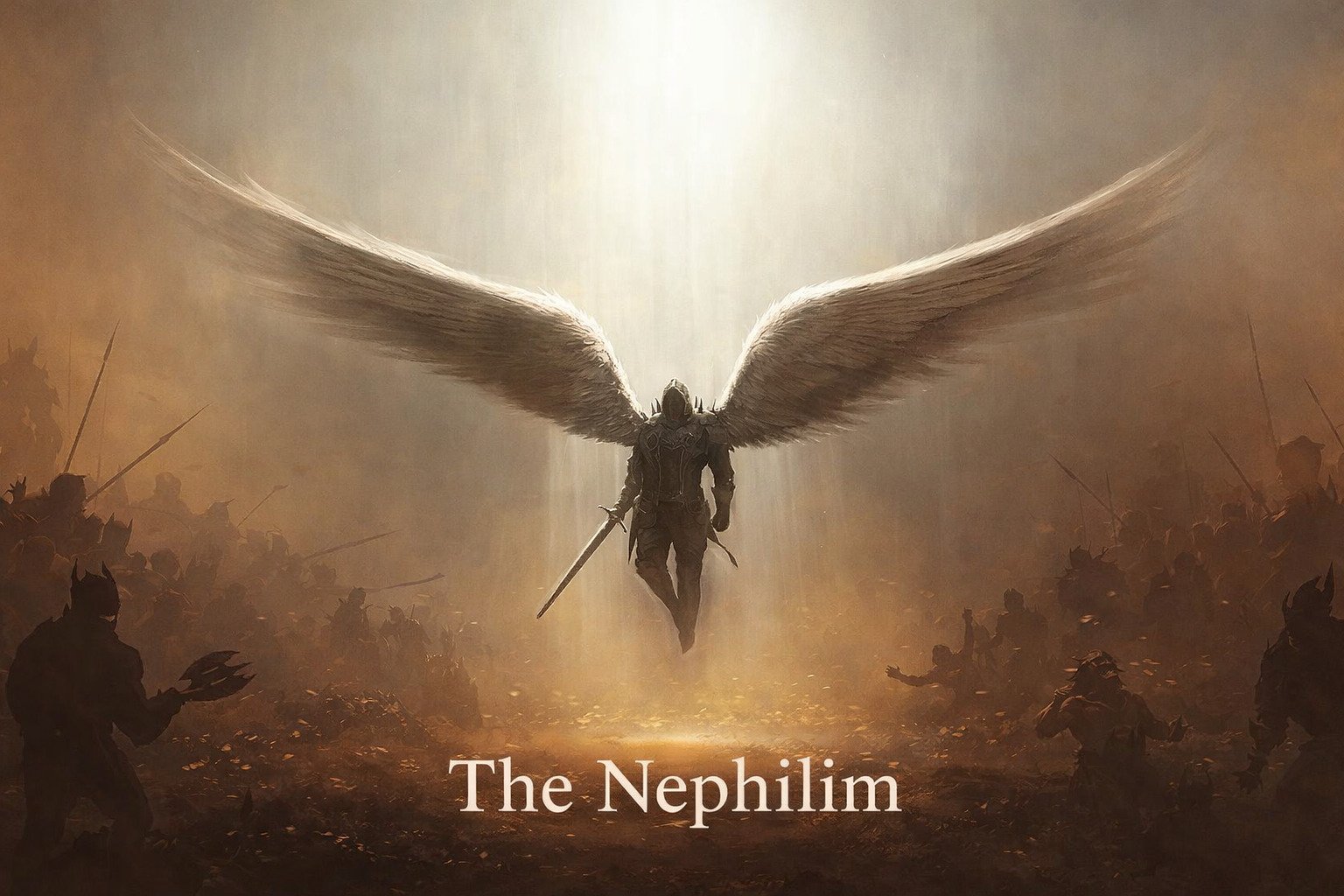
The story of the Nephilim is one of the most fascinating legends in ancient texts. In simple terms, the Nephilim were said to be the children of angels who fell from heaven and human women. Imagine beings who were part divine, part human -giants with extraordinary strength and influence. Their existence was seen as both awe-inspiring and terrifying. This tale, found in the Book of Enoch and hinted at in the Bible’s Genesis, is not just about supernatural beings -it’s about desire, rebellion, and the consequences of crossing boundaries between heaven and earth.
Who Were the Fallen Angels?
A group of angels, called the Watchers, were sent to guide humanity. But instead of staying true to their mission, they became enchanted by human women. Led by Semjaza, they descended to Earth, took wives, and fathered children. This act of defiance set the stage for the birth of the Nephilim.
The Birth of the Nephilim
The Nephilim were described as giants -larger, stronger, and more powerful than ordinary humans. But their strength came with danger. Ancient texts say they brought violence and chaos, dominating the world in ways that alarmed both humans and the divine. In plain words: they were the result of a forbidden love story that spiraled out of control.
Forbidden Knowledge and Azazel’s Role
One of the fallen angels, Azazel, went further by teaching humans forbidden arts: weapon-making, sorcery, and even cosmetics.
These teachings accelerated human corruption, leading to chaos and imbalance. In many interpretations, Azazel represents the danger of knowledge without wisdom.
The Great Flood: A Reset
Because of the Nephilim’s violence and the angels’ rebellion, the world was said to have become dangerously corrupt. The divine response was the Great Flood, a reset to cleanse the Earth. The fallen angels were punished, and their children ‘the Nephilim’ were wiped away.

Why this story still matters?
The legend of the Nephilim isn’t just ancient history. It speaks to timeless human themes:
- Desire that pushes boundaries.
- Rebellion against authority.
- Knowledge that can both empower and destroy.
That’s why the Nephilim continue to appear in modern books, films, and art -as symbols of forbidden love, untamed power, and the consequences of choices that defy limits.
The legend of the fallen angels and their union with human women is more than a tale of myth -it is a reflection on human nature itself. Desire, rebellion, and the search for knowledge are timeless themes, and the Nephilim stand as symbols of what happens when boundaries between the divine and mortal are crossed. In exploring this ancient narrative, we uncover not only a story of cosmic consequence but also a mirror to our own struggles with temptation and choice.
FAQs
No, it’s not included in most versions of the Bible. It’s an old Jewish text, but one church -the Ethiopian Orthodox Church does treat it as scripture.
Yes. Many myths worldwide speak of gods or divine beings falling in love with humans, often leading to powerful but tragic offspring.
It touches on timeless themes – desire, rebellion, forbidden love, and the pursuit of knowledge, that remain relevant in literature and art.
 Arpital
 Raghab