
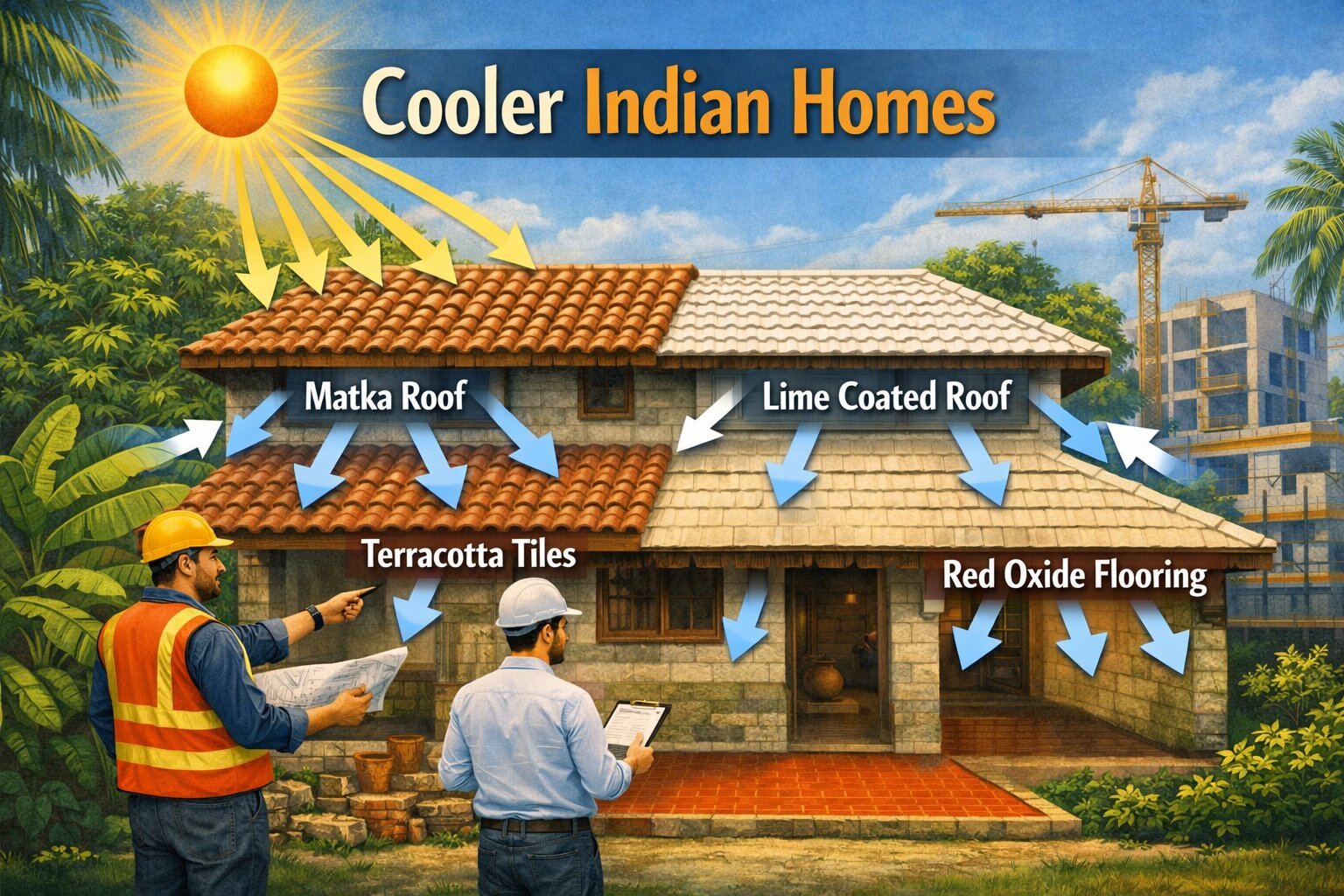
India’s climate is marked by scorching summers, humid monsoons, and long spells of heat that demand homes be built in harmony with the environment. Traditionally, our ancestors designed houses with natural cooling in mind -using mud walls, lime coatings, terracotta tiles, red oxide floors, and matka roofs that breathed with the seasons and kept interiors comfortable. These techniques were simple yet ingenious, proving that sustainable design could be both affordable and effective. Today, however, modern builders often replace these cooling methods with heat‑retentive materials like RCC slabs, vitrified tiles, and polished granite. While they look sleek and come at a premium, they trap heat inside, leaving residents with little choice but to rely on air‑conditioners. This blog revisits forgotten wisdom, showing how flooring and roofing techniques can help us reclaim naturally cool homes without the burden of AC.
Time Tested Techniques for naturally cooler Home
Indian architecture has long embraced materials and methods that respond intelligently to the country’s hot, humid climate. Roofs made with matka pots, terracotta tiles, lime coatings, or mud layers act as natural insulators, reducing heat absorption and allowing trapped air to keep interiors cool. Similarly, floors finished with red oxide, Kaavi, or stone stay comfortably cool underfoot, even in peak summer. These techniques were born from necessity and refined through generations -using locally available materials that breathe, reflect sunlight, and balance humidity. What makes them remarkable is their continued effectiveness: even today, homes built with these traditional methods remain cooler, more sustainable, and energy‑efficient than those relying on modern, heat‑retentive materials.
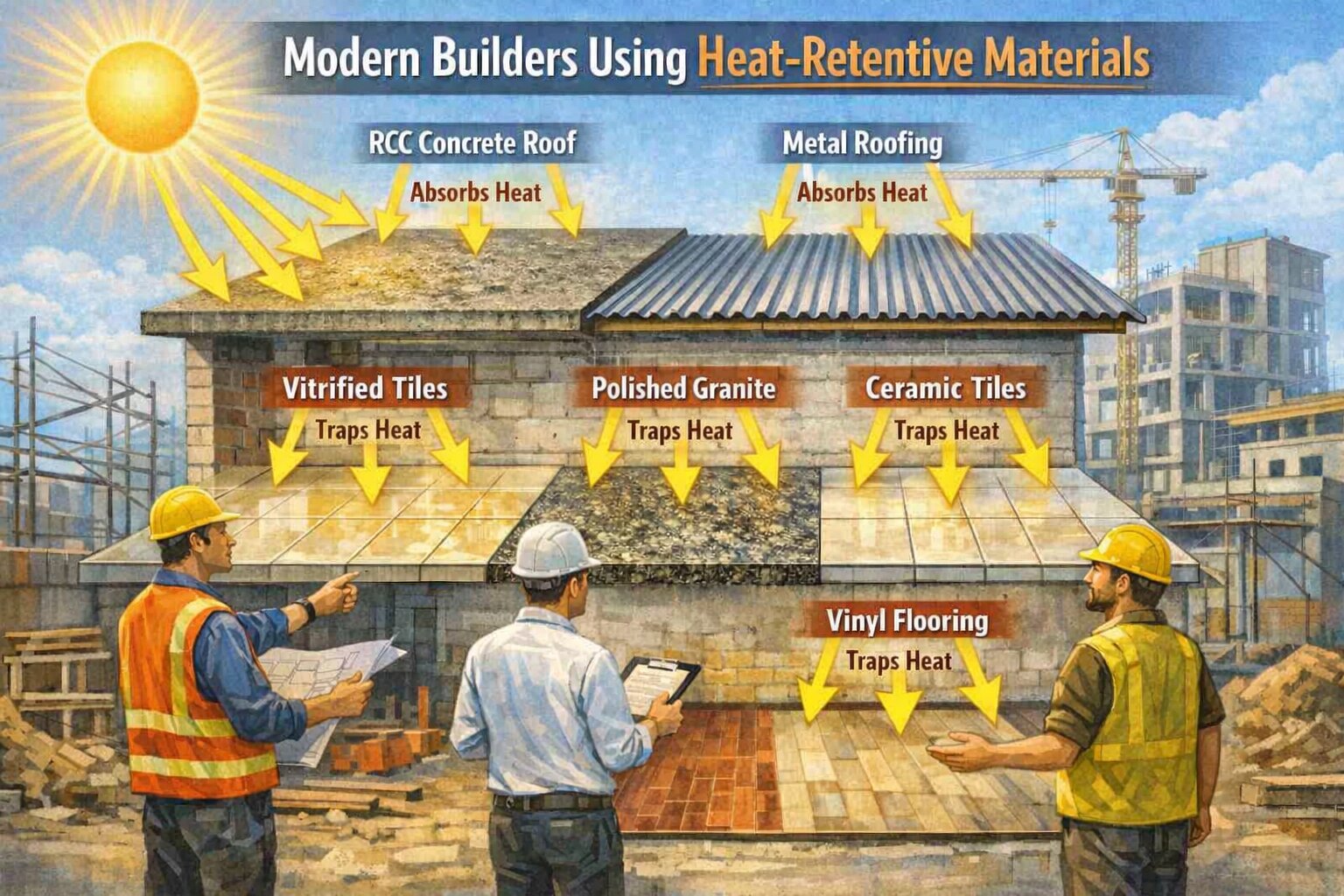
These materials were locally sourced, eco‑friendly, and produced with minimal energy, making them sustainable and long‑lasting. In contrast, modern construction often uses RCC slabs, metal sheets, bitumen layers, vitrified tiles, ceramic tiles, granite, and vinyl flooring. While sleek and durable, these industrial materials are dense and non‑porous, absorbing and retaining heat, which raises indoor temperatures and forces reliance on air‑conditioning. The difference lies in thermal behavior: traditional techniques reflect and breathe with the climate, while modern ones trap heat.
Practical ways to cool your modern home
Even if your house is built with modern materials, you can still integrate traditional cooling methods to reduce heat indoors:
- Apply Lime Wash on RCC Roofs: A simple coat of lime reflects sunlight and keeps concrete slabs cooler.
- Use Terracotta or Clay Tiles Indoors: Replace or overlay vitrified tiles with terracotta tiles in living spaces for a naturally cooler floor.
- Introduce Red Oxide Flooring in Select Areas: Especially effective in verandas, courtyards, or rooms where barefoot comfort matters.
- Add Earthen Pots (Matka Technique) on Roofs: Embedding pots in slabs or using them decoratively helps trap air and insulate against heat.
- Combine Stone Flooring with Rugs: Granite or Kota stone floors stay cool; adding natural fiber rugs balances comfort and aesthetics.
- Shade with Greenery: Planting trees or creepers around walls and roofs reduces direct sun exposure and lowers indoor temperature.
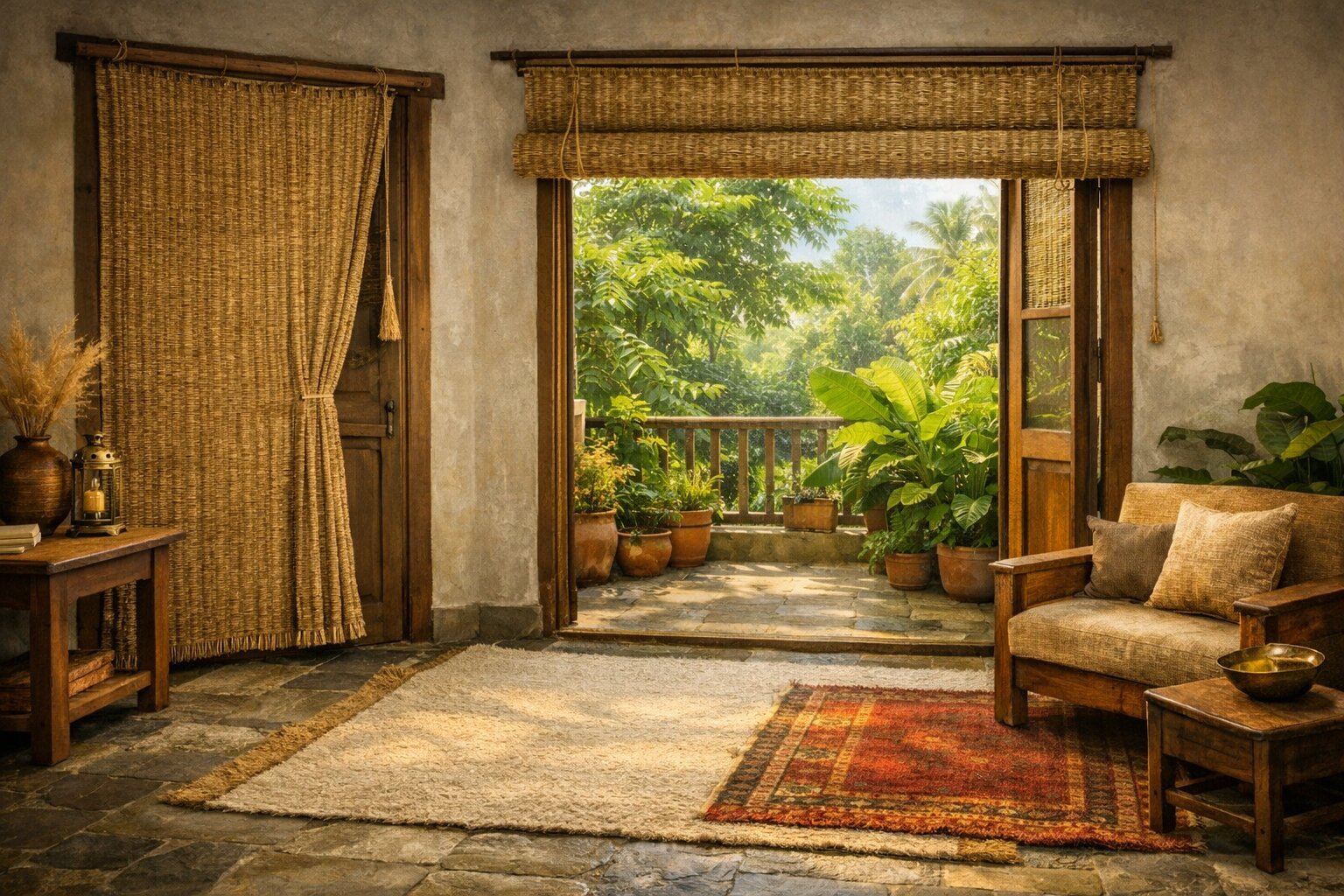
- Install Vetiver (Khus) Curtains: These curtains are made from woven vetiver grass roots. When kept moist, they cool the air passing through by natural evaporation.(Perfect for sunny windows, balconies, courtyards where natural ventilation is strong).
The Way Forward
Today’s reliance on heat‑retentive concrete slabs, vitrified tiles, and polished granite has trapped us in homes that demand air‑conditioners, draining both wallets and the planet. The solution lies not in more electricity, but in rediscovering sustainable techniques that have stood the test of time. By embracing traditional flooring and roofing methods, we can reclaim cooler, healthier living spaces and reduce our dependence on artificial cooling. The path forward is not just about comfort -it’s also about honoring heritage, saving energy, and building homes that truly belong to the Indian climate.
FAQs
Indoor and balcony plants absorb heat, release moisture, and shade walls or windows -reducing direct sunlight and improving air quality.
Small fountains or clay water pots placed near windows or balconies add moisture to the air, creating a mild evaporative cooling effect.
Cross‑ventilation allows air to flow freely between opposite openings, pushing out hot air and bringing in cooler breezes -especially effective in coastal or humid regions.
 Raghab
 Abhilashb