
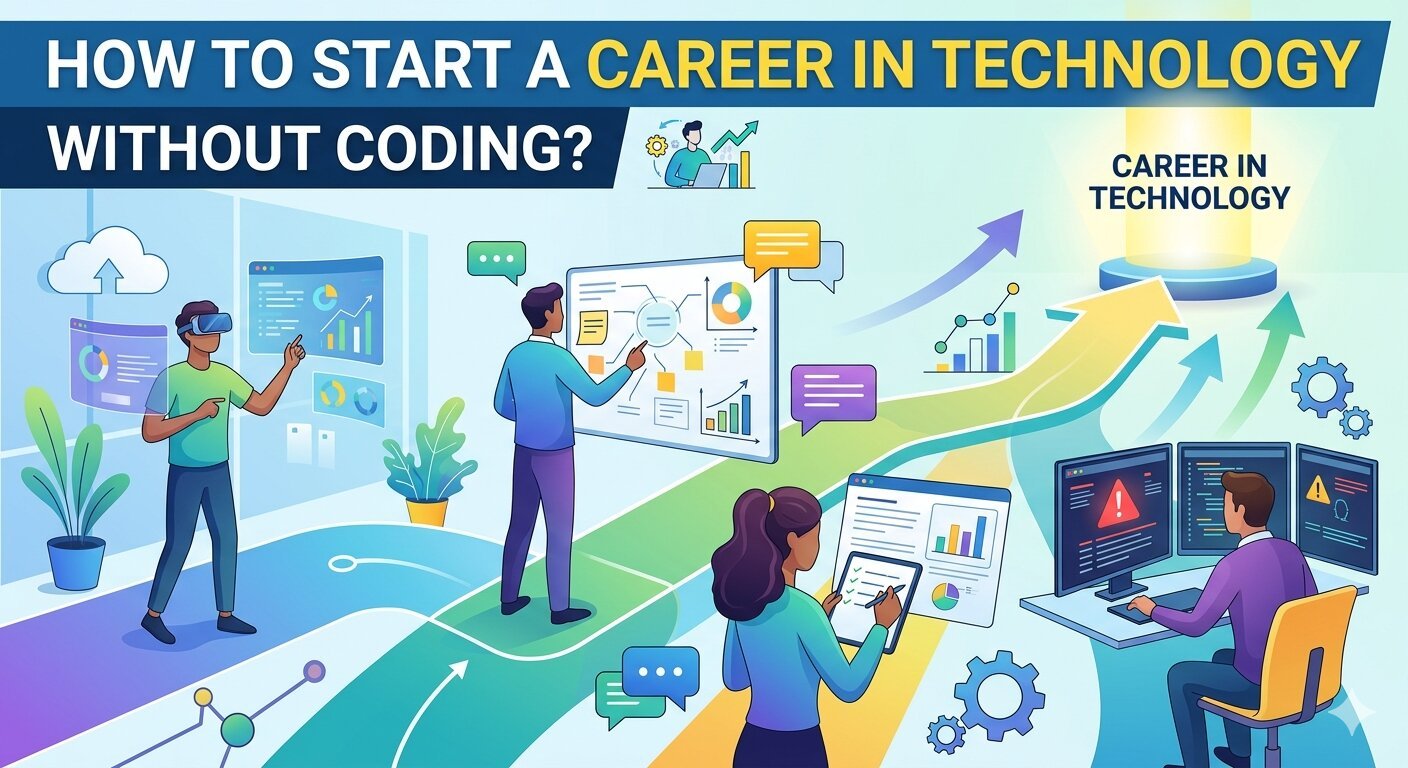
The technology industry is one of the fastest-growing sectors in the world, offering countless career opportunities. While many people assume that coding is essential to break into tech, that’s not entirely true. There are many high-paying and rewarding tech careers that don’t require programming skills.
If you’re interested in technology but don’t want to learn coding, this guide will show you exactly how to start your career.
Why Choose a Non-Coding Tech Career?
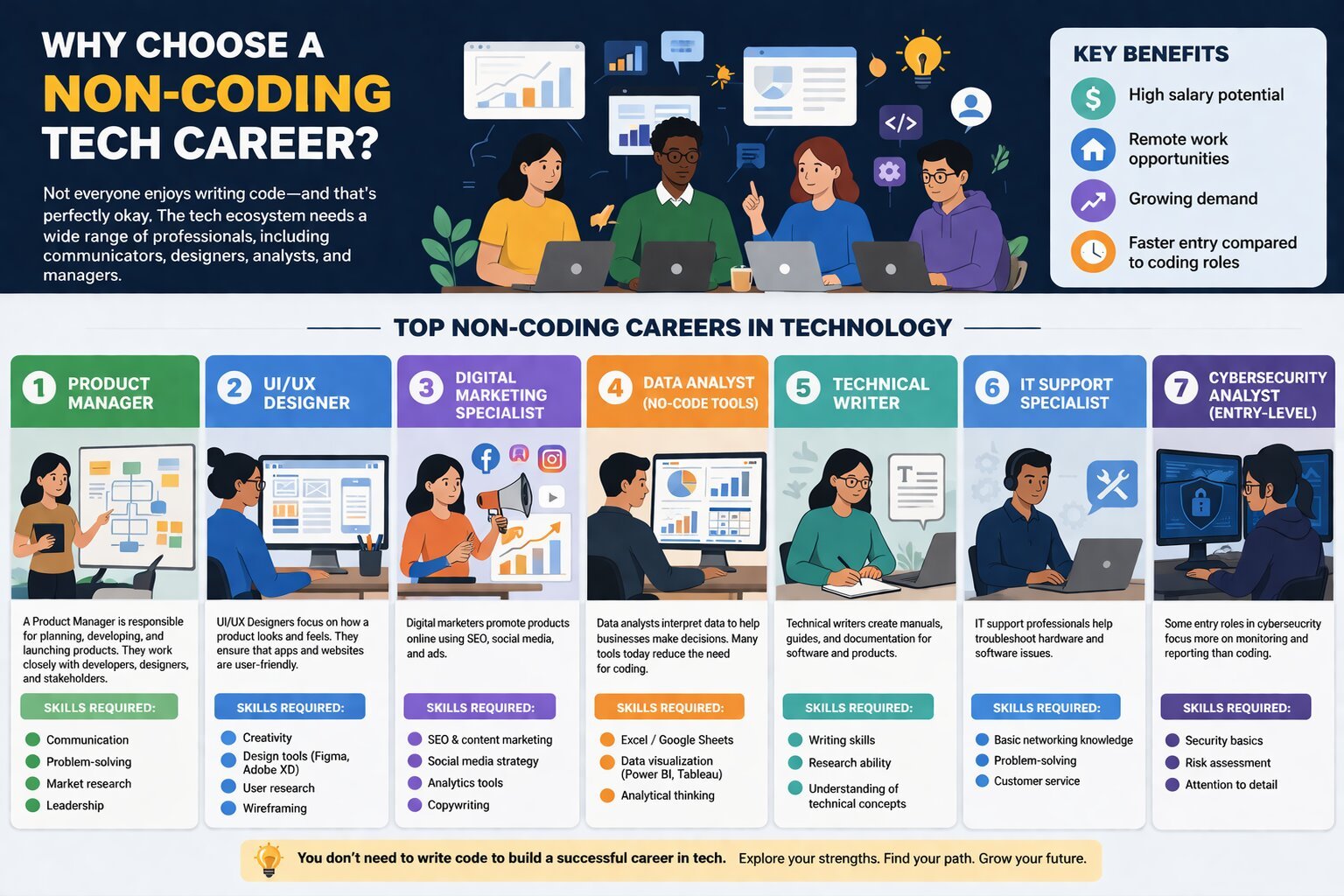
Not everyone enjoys writing code and that’s perfectly okay. The tech ecosystem needs a wide range of professionals, including communicators, designers, analysts, and managers.
Key benefits:
- High salary potential
- Remote work opportunities
- Growing demand
- Faster entry compared to coding role
Top Non-Coding Careers in Technology
1. Product Manager
A Product Manager is responsible for planning, developing, and launching products. They work closely with developers, designers, and stakeholders.
Skills required:
- Communication
- Problem-solving
- Market research
- Leadership
2. UI/UX Designer
UI/UX Designers focus on how a product looks and feels. They ensure that apps and websites are user-friendly.
Skills required:
- Creativity
- Design tools (Figma, Adobe XD)
- User research
- Wireframing
3. Digital Marketing Specialist
Digital marketers promote products online using SEO, social media, and ads.
Skills required:
- SEO & content marketing
- Social media strategy
- Analytics tools
- Copywriting
4. Data Analyst (No-Code Tools)
Data analysts interpret data to help businesses make decisions. Many tools today reduce the need for coding.
Skills required:
- Excel / Google Sheets
- Data visualization (Power BI, Tableau)
- Analytical thinking
5. Technical Writer
Technical writers create manuals, guides, and documentation for software and products.
Skills required:
- Writing skills
- Research ability
- Understanding of technical concepts
6. IT Support Specialist
IT support professionals help troubleshoot hardware and software issues.
Skills required:
- Basic networking knowledge
- Problem-solving
- Customer service
7. Cybersecurity Analyst (Entry-Level)
Some entry roles in cybersecurity focus more on monitoring and reporting than coding.
Skills required:
- Security basics
- Risk assessment
- Attention to detail
Step-by-Step Guide to Get Started
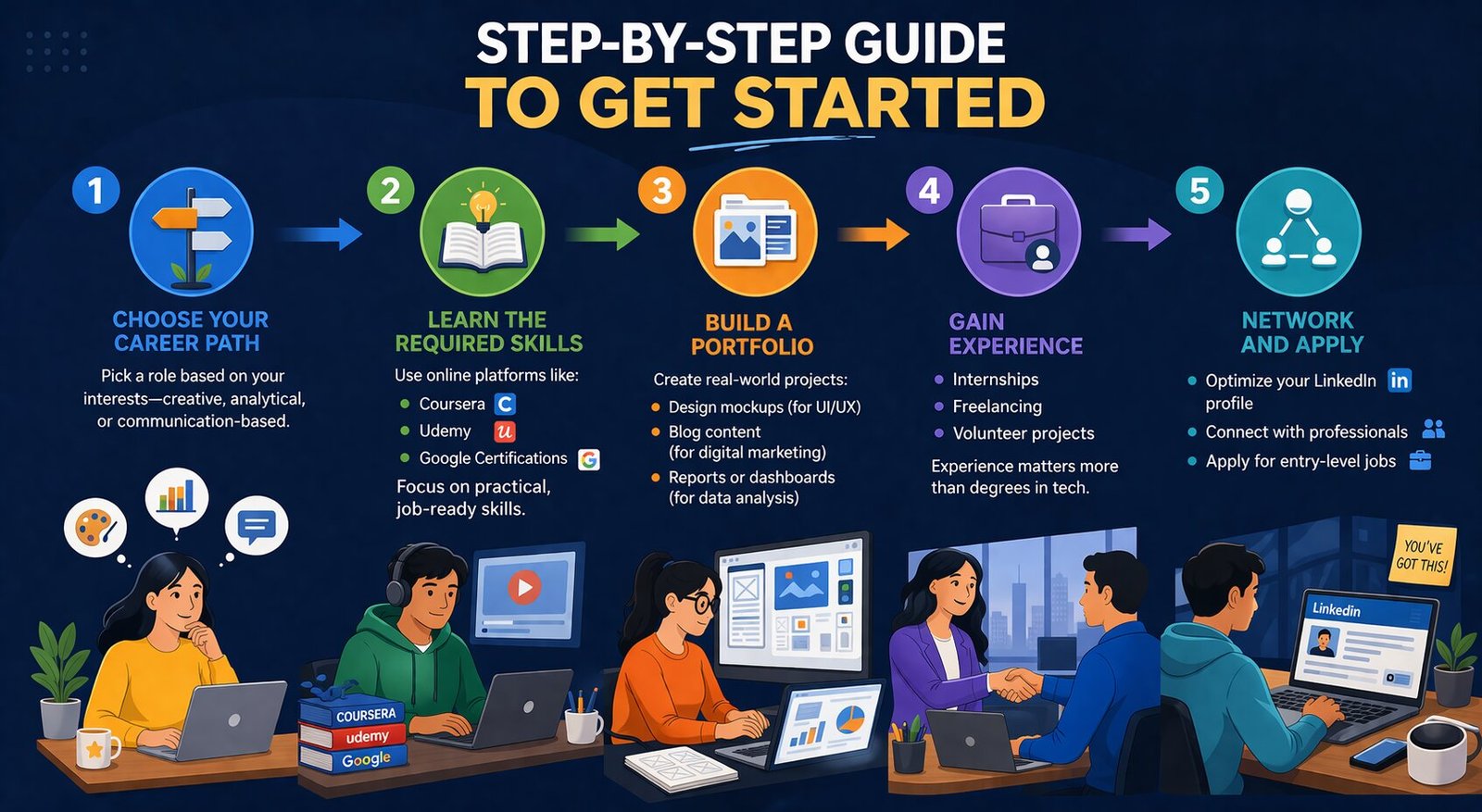
Step 1: Choose Your Career Path
Pick a role based on your interests—creative, analytical, or communication-based.
Step 2: Learn the Required Skills
Use online platforms like:
- Coursera
- Udemy
- Google certifications
Focus on practical, job-ready skills.
Step 3: Build a Portfolio
Create real-world projects:
- Design mockups (for UI/UX)
- Blog content (for digital marketing)
- Reports or dashboards (for data analysis)
Step 4: Gain Experience
- Internships
- Freelancing
- Volunteer projects
Experience matters more than degrees in tech.
Step 5: Network and Apply
- Optimize your LinkedIn profile
- Connect with professionals
- Apply for entry-level jobs
Tools You Should Learn
Depending on your career path:
- Design: Figma, Canva
- Marketing: Google Analytics, SEMrush
- Data: Excel, Power BI
- Project Management: Trello, Notion
Salary Expectations
Non-coding tech jobs can be highly rewarding:
- Entry-level: ₹3–6 LPA
- Mid-level: ₹6–15 LPA
- Senior-level: ₹15+ LPA
(Salaries vary based on role, location, and experience.)
Challenges You May Face
- High competition
- Need for continuous learning
- Building initial experience
But with consistency, these challenges can be overcome.
Final Thoughts
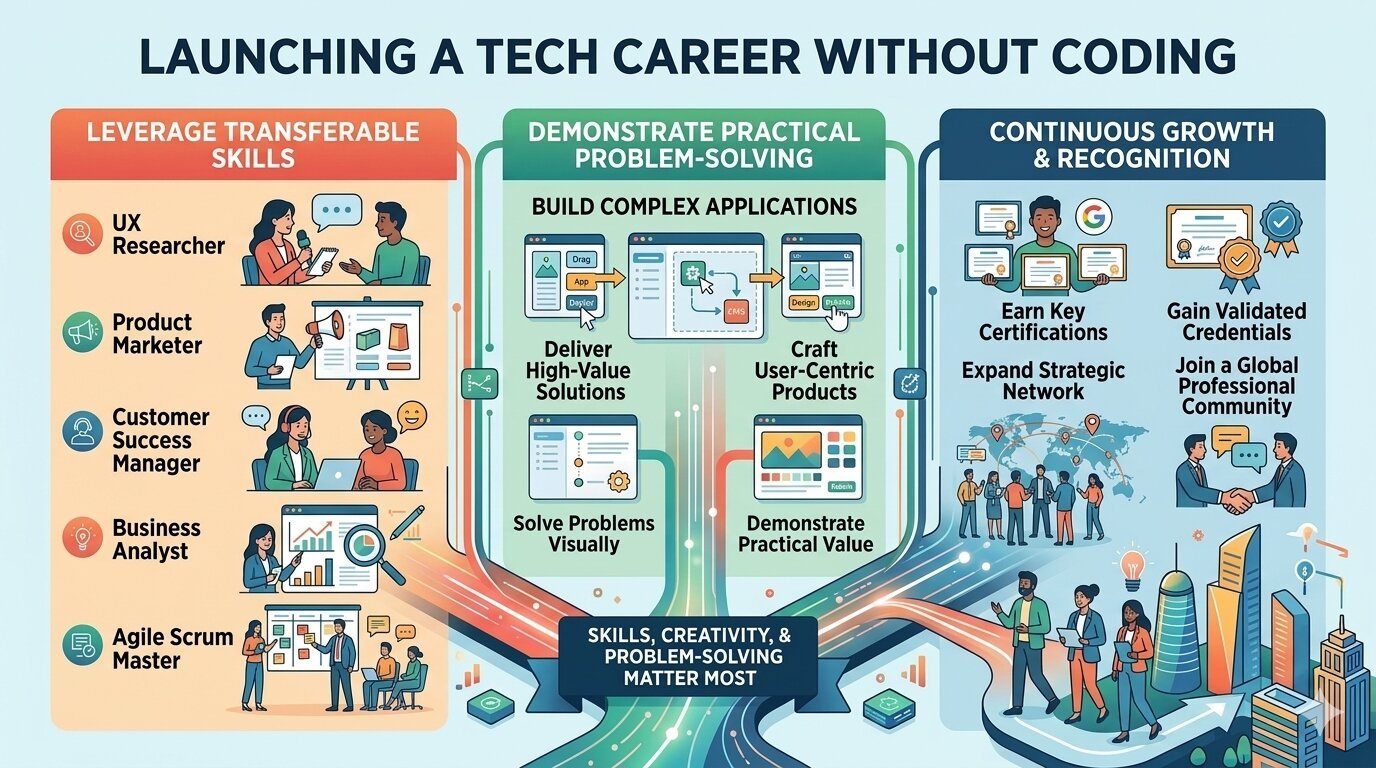
Starting a career in technology without coding is not only possible – it’s a smart choice for many people. The tech industry values skills, creativity, and problem-solving just as much as programming.
Focus on learning, building real-world projects, and staying updated with industry trends. With the right approach, you can successfully enter the tech world without writing a single line of code.
You may also like:
https://whyhowandwhat.com/what/what-ai-can-and-cannot-do-in-digital-marketing-today/
https://whyhowandwhat.com/science/geo-future-of-content-marketing/
 Sushreep